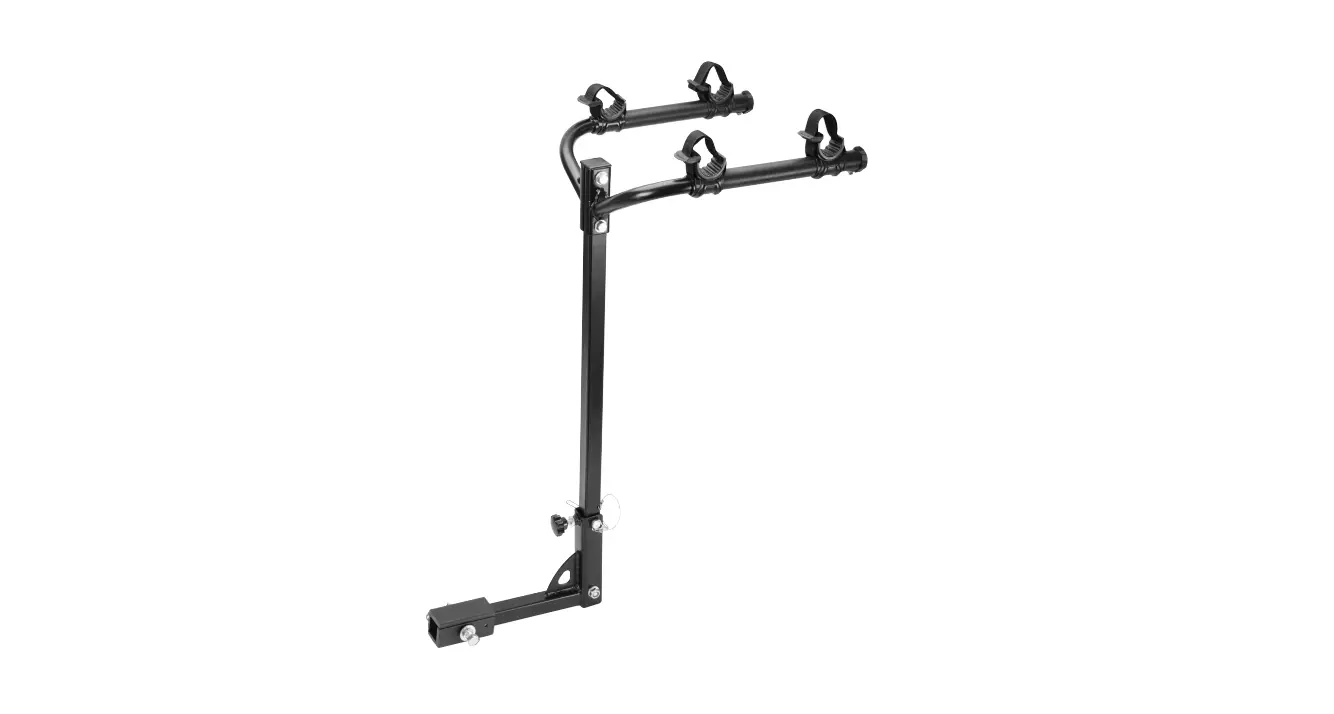
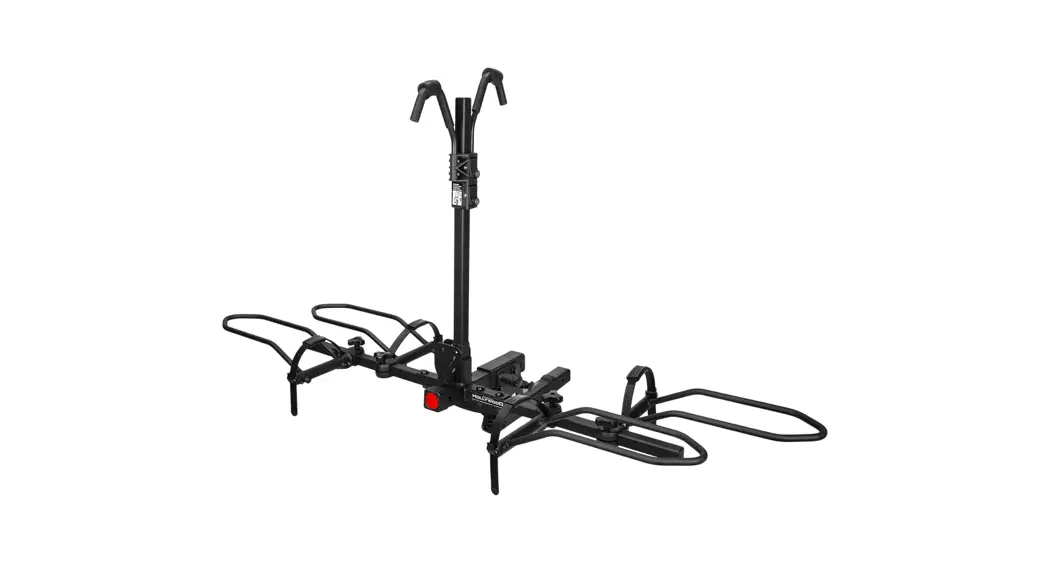
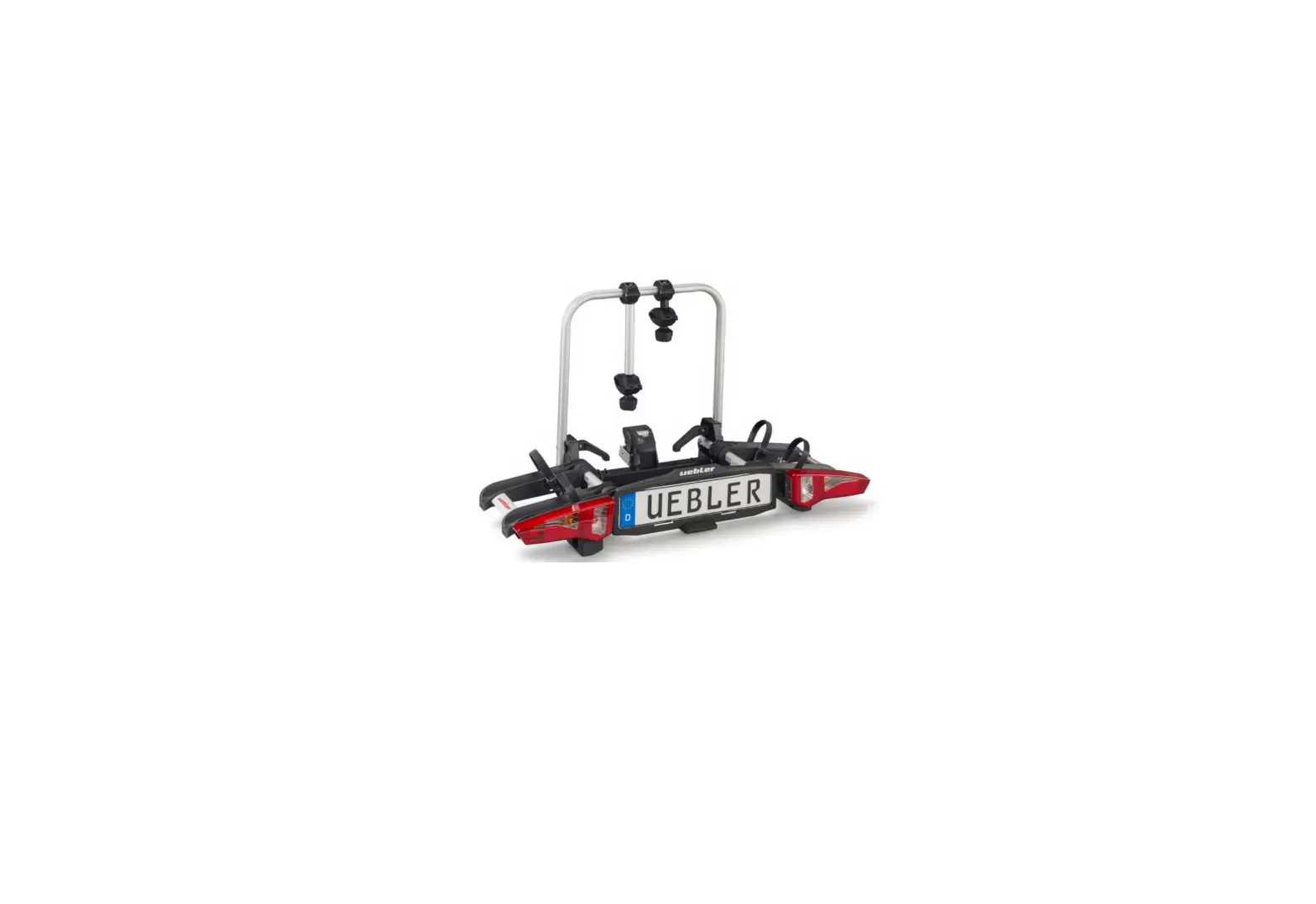
LAS 11596 SD260 Cycle Rack for Towbar Instruction Manual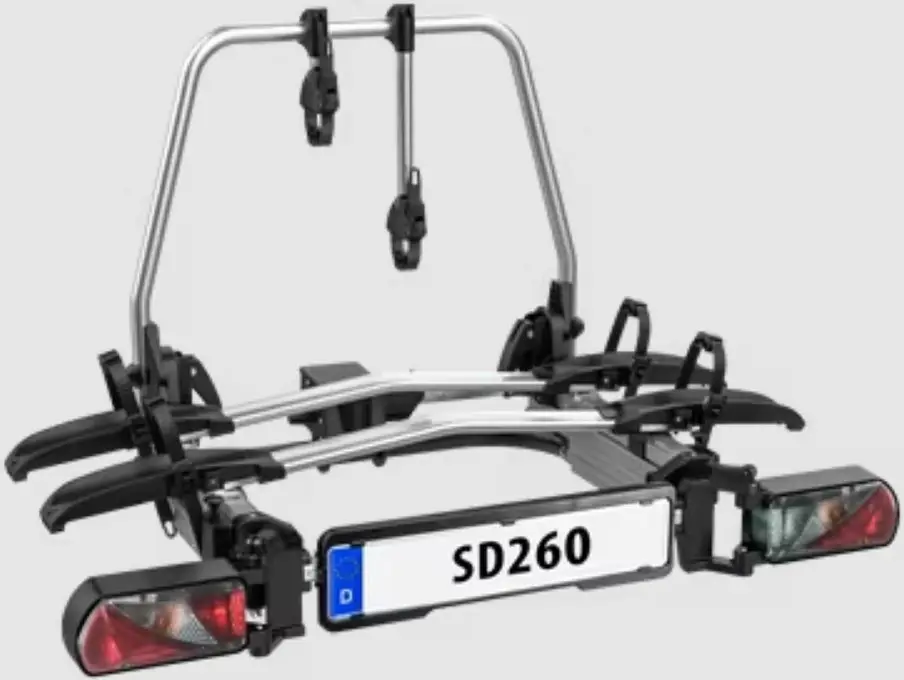
Details about this Instruction Manual
Foreword
These fitting instructions will assist you with the proper and safe fitting of the SD260 bike carrier.
Obligations Concerning the Handling of this Instruction Manual
Any person who
- fits
- cleans or
- disposes of
This bicycle carrier must have noted and understood the complete content of this instruction manual.
Always keep this instruction manual to hand and in a safe place. If the bicycle carrier is passed on, pass on the instruction manual with it.
Proper Use
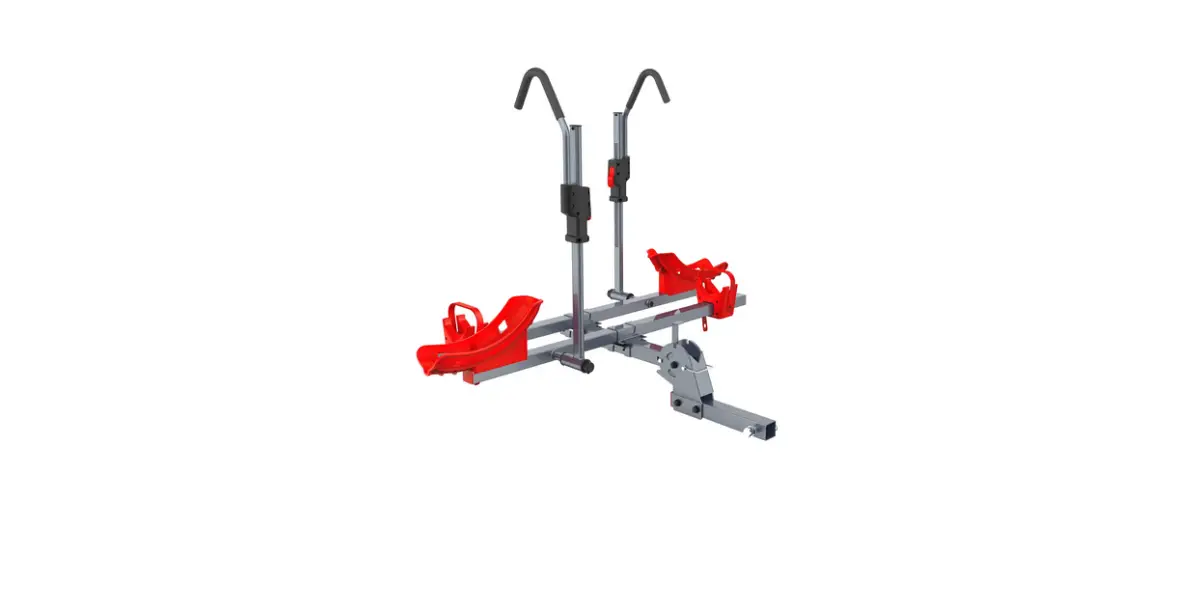
The SD260 bicycle carrier serves to transport a maximum of two bicycles. It may be fitted only on tow hitches that meet the requirements specified in the chapter on Coupling Requirements.
Moreover, under no circumstances is the maximum permitted load of the bicycle carrier to be exceeded.
Proper use also includes adherence to all information in these fitting instructions and particularly adherence to the safety instructions. Any other use is considered to be improper and may cause damage to property or injury to people. EAL GmbH accepts no liability for damages caused by improper use.
Safety instructions – explanation of the categories
You will find in these instructions the following categories of safety instructions:
 WARNING!
Personal injury possible:
Instructions with the heading WARNING warn of a possible impending danger. Failure to avoid such danger could result in serious or even fatal injuries.
CAUTION!
Personal injury or material damage possible:
Instructions under the heading CAUTION warn of possibly impending danger.
Failure to avoid such danger may result in slight or minor injuries.
The product or other nearby objects may be severely damaged.
ATTENTION!
Personal injury or material damage possible:
Instructions under the heading ATTENTION warn of a potentially harmful situation.
Failure to avoid such situations may result in damage to the product or other nearby objects.
 NOTE
NOTE
Other instructions:
Useful tip. Makes operation or fitting of the product easier or gives a better understanding.
The respective safety symbol used does not replace the text of the safety instruction.
You must therefore read the safety instruction and follow it exactly.
Scope of delivery
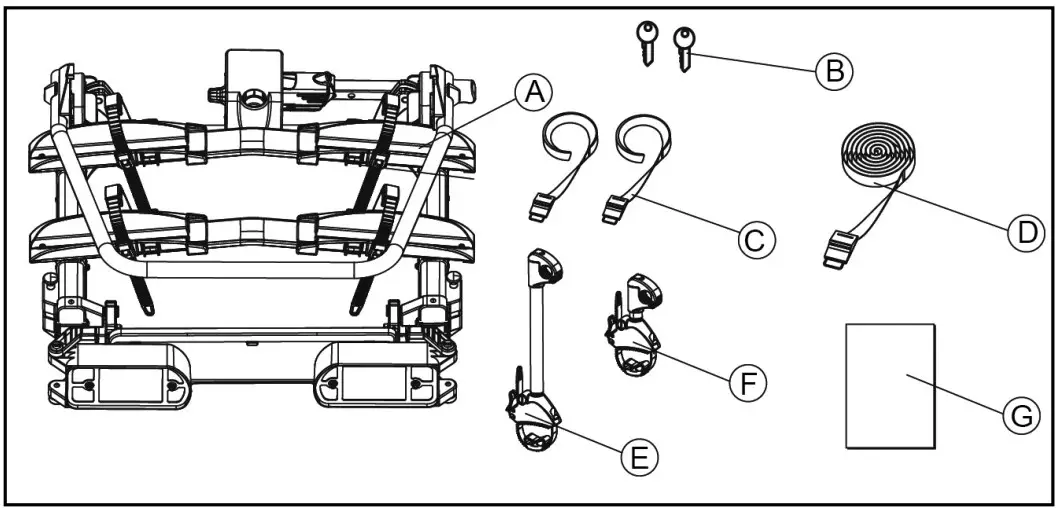
A = bike carrier
B = 2 keys
C = 2 safety straps for front wheels
D = 1 Safety strap for bicycle frame
E = frame holder long
F = frame holder short
G = assembly instruction and safety regulations
Unpack all the components and check for the presence of all parts.
Technical specifications
| Material: | Steel/aluminium |
| No of bicycles | 2 |
| Net weight: | approx. 20,5 kg |
| Max. load: | 60 kg |
| Load capacity per wheel rail (max.) | 30 kg |
| Wheel base (max.) | 130 cm |
| Rail gap | 24 cm |
| Max. tyre width up to | 3,25 inches |
| Slidable | Yes |
| Dimensions (WxHxD): | approx.108 x 75 x 60 cm |
The bike carrier is suitable for the transport of two bicycles at most. Please check the maximum permissible ball load. You can find it on the identification plate of the tow bar of your car
The total weight of the bike carrier with the bicycles cannot exceed the maximum permissible ball load of the tow bar.
| Max. permissible ball load | Weight bike carrier | Max. carrying capacity |
| 50 kg | 20,5 kg | 29,5 kg |
| 60 kg | 20,5 kg | 39,5 kg |
| 75 kg | 20,5 kg | 54,5 kg |
| 90 kg | 20,5 kg | max. 60 kg |
| 120 kg | 20,5 kg | max. 60 kg |
Coupling Requirements
DANGER!
The tow hitch breaking can cause injury to people.
The coupling may break as a result of fitting the bicycle carrier on a coupling in a material that is too soft.
- Fit the bicycle carrier only on a coupling made of St52 steel, GGG52 grey cast iron or better quality
- Never fit the carrier on a coupling made of aluminium, other light metals or plastic.
- Only suitable for use on the coupling of a passenger car
- Note the instructions of the coupling manufacture.

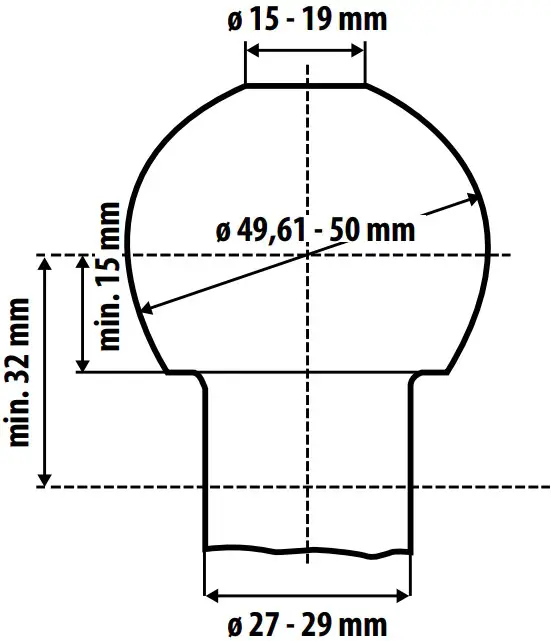
Fit the bicycle carrier only on tow hitches with the following properties:
Material: …….. Min. St52 steel or GGG52 grey cast iron
D-value…. ≥
Tow ball: Ø50mm (class A-50 according EC 94/20 or ECE R55)
Safety Instructions
Follow the fitting instructions carefully. Failure to follow the instructions can lead to personal injuries and material damage.
If you are not sure about correct fitting, ask your dealer or the manufacturer for further information. Neither the manufacturer nor dealer are liable for damages which are due to improper use or fitting.
Check the bike carrier and the load regularly: you are required to do so and may be held liable in case of damage.
NOTE
The legal regulations and provisions on the transport of goods on the back of your vehicle apply when driving with a mounted bicycle carried.
NOTE
Personal injury or material damage due to changed vehicle driving characteristics.
Driving with the bike carrier fitted will affect the driving characteristics of your vehicle
- Adjust your speed to the new driving characteristics
- Never exceed a speed of 130 km/h.
- Avoid sudden and jerky steering movements
- Remember that your vehicle is longer than usual.
WARNING!
Personal injury or material damage due to overloading.
Exceeding the max. carrying capacity of the bike carrier or the permissible bearing load of the trailer coupling or the permissible overall weight can lead to serious accidents.
- Observe the information on the max. carrying capacity, permissible bearing load and permissible overall weight of your vehicle. Never exceed these specifications.
WARNING!
Personal injury or material damage due to an incompletely fitted bike carrier.
Driving with a extended or folded bike carrier can lead to accidents.
The moving parts of bike carrier constitute a source of danger if not properly fitted
- Remove the bike carrier if it is not needed
- Never drive with a extended or folded bike carrier.
- Ensure that the bicycle carrier is always locked with both locking pins.
WARNING!
Personal injury or material damage due to loss of the bicycles.
Carrying bicycles without using the safety straps can lead to accidents.
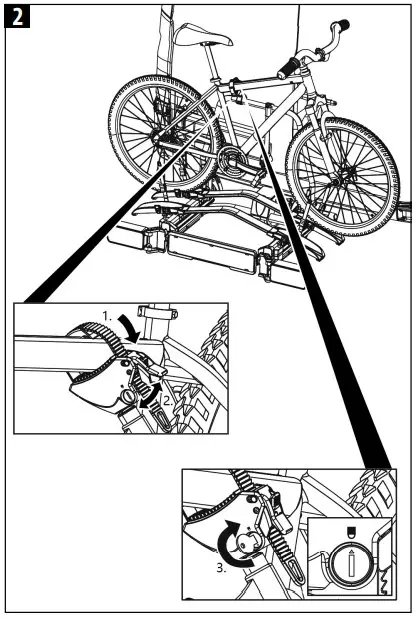
- Before the start of every journey, check the correct and firm attachment of the strap around the bikes and the frame holder bracket of the carrier (see Step 8 of chapter “Mounting bicyycles”).
- Before the start of every journey, check the correct and firm attachment of both straps around the front wheel, and the strap around the rear wheel of the bicycle
- Tighten the straps if necessary.
- Before the start of every journey, check that the straps are not worn or damaged.
- A damaged or worn strap must be replaced with an undamaged one before driving. Only strap which are approved by EAL GmbH may be used for this.
WARNING!
Personal injury or material damage due to projecting parts.
Parts projecting beyond the edge of the vehicle or bike carrier can cause personal injury or material damage when driving
- Fit only such parts which do not project beyond the edge of the vehicle or bike carrier.
WARNING!
Personal injury or material damage due to tarpaulins.
Tarpaulins increase the air resistance. They can become loose and fly about leading to serious accidents.
- Never use tarpaulins or covers.
WARNING!
Personal injury or material damage due to loss of the bicycles.
After the attachment, the carrier first settles properly into the coupling after driving several kilometres.
- Check the attachment of the carrier for secure attachment after driving several kilometres.
- Redo the attachment if it is loose.
WARNING!
Personal injury or material damage due to the breaking off of the bike carrier.
Driving with a mounted bike carrier over difficult terrain can lead to the carrier breaking off .
- Do not use the bike carrier when driving over difficult terrain.
- Drive slowly over speed bumps: max. Speed 10 km/h.
ATTENTION!
Material damage due to opening rear door or tailgate.
The rear door or tailgate could impact against the bike carrier and be damage
- Switch off electric tailgates and operate them manually.
- Extend the bike carrier before opening the reardoor or tailgate.
ATTENTION!
Material damage due to hot exhaust gases.
Damage can be caused to the bike carrier or the bicycles if the exhaust pipe is too close.
- Fit an exhaust deflector if necessary.
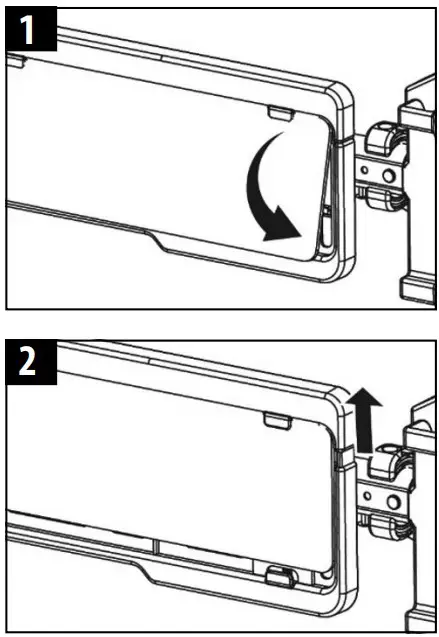
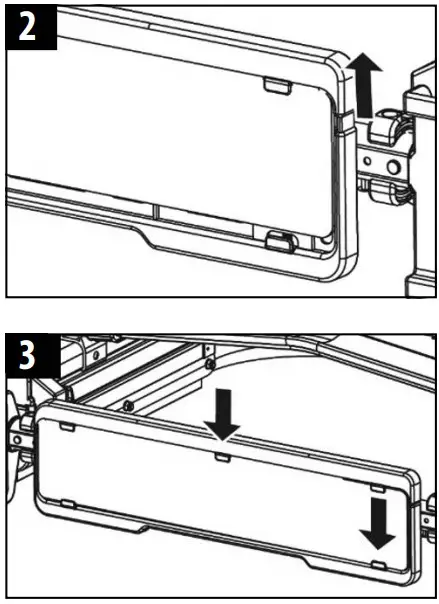
Fitting the registration plate to the bike carrier
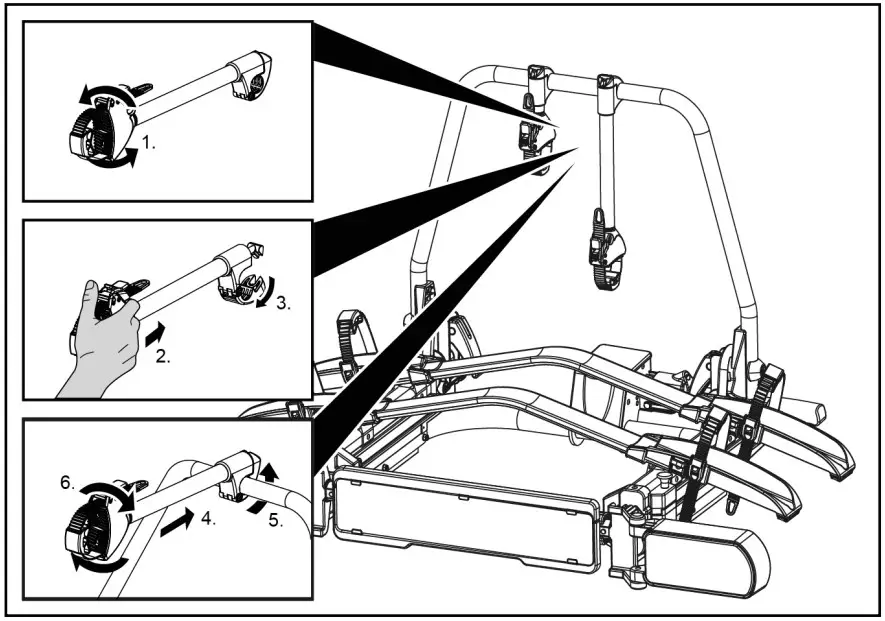
Fitting the frame holders to the bike carrier
Fitting the bike carrier to the trailer coupling
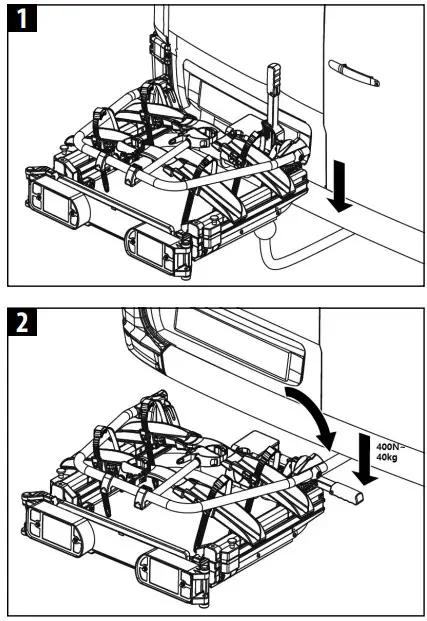
Park your vehicle on a level surface and apply the handbrake.
WARNING!
Personal injury or material damage due to damaged bike carrier.
Damage of the carrier, e.g. by bent parts, cracks or scratches, prevent the safe operation of the carrier.
- Do not fit the bike carrier if it is damaged in any way.
- Proceed as described in the chapter “Maintenance”
WARNING!
Personal injury or material damage due to loss of the bike carrier during the journey.
A faulty or defective connection between the bike carrier and trailer coupling can lead to the detachment of the bike carrier.
- Replace the trailer coupling if it is damaged.
- Clean the trailer coupling of dirt, dust and grease.
NOTE
There is often a layer of paint on the coupling ball. For the best possible attachment of the bike carrier, this paint coating should be carefully removed. Note the instructions of the coupling manufacturer.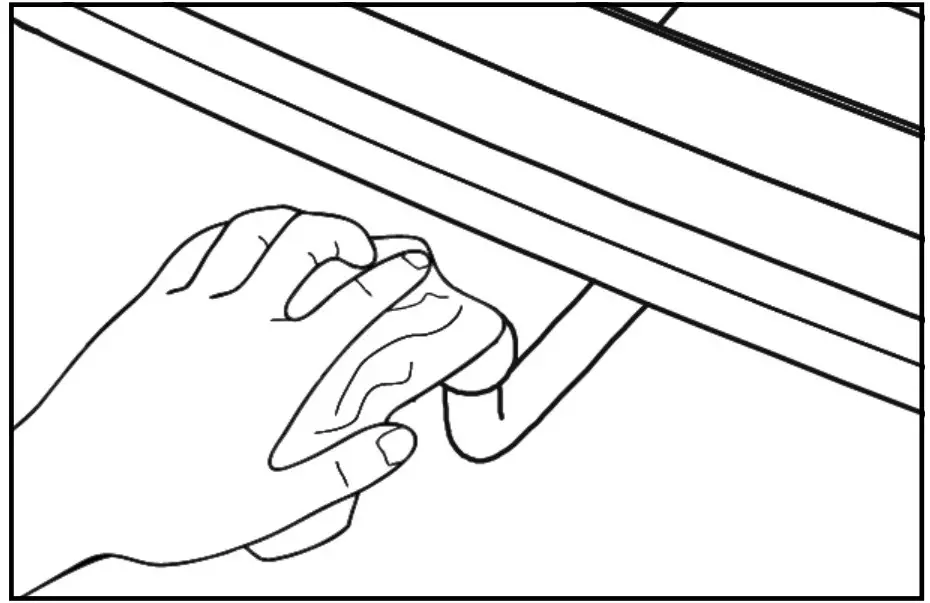
WARNING!
Personal injury or material damage due to unsecure bike carrier.
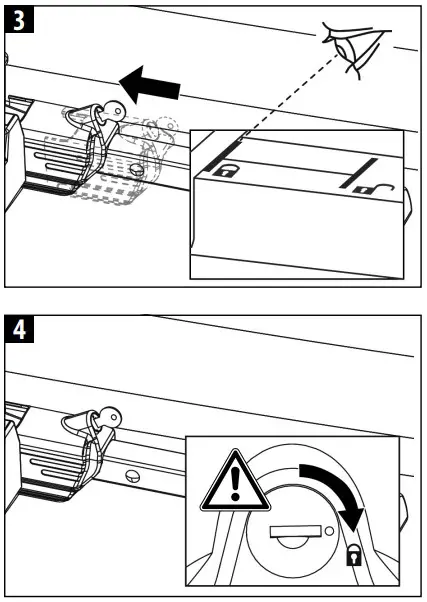
If the lever is not secured by locking, the bike carrier could become detached from the vehicle during the journey
- Always lock the bike carrier.
- Check that you have locked the lever and removed the key. Locking the bike carrier also impedes its possible loss by theft.
WARNING!
Personal injury or material damage due to loss of the bike carrier during the journey.
A loose connection between the bike carrier and trailer coupling can lead to detachment of the bike carrier.
- Check the bike carrier for secure attachment.
- Repeat steps 1 to 4 in the event of a loose connection. If this brings about no improvement, the quick connector may need to be adjusted, see chapter “Adjustment of the quick connector”.

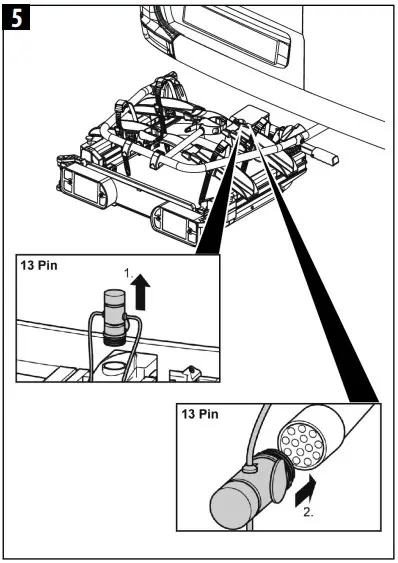
WARNING!
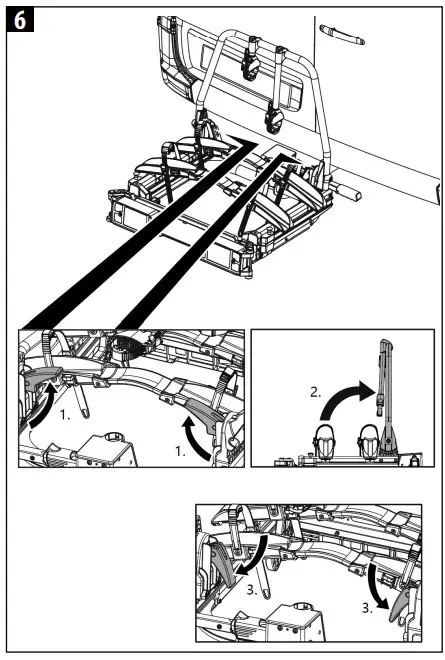
Personal injury or material damage due to unsecured U-tube or not fully extended wheel holders.
If the U-tube is not secured properly by the quick release levers, it could fold down during the journey
- Fold down the quick release levers until you feel they click into place.
- The wheel holders are extendable. To guarantee optimum stability of the bicycles, they should always be fully extended before use.


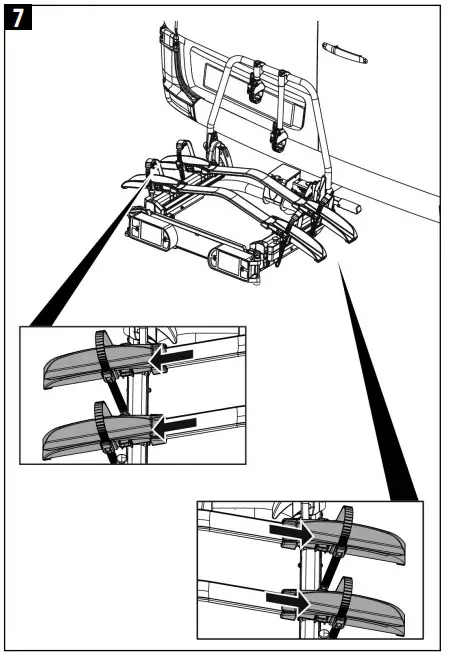
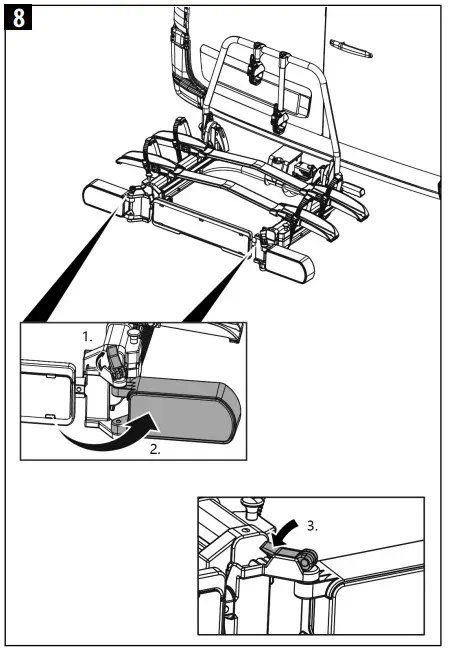
WARNING!
Personal injury due to not being seen by other road-users.
Driving with folded or a defective lighting system can lead to accidents.
- Fold down the quick release levers until you feel they click into place.
- Check the correct operation of the lighting system before the start of every journey.
- Replace any defective bulbs.
- Check the connection between the plug and coupling.


Mounting bicycles
ATTENTION!
Personal injury or material damage possible due to loose parts.
Improperly tightened parts on the bicycles can become loose during the journey.
- Remove all parts not firmly attached to the bicycle, such as e-bike battery, bicycle pump, bicycle bag, bicycle crate, bicycle basket, child seat, bottle or navigation device.
NOTE
In order to improve the driving characteristics of your vehicle, mount the heavier bicycle first. If carrying only one bicycle, this should be mounted in the rail closest to the rear of the vehicle.
NOTE
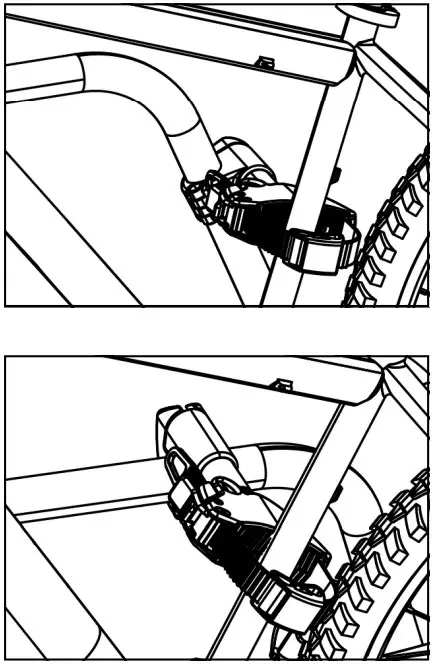
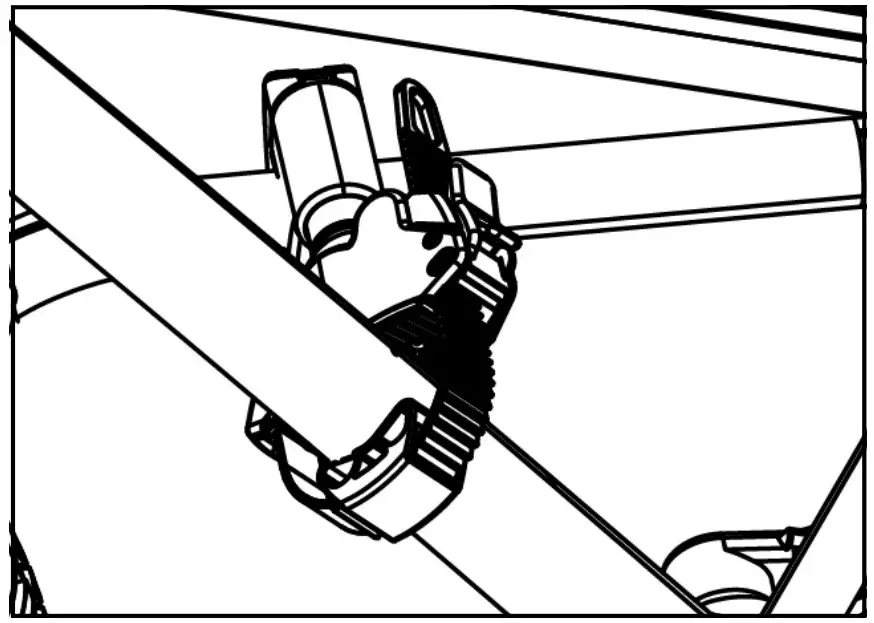
The frame holders are flexible to place on the U-tube, and are also flexible to place on your bicycle. Try the first time which position in your situation works best (and most stable affirmative is). It is important to place the frame holder as high as possible, giving maximum stability.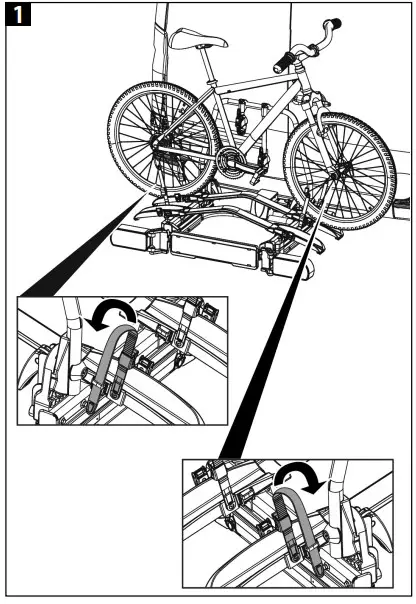
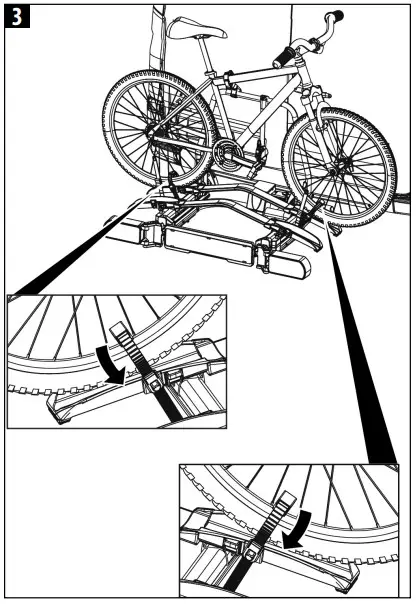
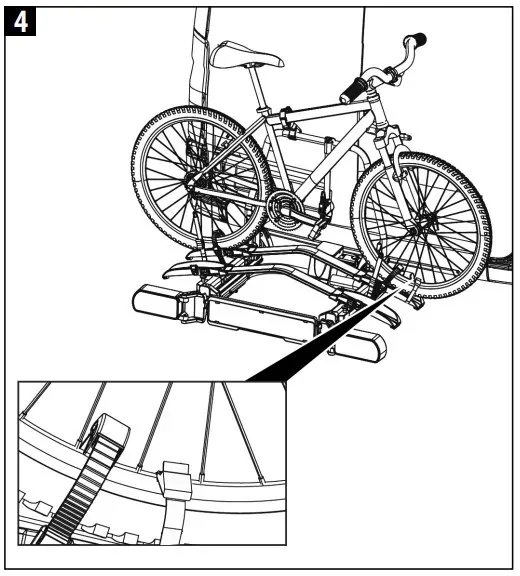
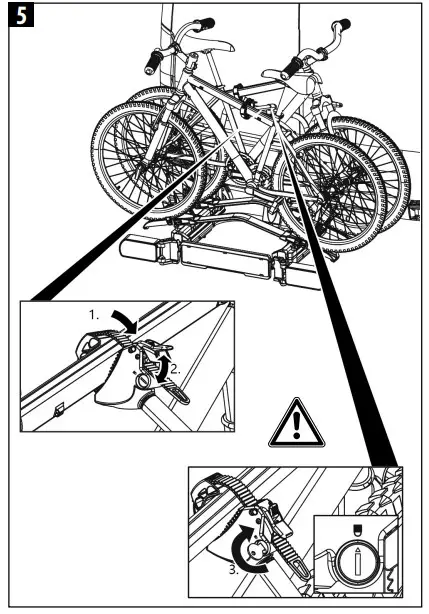
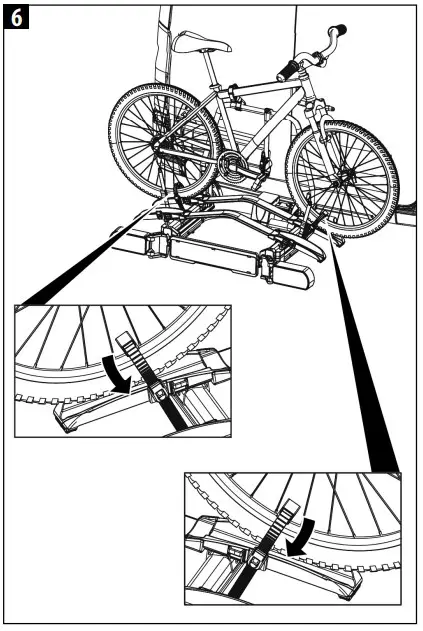
 WARNING!
Personal injury or material damage due to loss of the bicycles.
Carrying bicycles without using the safety straps can lead to accidents.
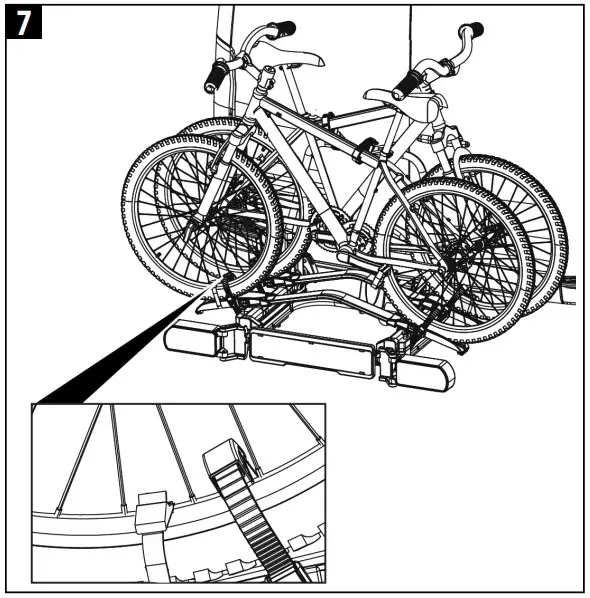
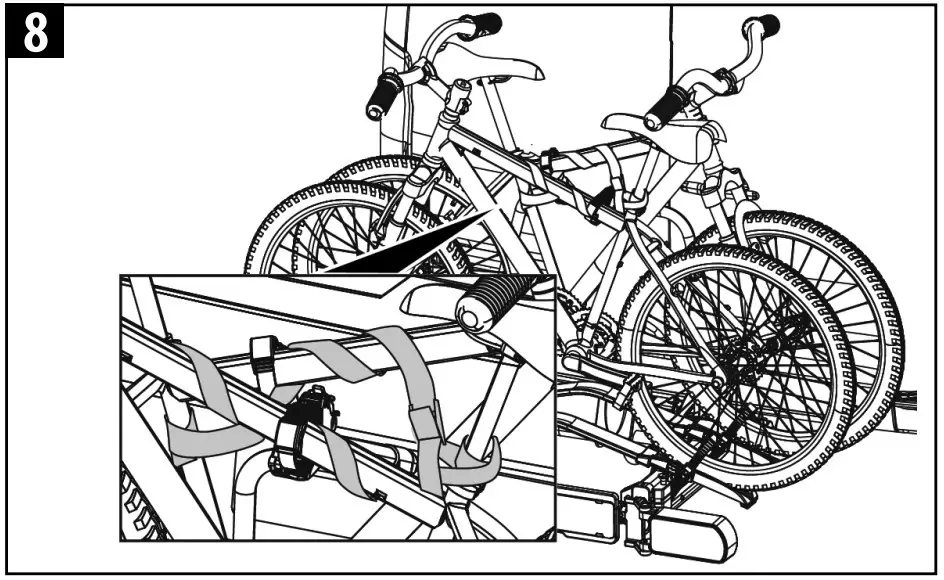
- Before the start of every journey, check the correct and firm attachment of the strap around the bikes and the Frame holder bracket of the carrier (see step 8).
- Before the start of every journey, check the correct and firm attachment of both straps around the front wheel, and the strap around the rear wheel of the bicycle.
- Tighten the straps if necessary. Before the start of every journey, check that the straps are not worn or damaged.
- A damaged or worn strap must be replaced with an undamaged one before driving. Only strap which are approved by EAL GmbH may be used for this.

WARNING!
Personal injury or material damage due to loss of a bicycle during the journey.
A loose connection between the bike carrier and bicycle can lead to detachment of the connection and loss of the bicycle.
- Check the bicycles for secure and complete attachment
- Repeat steps 1 to 8 of this chapter in the event of a loose connection.
Sliding the bike carrier, access to the luggage space
ATTENTION!
Material damage due to opening reardoor or tailgate.
The reardoor or tailgate could impact against the bike carrier and be damaged.
- Switch off electric tailgates and operate them manually.
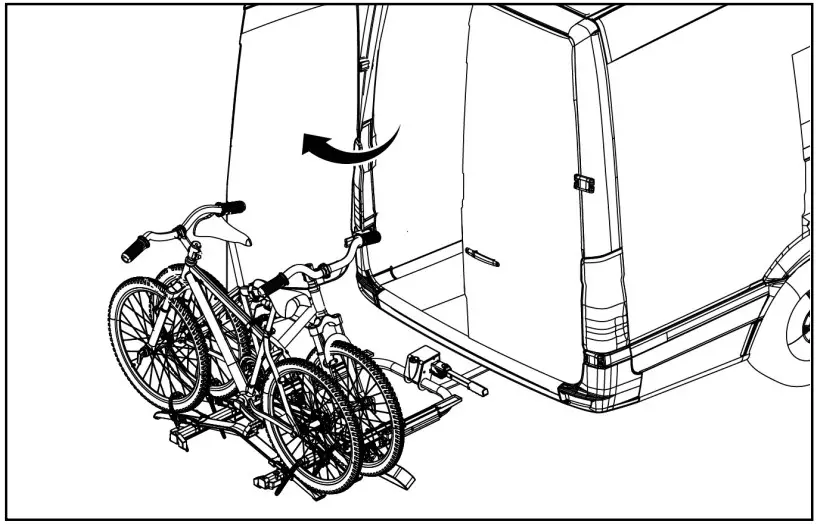
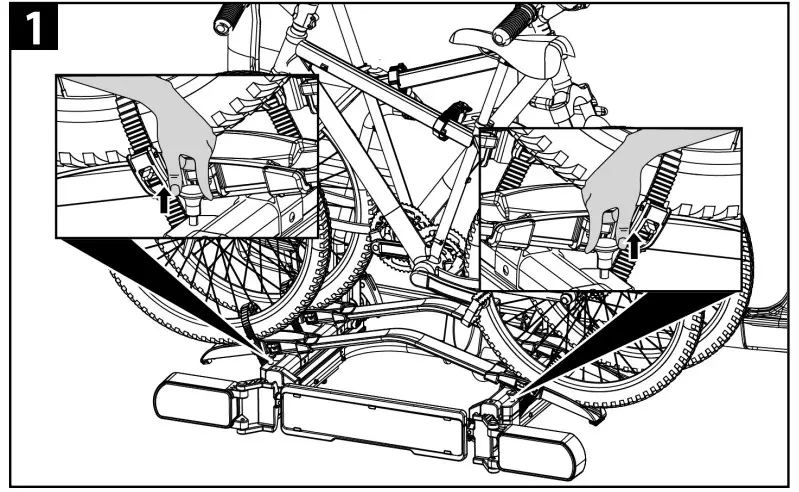
- Release the sliding mechanism by lifting both knobs.
- Extend the bike carrier before opening the reardoor or tailgate.
- Carefully open the reardoor or tailgate.

CAUTION!
Personal injury or material damage due to sudden sliding of the carrier.
Body parts or objects under or in front of the carrier when it is extended may be trapped.
- Make sure that there is nothing under the carrier.
- Keep all body parts, and particularly your head, clear, and maintain a suitable safety distance.
- Hold the upperframe of the carrier with both hands and carefully slide backwards (see fig. 2)


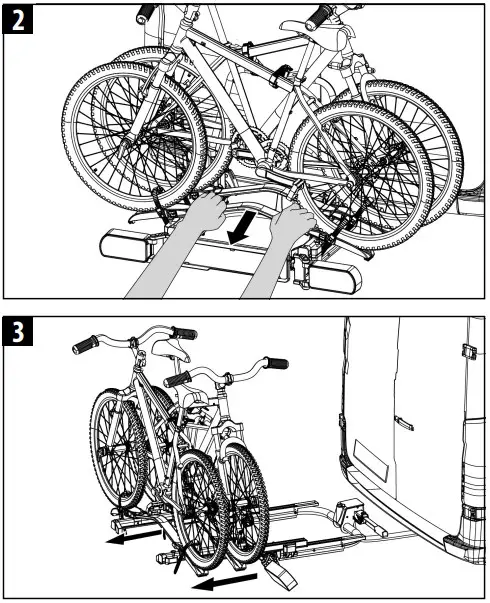
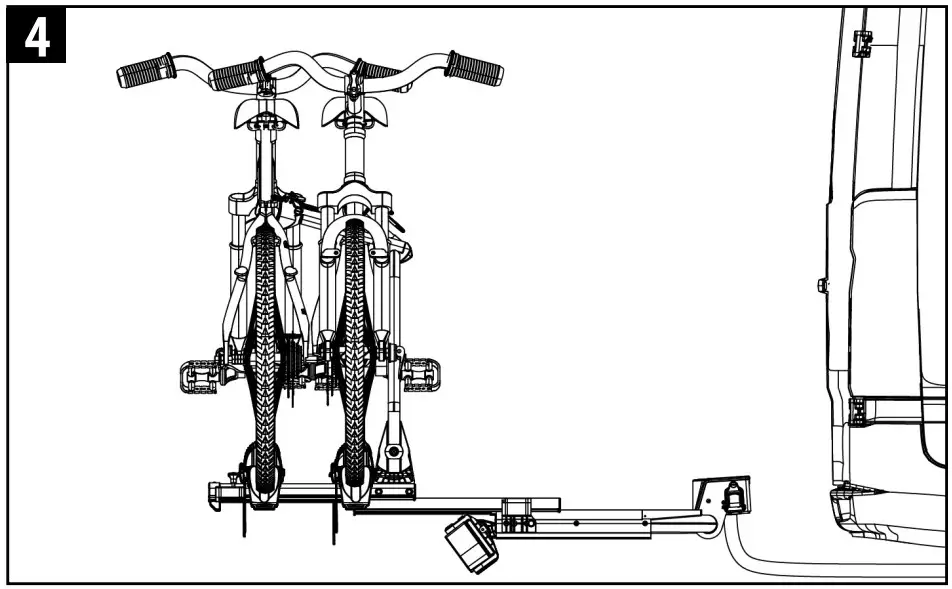
CAUTION!
Personal injury or material damage possible when sliding back the carrier.
Body parts or objects between the carrier and the vehicle when it is folded up may be trapped
- Remove any objects between the carrier and the vehicle.
- Hold the upper frame of the carrier with both hands and carefully slide forwards.
WARNING!
Personal injury or material damage possible due to loss of the bike carrier during the journey.
Riding with a bike carrier which is extended can result in detachment of the carrier or the coupling.
- Slide the carrier forwards before the start of the journey (see fi g. 5 of this chapter).
- The sliding mechanism locks back (you hear two clicks) by sliding back the entire bicycle carrier. Both levers are in the low position (see figure 6).
- Check that the bike carrier is properly secured in this position.

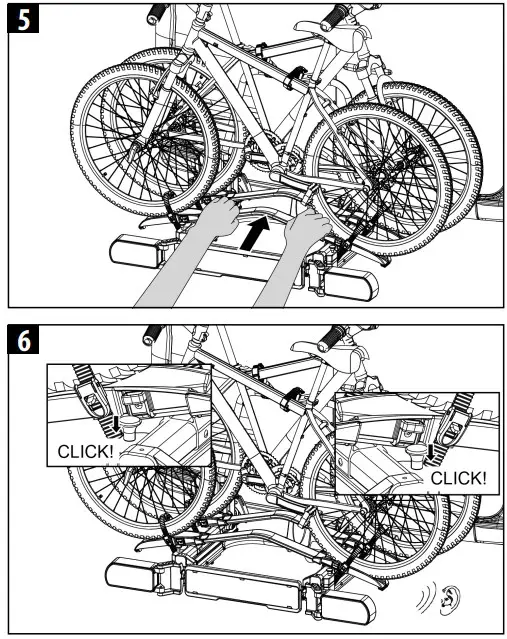
ATTENTION!
Before driving off , check that the bicycle carrier is fully pushed back and engaged.
Dismantling the bike carrier
To dismantle the bike carrier, proceed in the reverse order to fitting:
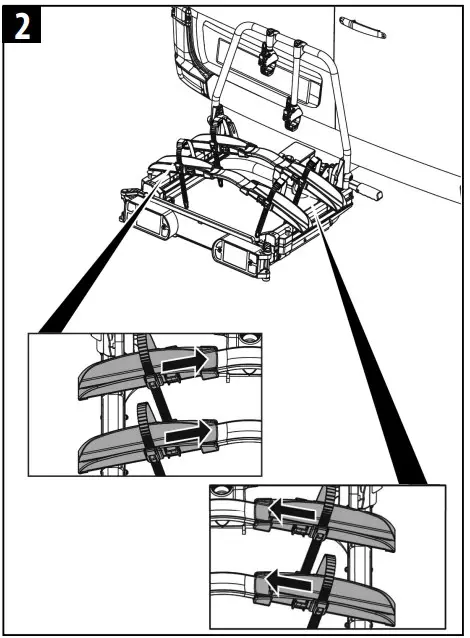
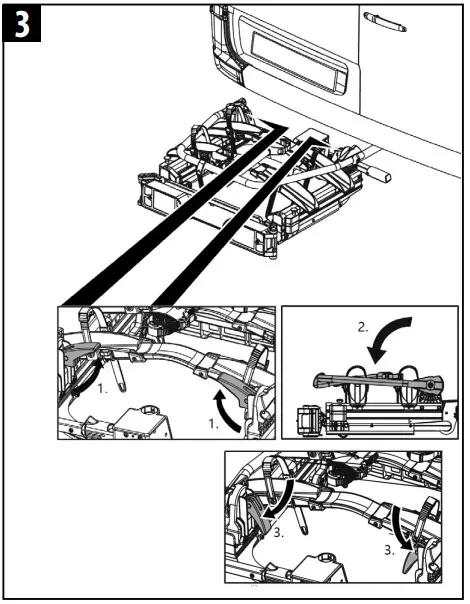
- Unlock the U-tube and rear lights and fold it down into the storage position.
- Fold the bike carrier together.
- Remove lighting connector from the car.
- Release the quick-connector lever and pull the bike carrier of the towbal
The ingenious folding system makes it convenient to carry and to store.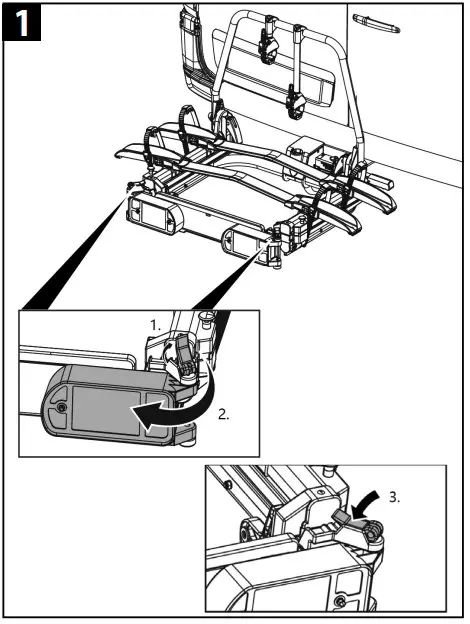
Cleaning and maintanance
Under normal conditions and use, the bike carrier only requires cleaning, and is otherwise maintenance free.
Clean the bicycle carrier regularly when used in coastal areas or in winter conditions in order to wash off any salt and prolong the service life of the bicycle carrier.
The bike carrier can be cleaned with a mild cleaning agent, with warm water and/or a soft cloth. First remove any coarse dirt and dust
Do not use any solvents or similar cleaning agents, since these can damage the bike carrier.
Leave the bike carrier to dry on its own. Do not use any electrical driers or other heating equipment to speed up the drying process.
Clean the bike carrier regularly when used in coastal areas or in winter conditions in order to wash off any salt and prolong the service life of the bike carrier.
Store the bike carrier in a dry and protected area when not used for extended periods (e.g. over winter) in order to prolong the service life of the bike carrier.
Always slide the bicycle carrier back into the transport position so no dirt or dust can remain in the sliding mechanism and limit a smooth sliding. In case of fouling of the sliding mechanism, rinse it with water.
Check the bike carrier for wear before the start of every journey. Defective parts and straps must be replaced.
The steel parts of the bike carrier are protected in the works against corrosion by a powder coating. If this paint coating is damaged, please have the damage rectified professionally as soon as possible.
Please refer to our customer service for the replacement of parts. Any modification of original parts and materials or the construction of bike carrier can adversely affect its safety and serviceability.
Disposal
Due to its lighting system, the bicycle carrier is an electrical device.
Do not dispose of electrical appliances in household waste! Discarded electrical and electronic equipment must be collected separately and recycled in an environmentally sound manner. Contact your municipal or city government on how to dispose of old electronic equipment. The materials are recyclable. You are making an important contribution to protecting our environment through recycling, material recycling or other forms of re-utilising old appliances!
Dispose of the bicycle rack in accordance with the laws and conditions in your country.
Adjustment of the quick release fastener
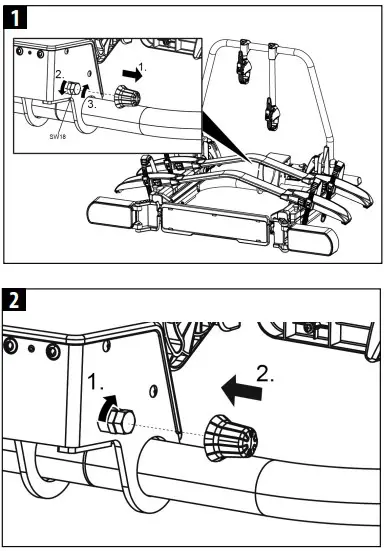
Carry out this maintenance operation only if the bike carrier cannot be fitted firmly to the trailer coupling, as described in the chapter “Fitting the bike carrier to the trailer coupling”.
- Remove the bike carrier from the trailer coupling, as described under “Dismantling the bike carrier”.
- Loosen the locking nut slightly (fig. 1).
- Screw in the setting screw one quarter of a turn (fig. 1)
- Tighten the locking nut (fig. 2)
- Check whether the carrier is now firmly seated on the trailer coupling, as described under “Fitting the bike carrier to the trailer coupling”. If not, repeat the above steps.

Plug assignment
The bicycle carrier is equipped with a lighting system. This is connected to the socket on the trailer coupling with a 13-pin plug. If your vehicle has a 7-pin connection instead of a 13-pin one, the corresponding assignments are listed below. This information is only for the retrofi tting by a specialised dealer. A retrofi tting by non-trained persons is not permitted.
7 Pin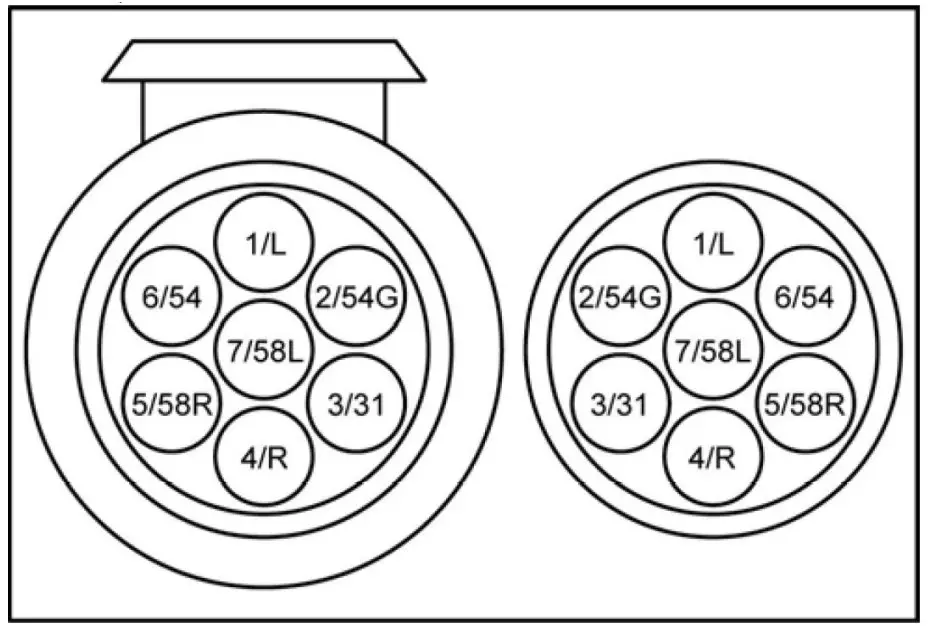
| 1/L | Turn signal light, left | yellow |
| 2/54G | Rear fog light | blue |
| 3/31 | Earth | white |
| 4/R | Turn signal light, right | green |
| 5/58R | Taillight , right | brown |
| 6/54 | Brake light | red |
| 7/58L | Taillight , left | black |
The reversing light is not working via the 7-pin plug!
13 Pin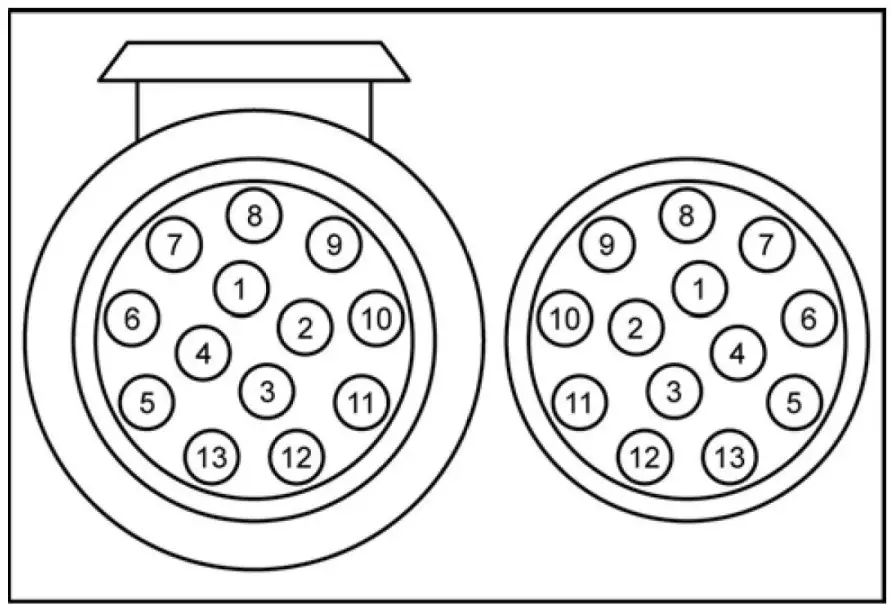
| 1 | Turn signal light, left | yellow |
| 2 | Rear fog light | blue |
| 3 | Earth | white |
| 4 | Turn signal light, right | green |
| 5 | Taillight , right | brown |
| 6 | Brake light | red |
| 7 | Taillight , left | black |
| 8 | Reserving light | grey |
| 9 | Not assigned | |
| 10 | Not assigned | |
| 11 | Not assigned | |
| 12 | Earth | |
| 13 | Not assigned |
12 V Bulb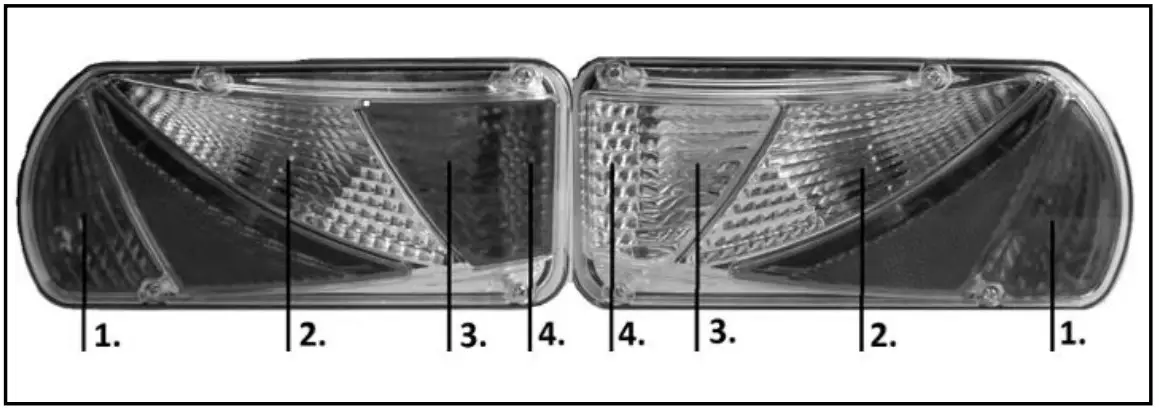
| 1 | 12 V 21/5 W BAY15d |
| 2 | 12 V 21 W BAY 15d orange |
| 3 | 12 V 21 W BAY 15d |
| 4 | 12 V C5 W |
Part list
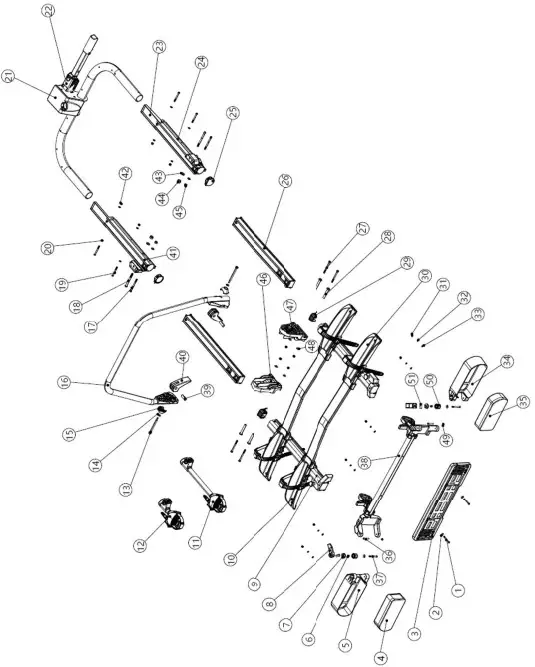
| Pos. | Description | QTY | Remark |
| 1 | Inner-hex bolt | 2 | M5*45 |
| 2 | Big wahser | 4 | M5 |
| 3 | License plate holder | 1 | |
| 4 | Rear light left | 1 | |
| 5 | Left lamp protector | 1 | |
| 6 | Lamp protector rotating spring | 2 | |
| 7 | Lamp protector rotating fastener | 2 | |
| 8 | Lamp rotating button | 2 | |
| 9 | Uppon sliding Alu-tube | 1 | |
| 10 | Plastic wheelholder left | 1 | |
| 11 | Lockable strap frameohlder long | 1 | Ø30 |
| 12 | Lockable strap frameohlder short | 1 | Ø30 |
| 13 | Hexagon socket head shoulder bolt | 2 | M6*Ø8*85 |
| 14 | Washer | 4 | M8 |
| 15 | Special plastic washer | 2 | |
| 16 | U-Tube | 1 | |
| 17 | Hex-socket round head bolt | 2 | M8*100 |
| 18 | Hex-socket round head bolt | 2 | M10*105 |
| 19 | Hex-socket round head bolt | 4 | M6*60 |
| 20 | Washer | 8 | M6 |
| 21 | Quick connector cover | 1 | |
| 22 | Quick connector | 1 | |
| 23 | Back-cap of buttom sliding tube | 2 | |
| 24 | Buttom sliding tube right | 1 | |
| 25 | Front-cap of buttom sliding tube | 2 | |
| 26 | Mid-sliding tube | 2 | |
| 27 | Hex-bolt | 4 | M6*75 |
| 28 | Linner tube | 4 | |
| 29 | Back-cap top slidign tube | 2 | |
| 30 | Plastic wheelholder right | 1 | |
| 31 | Cap nut | 6 | M5 |
| 32 | Spring washer | 6 | M5 |
| 33 | Washer | 6 | M5 |
| 34 | Right lamp protector | 1 | |
| 35 | Carman rear light right | 1 | |
| 36 | Hex-socket round head bolt | 2 | M5*35 |
| 37 | Hex-socket round head bolt | 2 | M5*30 |
| 38 | Lamp tilting subassembly | 1 | |
| 39 | Cylinder nut | 2 | M6 |
| 40 | Plastic handle | 2 | |
| 41 | Buttom sliding tube left | 1 |

 vertrieb.com
 Vertrieb Kfz-, Caravan-, Anhänger-und, Fahrradträger und Zubehör