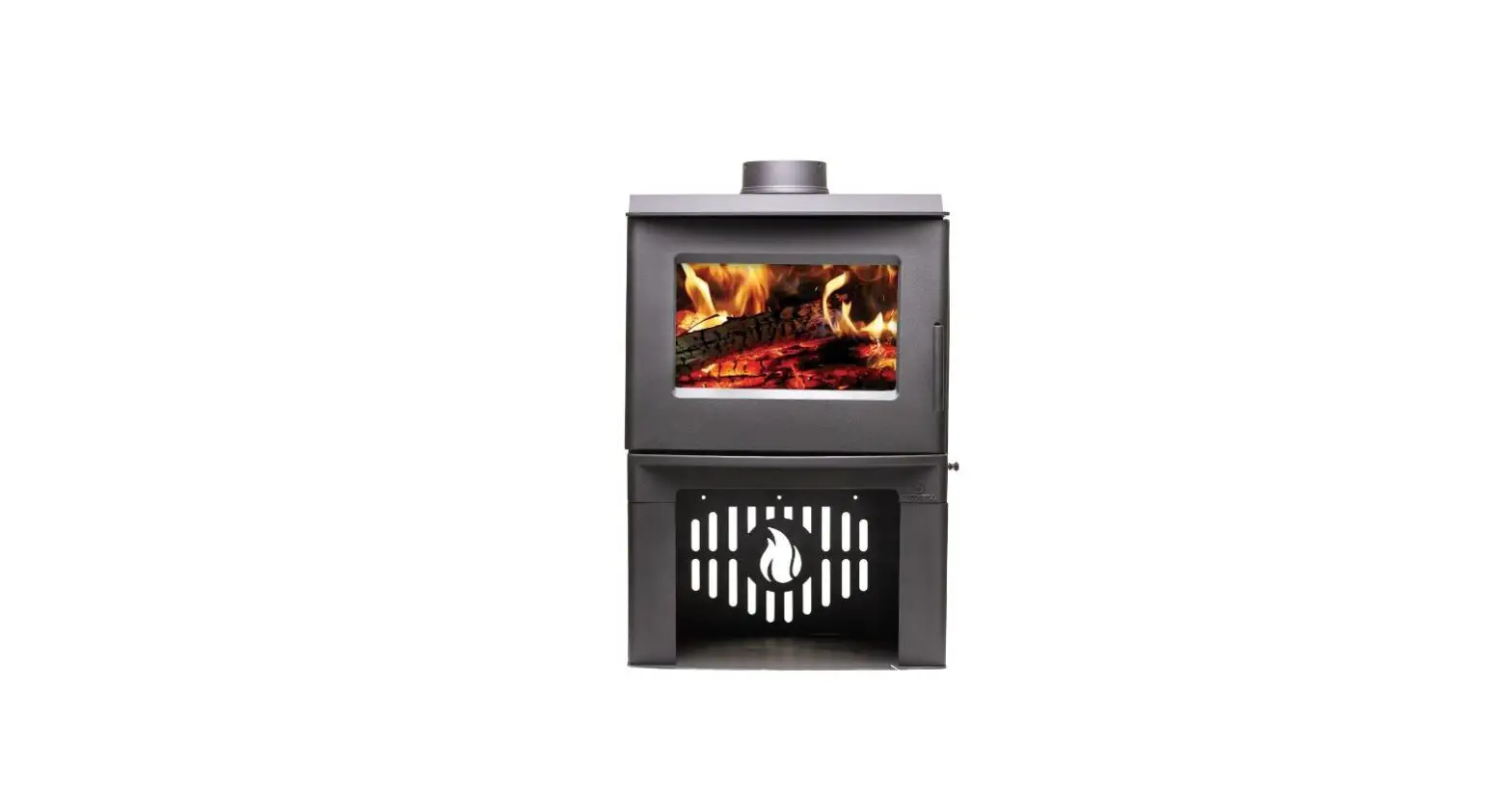
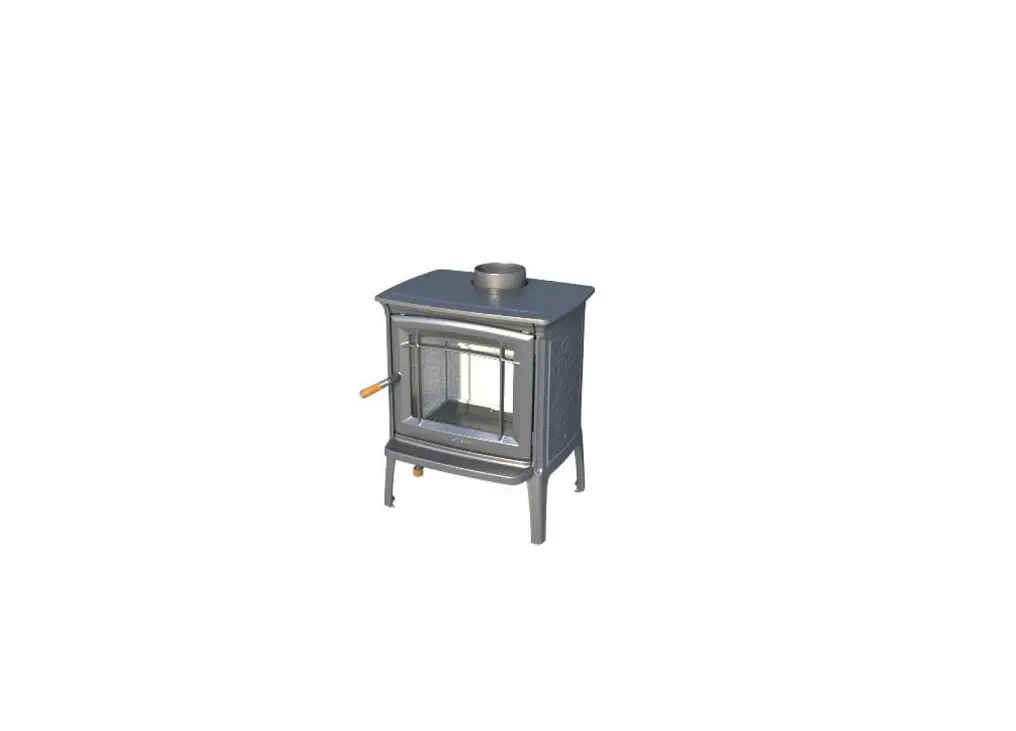
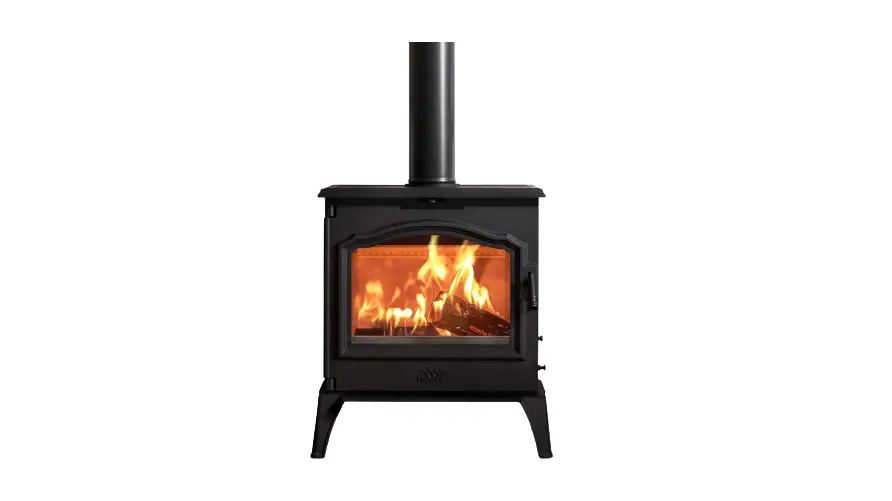
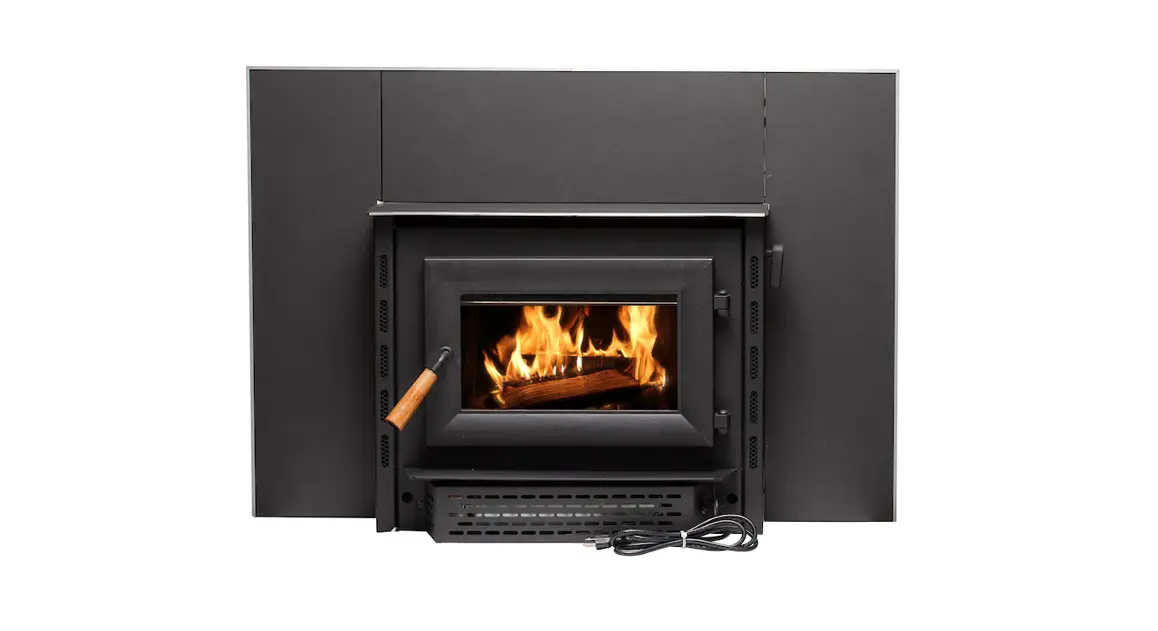
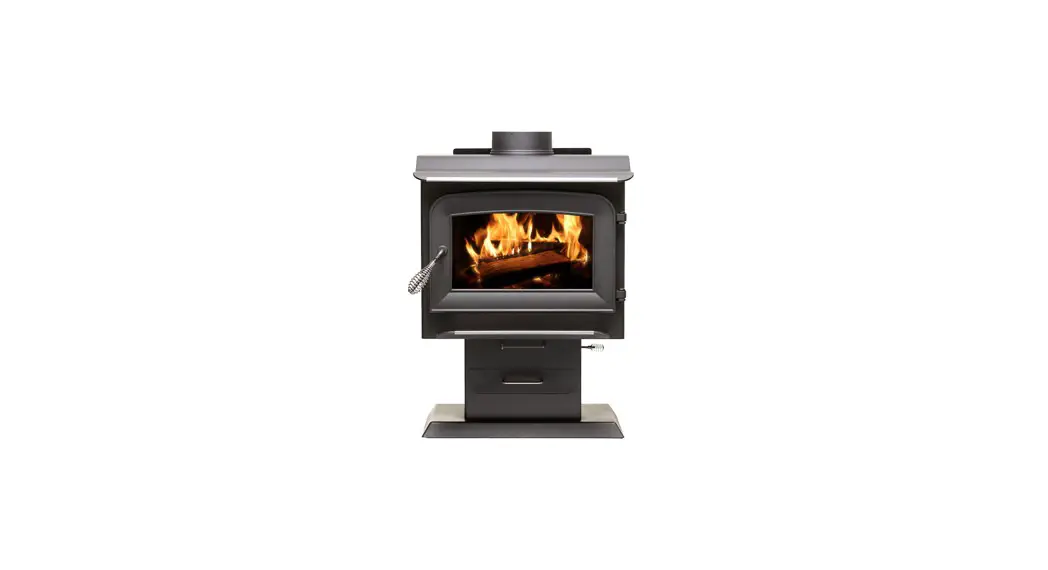
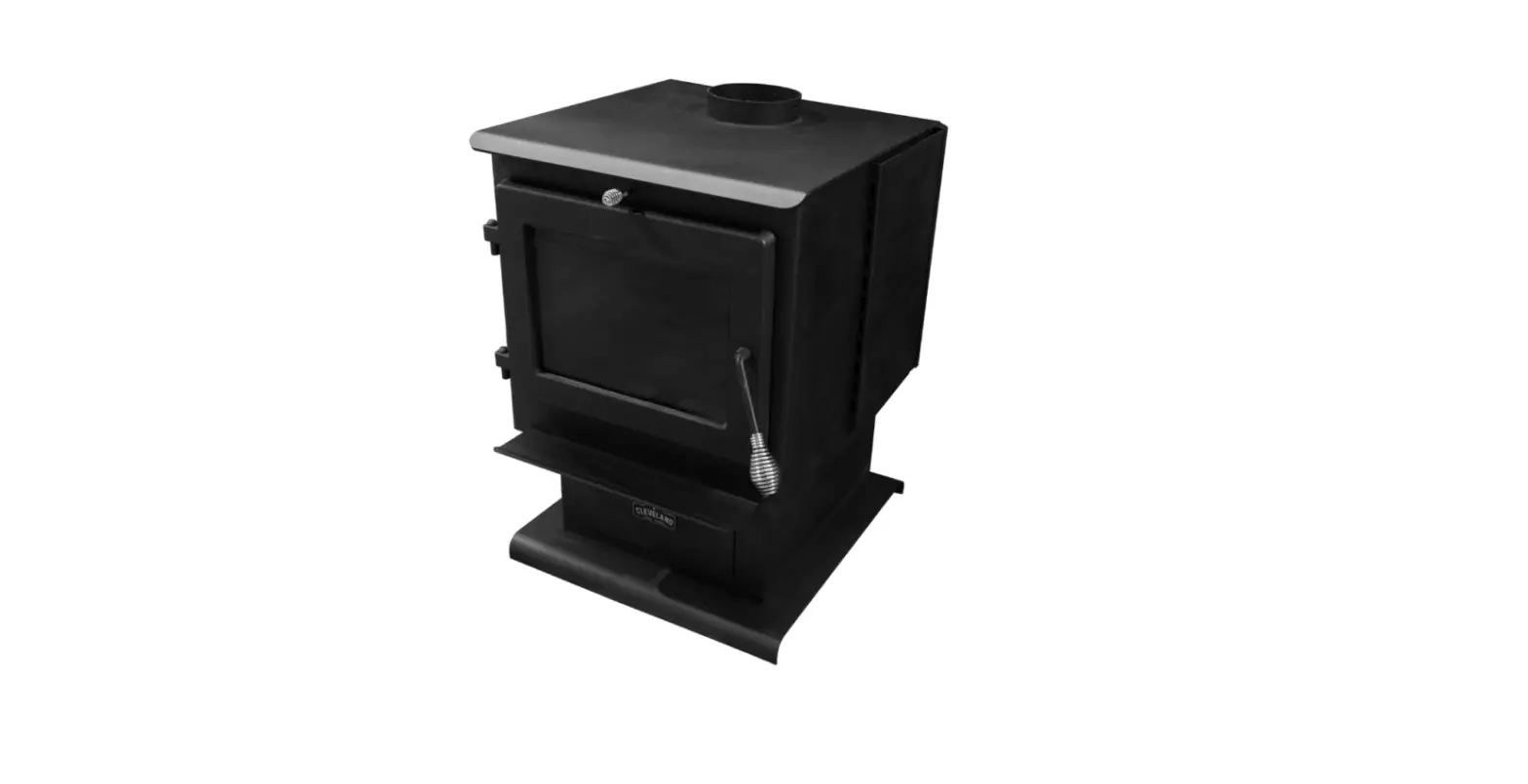
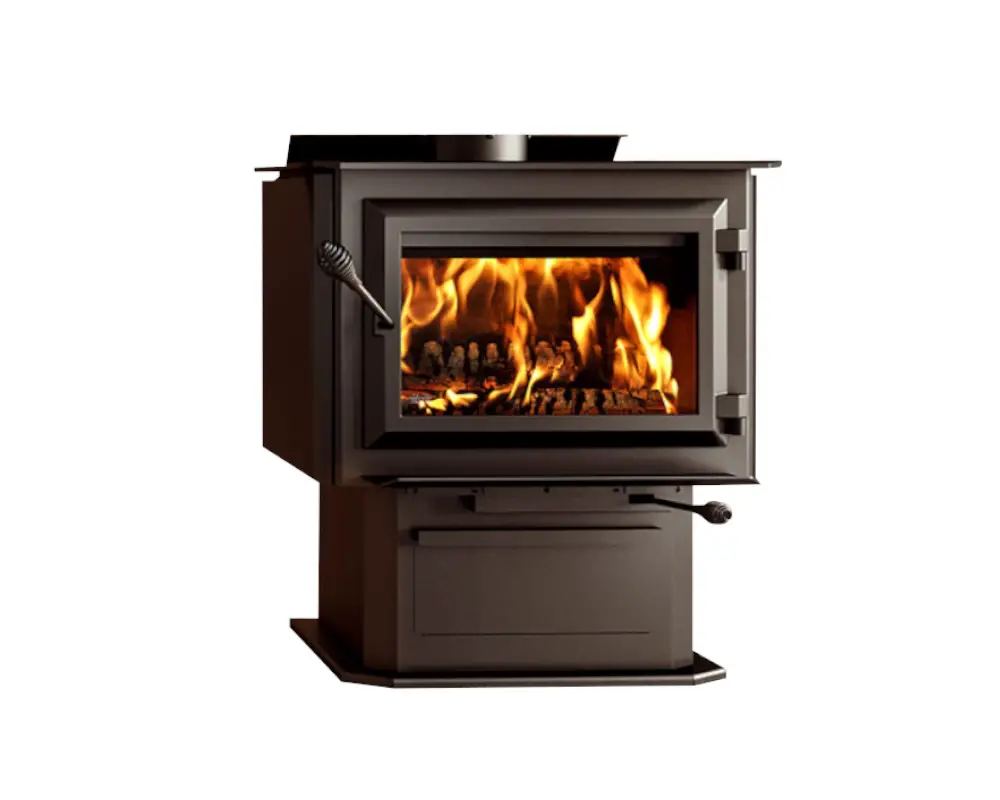
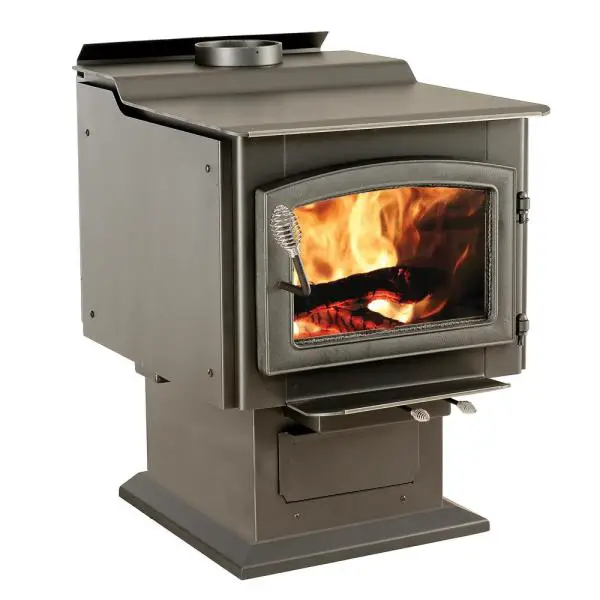
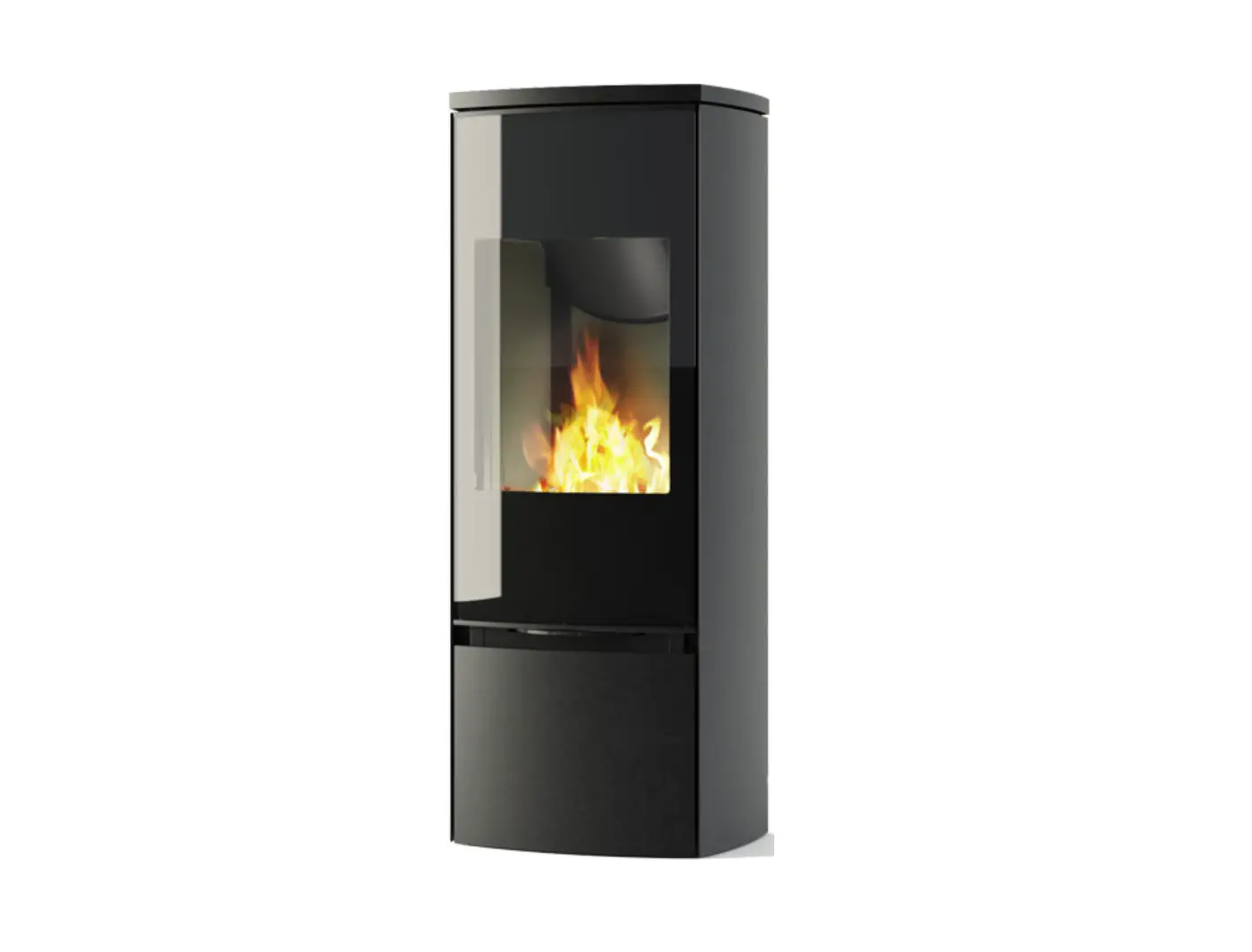
ESW0017 Wood Stove
Product Information
Model: 15-W06 (ESW0017)
Manufacturer: Englander Stoves
Website: www.englander-stoves.com
Customer Support: 1 (877) 356-6663
Email: [email protected]
Safety Standards: ULC S627 and UL 1482
Mobile Home Use: Approved for U.S. only, in accordance with
Manufactured Home and Safety Standard (HUD), CFR 3280, Part 24.
Product Usage Instructions
- Read the entire manual before installing and using the wood
fuel-burning appliance. - Keep children, furniture, fixtures, and all combustibles away
from the heating appliance. - Follow the installation instructions outlined in the manual for
safety and protection. - Contact local building or fire officials to inquire about
restrictions and installation inspection requirements in your area,
including permits. - The wood heater needs periodic inspection and repair for proper
operation. Consult the owner’s manual for further information. - It is against federal regulations to operate the wood heater in
a manner inconsistent with the operating instructions in the
owner’s manual. - If you experience any problems with the unit, do not return it
to the dealer. Contact technical support at 1-877-356-6663. - If using the wood unit in a mobile home, follow the
installation section of the manual for details on outside
combustion air hookup. Ensure compliance with Manufactured Home and
Safety Standard (HUD), CFR 3280, Part 24. - Inspect the firebox daily for ash accumulation. Remove excess
ash and follow disposal instructions in the owner’s manual. Do not
allow ash to cover the dog box hole and use the ash dump plug in
the firebox for temporary storage of ashes in the ash pan below.
Remember to replace the ash dump plug.
Note: The manufacturer’s manual is available for free download
on their website. Resale of the manual is strictly prohibited, and
information from unauthorized sources may not be reliable.
15-W06
(ESW0017 MODEL) INSTALLATION & OPERATION MANUAL
www.englander-stoves.com Questions 1 (877) 356-6663 [email protected]
Safety tested according to ULC S627 and UL 1482 standards by an accredited laboratory.
Manufactured By: Stove Builder International inc., 250, rue de Copenhague, St-Augustin-de- Desmaures (Québec) Canada, G3A 2H3
CAUTION
Please read this entire manual before installation and use of this wood fuel- burning appliance. Keep children, furniture, fixtures and all combustibles away from any heating appliance.
SAVE THESE INSTRUCTIONS
SAFETY NOTICE
Failure to follow these instructions can result in property damage, bodily injury or even death. For your safety and protection, follow the installation instructions outlined
in this manual. Contact your local building or fire officials about restrictions and installation inspection requirements (including permits) in your area.
THIS WOOD HEATER NEEDS PERIODIC INSPECTION AND REPAIR FOR PROPER OPERATION. CONSULT THE OWNER’S MANUAL FOR FURTHER INFORMATION. IT IS AGAINST FEDERAL REGULATIONS TO OPERATE THIS WOOD HEATER IN A MANNER INCONSISTENT WITH THE
OPERATING INSTRUCTIONS IN THE OWNER’S MANUAL.
46328A 2023-01-23
IMPORTANT: IF YOU HAVE A PROBLEM WITH THIS UNIT, DO NOT RETURN IT TO THE DEALER. CONTACT TECHNICAL SUPPORT @ 1-877-356-6663
Mobile Home Use (Approved for U.S. ONLY): This freestanding wood unit is approved for mobile home or doublewide installation with the outside combustion air hookup. See the “Installation” section of this manual for details pertaining to mobile home installations. Mobile home installation must be in accordance with the Manufactured Home and Safety Standard (HUD), CFR 3280, Part 24.
Retain for your files
Model Number Date of Purchase Date of Manufacture Serial Number
* This information can be found on the safety tag attached to the rear of the unit. Have this information on hand if you phone the factory or your dealer regarding this
product.
CAUTION
· Keep children away. · Supervise children in the same room as this appliance. · Alert children and adults to the hazards of high temperatures. · Do NOT operate with protective barriers open or removed. · Hot while in operation! Keep clothing, furniture, draperies and other
combustibles away. Contact may cause skin burns! · Do NOT over-fire your unit. · Installation MUST comply with local, regional, state and national codes and
regulations. · Consult local building, fire officials or authorities having jurisdiction about
restrictions, installation inspection, and permits.
IMPORTANT NOTE: The ash pan on this wood stove must be installed correctly before operation. The locking lip on the bottom of the ash pan must be slid INSIDE the stove pedestal so that it can lock the ash pan in place, flush against the pedestal. Tilt the ash pan up toward you as you slide it into the opening to do this. If the locking lip is on the outside of the stove pedestal, it is incorrectly
installed.
INCORRECT INSTALLATION
LOCKING LIP
Ash Dump
Dog Box
CORRECT INSTALLATION
See Below*
*DAILY –Inspect the firebox for ash accumulation; remove excess ash and follow instructions in your owner’s manual regarding disposal. Ash should not be allowed to accumulate in the stove to the point that it covers the dog box hole. The ash dump plug in the firebox may be removed and ashes raked into the ash pan below for temporary storage. Remember to replace the ash dump plug.
WELCOME!
Introduction · Thank You .. …………………………… 5
Specifications · Heating Specifications……………… 6 · Dimensions…………………………….. 6 · EPA Compliance ……………………… 6
Installation · Installation Overview ………………. 7 · Clearances to Combustibles……… 8 · Venting Introduction……………….. 9 · Venting Guidelines ………………….. 9 · Additional Venting Information .. 10 · Wall Pass-Throughs………………… 11 · Approved Venting Methods
o Through the Wall ……….. 12 o Through the Ceiling …….. 13 o Masonry Chimney ……….. 14 o Masonry Fireplace ………. 15 · Mobile Home Installation ……….. 16 · Outside Air Hook-Up ………………. 16 · Floor Protection …………………….. 17
Operation · Break-In Fires ……………………….. 18 · Continuous Operation……….. 18-19 · Safety Notes …………………….. 20-21
Maintenance · Stove Maintenance ……………….. 22 · Inspecting Gaskets…………………. 23 · Finish …………………………………… 23
Replacing Components · Glass ……………………………………. 24 · Burner Tubes ………………………… 25 · Ceramic Fiberboard……………….. 25 · Heat Shield …………………………….. 25
Optional Accessories · AC-16/AC-30 Blower ……………… 26
Important Information · EPA and Safety Info ……………… 27
Troubleshooting Guide · Troubleshooting ……………………. 32
Illustrated Parts Detail · Parts List ………………………………. 33 · Brick Layout ………………………….. 34
Warranty · Sample Tag……………………………. 35 · Warranty Details ……………………. 36 · Important Notice ……………………. 37 · Warranty registration Form …….. 38
This manual is available for free download on the manufacturer’s web site. It is a copyrighted document and resale is strictly prohibited. The manufacturer may update this manual occasionally and cannot be responsible for problems including injuries or damages resulting from the use of information found in any manual from unauthorized sources. PLEASE NOTE: If you purchased this model from certain stores, their model number may end in “L” “LC” “H” “CT”,
etc. This manual does apply to those models as well.
CAUTION: Stove is heavy. In addition, when handling any sheet metal products, be aware that there may be sharp edges or burrs. Although we make every effort to eliminate any sharp edges, please use caution when handling any metal parts. Remember to disconnect (unplug) the stove from the power source and allow it to completely cool down
before performing any maintenance.
Thank you for purchasing this fine product from Englander!
Englander was started, and is still owned by, a family that believes strongly in a “Do It Yourself” spirit that’s one reason you found this product at your favorite “Do It Yourself” store.
We intentionally design and build our stoves so that any homeowner can maintain his or her unit with basic tools, and we’re always more than happy to show you how to do the job as easily and as inexpensively as possible.
From our free, downloadable service sheets to our “wizard-style,” click-through Troubleshooting guide on our web site, we have always tried to help our customers stay “heat-ready,” especially when oil and electricity prices continue to skyrocket.
Please look at our vast Help section on our web site and call our Technical Support department at (877) 356-6663 if you need any help with your unit. We are nearly always able to help “walk you through” any repairs, problems or questions you may have.
PLEASE NOTE: While information obtained on our web site and through our 877 number is always free of charge, there will be a service charge incurred with any “on-site” repairs or maintenance that we may arrange.
Wishing you years of efficient, quality and “comfy” heating, Englander Technical Support Department
www.englander-stoves.com 1 (877) 356-6663
REMOVABLE DOOR HANDLE
Please Note: This unit comes with a removable door handle, which must be removed from the stove when not being used to open or close the door. To use the handle, simply place it onto the door handle rod that is located on the stove door. The handle may then be stored in the hole that is located on the right side of the pedestal when not in use.
CAUTION Handle will get HOT if left on stove.
Door Handle Rod
Handle Storage Hole
Heating Specifications
SPECIFICATIONS
· Maximum Burn Time** ………………………………………………………………….. · Approximate Square Footage Heated*** ……………………………………….. · Flue Collar …………………………………………………………………………………….
Upto14 hours 2,400 sq. ft. 6.0 in. round
Dimensions (Inches)
272-7in3./W8 ide
262-i3n.3/D4eep
34 1/4 3365-i3/n.4 High
Dimensions are approximate. Be sure to locate your stove in the installation area before installing pipe, etc.
EPA and Safety Compliance Specifications
·
EPA Compliance Status ………………….. Certified to comply with 2020 particulate emission
standards using cord wood.
·
EPA Test Standard …………………………………. ASTM E3053-17, EPA Alt 125, CSA B415.1-10
· Particulate Emissions …………………………………………………………………. 1.8 grams/hr
· CO Emissions ………………………………………………………………………………… 1.9 grams/min
· Heat Output Range …………………………………………………………………… 17500 65900 Btu/hr
· Efficiency* ……………………………………………………………………………………… 72% HHV
· Certified To ………………………………………… UL 1482-2011(R2015) and ULC-S627-00(R2016)
** – Maximum burn times are heavily dependent on the type of wood burned in the stove; as such, these numbers may vary. *** – The maximum heating capacity of this unit can vary greatly based on climate, construction style, insulation and a myriad of other factors. Use this information in conjunction with a BTU loss calculation for your home to determine if this unit will be sufficient for your needs.
TAMPER WARNING: “This wood heater has a manufacturer-set minimum low burn rate that must not be altered. It is against federal regulations to alter this setting or otherwise operate this wood heater in a manner inconsistent with operating instructions in this manual.”
“This wood heater needs periodic inspection and repair for proper operation. It is against federal regulations to operate this wood heater in a manner inconsistent with operating instructions in this manual.”
INSTALLATION
Installation Overview
When choosing a location for your new stove, there are a multitude of factors that should be taken into account before beginning the installation.
1. Traffic Patterns To help prevent accidents, the stove should be placed in a location where it is out of the way of normal travel through the home.
2. Heat Flow and Efficiency When deciding on a location for the stove, consider the way heat moves throughout your home. Install the stove where you need the heat; basement installations often do not allow sufficient heat to flow to the upper floors and a top floor installation will not allow any heat to reach the floors below. Always consider that heat rises and will take the path of least resistance while it is still hot.
3. Exhaust Location The engine which drives a wood stove is the chimney system, so it is important to consider precisely how the chimney system will be integrated into the stove installation. Ideally, a wood stove chimney will run completely vertical from the flue collar of the unit all the way to the termination point above the roof line. Keeping the entire chimney system inside the heated envelope of the home will ensure a strong, easy to initiate draft in the chimney. Although exterior chimney systems often function properly, they are more likely to suffer from cold down drafts at start up or provide weak draft to the unit. Also, consider the cross-sectional area of the chimney; although existing masonry chimneys can often be used, a large external masonry chimney will result in a unit that is difficult or impossible to operate properly. In that case, an insulated chimney liner will often be required to supply the necessary draft.
4. Wall Construction Locating the stove so that the exhaust system can pass between studs will simplify the installation and eliminate the need to reframe any sections of the wall or ceiling to accommodate the wall thimble or ceiling box.
WARNING
· Do not store or use gasoline or other flammable vapors and liquids in the vicinity of this or any other appliance.
· Do Not Over-fire If any external part starts to glow, you are over-firing. Reduce intake air supply. Over-firing will void your warranty.
· Comply with all minimum clearances to combustibles as specified. Failure to comply may result in a house fire.
· Tested and approved for cordwood only. Burning any other fuel will void your warranty.
Clearances to Combustibles
INSTALLATION
F
Parallel Wall Installation
Corner Installation
WARNING – INSTALL VENT AT CLEARANCES SPECIFIED BY THE VENT MANUFACTURER
Single Wall Chimney Connector Unprotected Surface with side shields
Double Wall Chimney Connector Unprotected Surface with side shields
Unit to Side Wall
Chimney Connector
to Side Wall
Chimney Connector to
Rear Wall
Unit to Rear Wall
A in (cm)
B in (cm)
C in (cm)
D in (cm)
19 (48.3)
30 (76.2)
12 (30.5)
6 (15.2)
19 (48.3)
30 (76.2)
12 (30.5)
6 (15.2)
Unit to Corner
E in (cm)
5 (12.7)
5 (12.7)
Chimney Connector to Corner
F in (cm)
17 (43.2)
17 (43.2)
Clearance required between the stovetop and the ceiling above (US) is 30 inches (or 762 MM for Canada) Notes for this unit: The product may differ slightly from the diagrams. The clearances are the minimum for this unit and may need to be increased for blower installation or to have proper ventilation clearances. Observe all ventilation manufacturer clearances and local codes.
Venting Introduction
INSTALLATION
Venting Guidelines
This wood stove operates on a natural draft system, in which the chimney system pulls air through the stove. This unit must be installed in accordance with the following detailed descriptions of venting techniques; not installing the stove in accordance with the details listed here can result in poor stove performance, property damage, bodily injury or death. Avoid make-shift compromises when installing the venting system. Englander is not responsible for any damage incurred due to a poor or unsafe installation.
Be certain that all aspects of the venting system are installed to the venting manufacturer’s instructions, particularly the required clearances to combustibles. Also, be certain to use an attic radiation shield to prevent insulation from contacting a chimney which passes through an attic.
The chimney system is the “engine” which drives a wood stove, so it is imperative for proper unit function that the venting system be installed exactly as described in the following section.
If questions arise pertaining to the safe installation of the stove, our Technical Support line (877-356-6663) is available. Contact your local code official to be certain your installation meets local and national fire codes, and if you’re uncertain about how to safely install the stove, we strongly recommend contacting a local NFI certified installer to perform the installation.
· ALWAYS install vent pipe in strict adherence to the instructions and clearances included with your venting system.
· DO NOT CONNECT THIS UNIT TO A CHIMNEY FLUE SERVING ANOTHER APPLIANCE.
· DO NOT install a flue pipe damper or any other restrictive device in the exhaust venting system of this unit.
· USE an approved wall thimble when passing and a ceiling support/fire stop when passing through a ceiling.
· INSTALL three sheet metal screws at every chimney connector joint.
· AVOID excessive horizontal runs and elbows, as both will reduce the draft of the venting system and will result in poor stove performance.
· INSPECT your venting system often, to be certain it is clear of creosote, fly-ash and other restrictions.
· CLEAN the venting system as detailed in the maintenance section of this manual.
· ADHERE to the 10-3-2 rule regarding chimney terminations.
· INSTALL single wall chimney connector with the male end down to prevent creosote leakage. Follow double wall chimney connector manufacturer’s instructions regarding proper pipe installation.
Where passage through a wall or partition of combustible construction is desired, the installation shall conform with CAN/CSA-B365.
WARNING: Venting system surfaces get HOT, and can cause burns if touched. Noncombustible shielding or guards may be required.
INSTALLATION
Additional Venting Information · Do not mix and match components from different pipe manufacturers when assembling your venting system (i.e. Do NOT use venting pipe from one manufacturer and a thimble from another).
· We require a minimum chimney height of 15.0 ft. Chimney systems shorter than this may not create the amount of draft which is required to operate this wood burning unit.
· Do not use makeshift compromises when installing the venting system; have existing chimney systems inspected before use and be certain all new chimney systems are installed to the manufacturer’s specifications and with only UL listed components (ULC if Canada).
· Prefabricated venting systems used for this stove must be listed to CAN/ULC S629 (Canada)and UL 103HT (US).
· Never install a draft inducer or any other system which increases the natural draft of the chimney; similarly, do not install a barometric or stovepipe damper with this unit.
· Never use single wall or double chimney connector as a chimney system; never pass either type of chimney connector through a combustible wall without carefully following the manufacturer’s instructions and those listed in the following page on Wall PassThroughs. NEVER pass chimney connector through an attic, floor, closet or roof.
· Only use 24 gauge MSG black single wall chimney connector or UL Listed (ULC if Canada) double wall chimney connector.
Single Wall Chimney Connector Installation
The male end of single wall chimney connector is installed facing down so that any liquid creosote in the flue will run into the unit instead of onto the outside of the pipe (the natural draft in the chimney system will prevent smoke leakage at the joints).
Flue Gas Direction
Crimped or male end of single wall chimney connector must face down.
Fasten each single wall chimney connector joint with three sheet metal screws.
WARNING
· INSTALL VENT AT CLEARANCES SPECIFIED BY THE VENT MANUFACTURER. · HOT! Do not touch! Severe burns or clothing ignition may result. · Glass and other surfaces are hot during operation.
Wall Pass-Throughs
INSTALLATION
In Canada, the installation must conform to CAN/CSA-8365 when passing through combustible construction.
INSTALLATION
Approved Venting Method 1: Through the Wall Factory Built Chimney
10 ft.
Termination Cap
2.0 ft.
3.0 ft.
Storm Collar Roof Flashing
The 10-3-2 Rule: The chimney system must terminate 3.0 ft. above the point where its centerline passes through the roof AND the chimney must terminate 2.0 ft. above any part of the dwelling within a 10 ft. radius of the chimney.
18.0 in.
Wall Thimble
Chimney Connector (Single or Double Wall)
Class A Chimney System Tee and Tee Support
· Prefabricated chimney systems must conform to UL-103HT (2100 °F) for the U.S. and CAN/ULC-S629 (650°C) for Canada.
· This wood burning unit is only listed for installation with 6.0″ diameter chimney connector and chimney systems. Installing this unit on prefabricated chimneys larger than 6.0″ diameter will result in decreased draft and the potential for poor unit performance.
· Follow all venting system manufacturer’s installation requirements and required clearances. · Use three sheet metal screws at each single wall chimney connector joint (check manufacturer’s
recommendations when double wall chimney connector is used). · Drill three holes in the flue collar of the unit and attach the chimney connector to the unit using sheet metal
screws (holes should be pre-drilled in flue collar from factory). · Properly attach the prefabricated chimney system to the home in strict accordance with the prefabricated
chimney system manufacturer’s instructions. · Avoid numerous elbows and excessive horizontal runs as both will lead to poor draft and increased creosote
accumulation. Horizontal runs of chimney connector must never exceed 4.0 ft. and the overall length of the chimney connector must not exceed 8.0 ft. with single wall black connector pipe. If necessary to run longer than 8.0 ft. of chimney connector pipe, double wall black chimney connector pipe must be used. · Special adapters and slip connectors are available to eliminate the need to cut single wall chimney connector. Double wall chimney connector must be used with these slip connectors, as it cannot be trimmed to length.
Please Note: Installation diagrams are for reference purposes only and are not drawn to scale, nor meant to be used as plans for each individual installation. Please follow all venting system requirements, maintain the required clearances to combustibles, and follow all local codes.
INSTALLATION
Approved Venting Method 2: Through the Ceiling
10 ft.
Termination Cap
2.0 ft. 3.0 ft.
Storm Collar Roof Flashing Ceiling Support Box
The 10-3-2 Rule: The chimney system must terminate 3.0 ft. above the point where its centerline passes through the roof AND the chimney must terminate 2.0 ft. above any part of the dwelling within a 10 ft. radius of the chimney.
Class A Chimney System
Chimney Connector (Single or Double Wall)
· Prefabricated chimney systems must conform to UL-103HT (2100 °F) for the U.S. and CAN/ULC-S629 (650°C) for
Canada. · This wood burning unit is only listed for installation with 6.0″ diameter chimney connector and chimney systems.
Installing this unit on prefabricated chimneys larger than 6.0″ diameter will result in decreased draft and the potential for poor unit performance. · Follow all venting system manufacturer’s installation requirements and required clearances. · Use three sheet metal screws at each single wall chimney connector joint (check manufacturer’s recommendations when double wall chimney connector is used). · Drill three holes in the flue collar of the unit and attach the chimney connector to the unit using sheet metal screws (holes should be pre-drilled in flue collar from factory). · Properly attach the prefabricated chimney system to the home in strict accordance with the prefabricated chimney system manufacturer’s instructions. · The overall length of the chimney connector must not exceed 8.0 ft. In the case of cathedral ceilings, the prefabricated chimney system should extend to 8.0 ft. from the top of the unit if using single wall chimney connector pipe. If necessary to run longer than 8.0 ft. of chimney connector pipe, double wall black chimney connector pipe must be used. · Special adapters and slip connectors are available to eliminate the need to cut single wall chimney connector. Double wall chimney connector must be used with these slip connectors, as it cannot be trimmed to length.
Please Note: Installation diagrams are for reference purposes only and are not drawn to scale, nor meant to be used as plans for each individual installation. Please follow all venting system requirements, maintain the required clearances to combustibles, and follow all local codes
INSTALLATION
Approved Venting Method 3: Internal or External Masonry Chimney System
10 ft.
2.0 ft.
Chimney liner cross-sectional area (Length x Width) must be
no larger than twice the cross-
sectional area of the flue collar (2 x 28.27 in2 = 56.55 in2). If
chimney liner is larger than 56.55 in2, relining with a 5.5″
or 6.0″ liner is required
18.0 in.
3.0 ft.
The 10-3-2 Rule: The chimney system must terminate 3.0 ft. above the point where its centerline passes through the roof AND the chimney must terminate 2.0 ft. above any part of the dwelling within a 10 ft. radius of the chimney.
Chimney Connector (Single or Double Wall)
Masonry Thimble with proper clearance to combustibles
Ash Cleanouts must have an airtight seal to
prevent weak draft.
· Follow the rules listed above concerning maximum permissible flue liner size; installing this unit on masonry chimneys exceeding 56.55 in2 in cross-sectional area will result in decreased draft and the potential for poor unit performance.
· Use three sheet metal screws at each single wall chimney connector joint (check manufacturer’s recommendations when double wall chimney connector is used).
· Drill three holes in the flue collar of the unit and attach the chimney connector to the unit using sheet metal screws (holes should be pre-drilled in flue collar from factory).
· Avoid numerous elbows and excessive horizontal runs as both will lead to poor draft and increased creosote accumulation. Horizontal runs of chimney connector must never exceed 4.0 ft. and the overall length of the chimney connector must not exceed 8.0 ft. with single wall black connector pipe. If necessary to run longer than 8.0 ft. of chimney connector pipe, double wall black chimney connector pipe must be used.
· A tight seal at the thimble is crucial for proper unit performance and to create a safe installation. Use the proper adapter designed for connecting single or double wall chimney connector to a masonry thimble.
· Have existing masonry chimneys inspected for safety and proper clearances to combustibles before putting them into service; a qualified chimney sweep can perform this inspection.
· External masonry chimneys often suffer cold downdrafts and poor draft performance even when they meet the cross-sectional area rules. In this case, a 6.0″ insulated liner may be necessary.
Please Note: Installation diagrams are for reference purposes only and are not drawn to scale, nor meant to be used as plans for each individual installation. Please follow all venting system requirements, maintain the required clearances to combustibles, and follow all local codes.
INSTALLATION
INSTALLATION INTO A MASONRY FIREPLACE
Preparation Keep in mind that this type of a installation will make it difficult to change speeds on the blower frequently. We recommend picking a blower speed and sticking with it, since adjusting the blower will be difficult because of the tight installation. WARNING: DO NOT ATTEMPT TO ADJUST BLOWER DURING OPERATION. SKIN BURNS MAY OCCUR WHEN MAKING CONTACT WITH THE UNIT. WAIT FOR UNIT TO COMPLETELY COOL BEFORE ATTEMPTING TO ADJUST BLOWER.
Measure your hearth to ensure it is large enough to accept the unit.
Unit must have a 36″ clearance from the top of the stove to a mantel in accordance with NFPA 211.
For the USA: Hearth must extend at least
16 in. from the front of the fuel opening.
The 10-3-2 Rule: The chimney system must terminate 3.0 ft.
For Canada: Hearth must extend at least 18 in. (450.0 mm) from the front of the fuel opening.
above the point where its centerline passes through the roof
AND the chimney must terminate 2.0 ft. above any part of the
Inspect your hearth to be sure it is
dwelling within a 10 ft. radius of the chimney.
constructed of a noncombustible material
such as brick or stone. Do not install this
stove on a hearth that is constructed of wood framework that is covered by brick or stone and do not install this unit in a zero (0)
6 in. (15.24 cm) liner highly recommended
clearance fireplace. The manufacturer will
not be held responsible for an accident
resulting from this stove being installed on a
hearth constructed of a combustible
material.
Inspect your fireplace to ensure it is in proper working order and free of any obstructions. Prior to installation, remove the existing damper or wire it to fasten it open.
Venting Your Stove – Direct Connect When this unit is direct connected it will
Remove or wire
require six inch (6″) diameter 24 gauge pipe
damper open
from the stove through the damper opening.
(NOTE: The chimney connector must be attached to the appliance with a minimum of three (3) screws, and 3 screws should
36 in. (91.4 cm) minimum Stovetop to mantel
Connector Pipe
be used to attach each adjoining
section.)
We highly recommend having the chimney
fully lined with a 6 inch liner to ensure proper
draft. This will make it necessary to block off
the open area on both sides of the pipe that
passes through the damper opening, which
can be done with sheet metal or by packing
flame retardant fiberglass insulation in the
open areas (no paper or combustibles). You must be sure the draft from the chimney
See hearth requirements
is being pulled through the stove, and not
around the connector pipe.
We highly recommend you have this
done by a professional. You should also contact your local authorities to be sure you are following all codes.
INSTALLATION
WARNING DO NOT INSTALL IN A SLEEPING ROOM.
CAUTION
THE STRUCTURAL INTEGRITY OF THE MANUFACTURED HOME FLOOR, WALL AND
CEILING/ROOF MUST BE MAINTAINED.
Caution NEVER draw outside combustion air from:
Wall, floor or ceiling cavity or enclosed space such as an attic, garage or crawl
space.
Mobile Home Installation (U.S. ONLY, NOT APPROVED FOR CANADIAN MOBILE HOME INSTALLATION)
· The wood stove MUST be secured to the floor of the mobile home using lag bolts and the holes
provided in the bottom of the unit for this purpose. Outdoor-aired space heaters
Chimney Cap/Spark Arrestor
must be attached to the structure. Use a #8 copper wire to ground stove to frame of mobile home.
Class A Chimney System
REMOVE TO ALLOW TRANSPORTATION
· The wood stove must be connected to the
Roof Flashing and Storm Collar
chimney system with double wall chimney
connector which is UL listed for use in
Joist Shield/Firestop
mobile and manufactured homes.
· Carefully follow all clearances listed in the
Mobile Home Approved Double
appropriate section of this manual AND follow
Wall Chimney Connector
the venting manufacturer’s minimum clearance requirements. Similarly, be certain
Use silicone to create a vapor barrier where the chimney passes
the venting system used is approved for mobile through to exterior.
home use.
· Installation must be in accordance with Manufacturers Home & Safety Standard (HUD) CFR 3280, Part 24 as well as any applicable local codes.
Outside Combustion Air
· The use of outside combustion air is mandatory when installing this wood stove in a mobile or manufactured home.
· The outside air connection pipe protrudes from the bottom center of the stove; a kit is available from Englander designed for connecting this unit to outside combustion air. [Part No. AC-OAK3]
· If it is not feasible to use the AC-OAK3 outside air hookup kit in your stove installation, other materials may be used, provided the following rules are followed: o The pipe used for outside air hookup must be metal, with a minimum thickness of .0209in. (25 gauge mild steel) or greater and an inside diameter of approximately 2.75 in. o Keep pipe runs short and use a mechanical fastener at each pipe joint. o A screen or other protection device must be fitted over the outside air termination point to prevent rain, debris and nuisance animals from entering the piping system. Inspect the outside combustion air inlet for block and debris monthly.
4_7__i_nin
FLOOR PROTECTION
· This wood stove requires a U.L. listed (ULC if Canada) floor protector with a R factor of no less than 1.0, if the stove is to be installed on a combustible floor. If the floor the stove is to be installed on is already non-combustible (i.e. a concrete floor in a basement), no floor protection is needed (although a decorative floor protector can still be used for aesthetic reasons).
· When using any floor protector, consider that this stove is not only heavy but will induce heating and cooling cycles on the floor protector which can damage tile and loosen mortar and grout joints located near the stove.
· The floor protector should be UL rated and listed, or equivalent (ULC if Canada1) and must be noncombustible. A hearth rug is NOT an approved substitute for a proper hearth pad.
· For the US: The floor protector must extend at least 16 in. from the front of the fuel opening, 8 in. from the sides of the door opening and 8 in. from the rear of the unit.
· For Canada: The floor protector must extend at least 450 mm from the front of the fuel opening, 200 mm from the sides of the door opening and 200 mm from the rear of the unit.
A: US 8 in CAN 8 in / 200 mm
B: US 16 in CAN 18 in / 450 mm
3_8__½__ iinn · The floor protector must extend 2 in. (50.8 mm) on either side of any horizontal venting runs and
extend directly underneath any vertical venting pipe.
CAUTION
NEVER USE GASOLINE, GASOLINE-TYPE LANTERN FUEL, KEROSENE, CHARCOAL LIGHTER FLUID, OR SIMILAR LIQUIDS TO START OR “FRESHEN UP” A FIRE IN THIS HEATER. KEEP ALL SUCH LIQUIDS WELL AWAY FROM THE HEATER WHILE IN USE. ADDITIONALLY, NEVER APPLY FIRESTARTER TO ANY HOT SURFACE OR EMBERS IN THE STOVE.
1 In Canada, to comply with CSA B365, Installation Code for Solid-Fuel-Burning Appliances and Equipment, any combustible covering beneath the appliance and/or within the area extending horizontally at least 450 mm (18 in) beyond the appliance on any side equipped with a door, and at least 200 mm (8 in) beyond the appliance on other sides, shall be protected by a continuous, durable, non-combustible pad that will ember protection. The 450 mm (18 in) ember protection required on any side with a door shall extend for the full width of the appliance plus the 200 mm (8 in) required on each side of the appliance without a door. Where the appliance is installed less than 200 mm (8 in) from a wall, the ember pad need only extend to the base of the wall. An ember pad shall not be placed on top of a carpet unless the pad is structurally supported to prevent displacement and distortion.
First Fire- Remember to open a door
OPERATION
and/or window to ventilate the area. You may find it necessary to open
Break-In Fires · This wood burning unit is constructed of heavy gauge
several doors or windows for plenty of ventilation.
steel and cast iron and is built to last a long time.
However, in order to ensure no excessive thermal stresses are induced on the metal during the
first fire, three break-in fires should be burned, each one slightly hotter than the last. These
break-in fires will not only help the stove body acclimate to the high temperatures of the fire,
but will also slowly cure the high temperature stove paint, which will ensure the high
quality finish lasts for years.
· This stove has a single air control rod which regulates the wood burn rate; when the primary air control slide is pushed all the way into the unit, the stove will burn more slowly and put out heat over a longer time period. Conversely, when the air control slide is pulled all the way out, the unit will burn more quickly and put out a larger amount of heat over a relatively shorter time period. Do not attempt to modify the range of air control adjustment for any reason.
· The first break-in fire should be just a large kindling fire, getting the stove to about 300°. Once this temperature has been reached, allow the fire to die out with the air control open. The second and third break-in fires should be a bit larger, with some small dry splits added to the kindling load. The temperature goal during these fires is about 350°F 450°F; don’t let the fire get hotter than that.
Continuous Operation Daily Operation after your Break-In Fires Start-up
– Load the firebox with wood, split to moderate size. – On top of the startup wood, add dry kindling split into very small pieces. – Ignite the kindling from the top until a flame is established. – Close the door and set the damper to High (with rod pulled all the way out) to reduce the
amount of smoke. High Burn – Be sure the dog box is not covered with ashes or coals (see Brick Layout, page 34, for dog box
location). – Load wood load onto the coal bed after chopping and packing coals, if necessary. – Close the door, set the damper to High (with rod pulled all the way out) and set blower to High
speed. Low Burn – Be sure the dog box is not covered with ashes or coals (see Brick Layout, page 34, for dog box
location). – Load wood load onto the coal bed after chopping and packing coals, if necessary. – Close the door, set the damper to High and set blower to High speed. – After 15 minutes, set the damper to Low (rod pushed all the way in) and set blower to Low speed. Medium Burn – Be sure the dog box is not covered with ashes or coals (see Brick Layout, page 34, for dog box
location). – Load wood load onto the coal bed after chopping and packing coals, if necessary. – Close the door, set the damper to ½ closed and set blower to High speed. – After 15 minutes, set the blower to Low speed.
OPERATION
· The optional room air convection blower was designed to extract the maximum amount of heat from the stove, for the highest possible heat transfer into the room. Since the blower is so efficient at removing heat from the unit, it is very important to only operate the room air blower after a fresh wood load has been allowed to burn for at least thirty (30) minutes. Allowing a fresh load of wood to burn without the blower on ensures that the entire unit reaches proper operation temperatures and that the secondary combustion system is functioning properly. Additionally, follow the guidelines below for acceptable blower speeds.
· When using the optional room air convection blower (Part No. AC-16, or you can upgrade to the AC-30), the blower should be operated as follows depending on heat output level:
Burn Rate Blower Speed AC-16 Blower Speed AC-30
High Medium High Medium Medium Low Low
High
High
Low
Low
Low
High Medium High Medium Medium Low Low
Creosote Formation and Need for Removal When wood is burned slowly, it produces tar and other organic vapors, which
combine with expelled moisture to form creosote. The creosote vapors condense in the relatively cool chimney flue of a slow-burning fire. As a result, creosote residue accumulates on the flue lining. When ignited, this creosote makes an extremely hot fire. The chimney and chimney connector should be
inspected at least once every two months during the heating season to determine if a creosote buildup has occurred. If creosote has accumulated, it
should be removed to reduce the risk of chimney fire.
DO NOT USE GRATES OR ANDIRONS OR OTHERWISE ELEVATE FIRE BUILD WOOD FIRE DIRECTLY ON HEARTH
DO NOT OPERATE WITH THE MAIN DOOR OPEN OPERATING THE STOVE WITH THE MAIN DOOR OPEN WILL CREATE AN OVER-FIRE
In the event of a creosote or soot fire (chimney fire), close the air control on the stove, contact the local fire department and get out! Do not throw water on the fire! Contact
your local fire authority for more information on how to handle a chimney fire and P develop a safe evacuation plan for you and your family in the event of a chimney fire.
age | 18
DO NOT STORE FUEL CLOSER THAN SPECIFIED CLEARANCES TO COMBUSTIBLES OR WITHIN THE SPACE NEEDED FOR LOADING THE STOVE AND FOR ASH REMOVAL.
OPERATION
Additional Safety Guidelines
CAUTION: When adding fuel to the stove, the blower must be turned OFF.
· The installation of smoke detectors is highly recommended when installing this or any other solid fuel burning appliance. Smoke detectors should be located near or in every room of the home, particularly sleeping rooms.
· A smoke detector can be installed in the same room as this cordwood burning unit; installing the smoke detector too close to the unit can lead to nuisance alarms due to slight wisps of smoke emitted during the fire starting or reloading process. Due to this, the smoke detector in the same room as the unit will be most useful if it is located as far from the unit as the room will permit.
· This stove is designed to burn natural wood only. Higher efficiencies and lower emissions generally result when burning air dried, seasoned hardwoods, as compared to soft woods or to green or freshly-cut hardwoods. DO NOT BURN garbage, lawn clippings or yard waste, materials containing rubber, including tires; Materials containing plastic: Waster petroleum products, paints or paint thinners, or asphalt products; Materials containing asbestos; Construction or demolition debris; Railroad ties or pressure-treated wood; Manure or animal remains; Salt water driftwood or previously salt water saturated materials; Paper products, cardboard, plywood, or particleboard. The prohibition against burning these materials does not prohibit the use of fire starters made from paper, cardboard, saw dust, wax and similar substances for the purpose of starting a fire in an affected wood heater. Burning these materials may result in release of toxic fumes or render the heater ineffective and cause smoke.
· Burning fuels other than cordwood, particularly coal and charcoal, can result in hazardous concentrations of carbon monoxide being emitted into the dwelling. For these reasons, NEVER burn coal or charcoal in this cordwood stove. Installing a carbon monoxide detector and being aware of the symptoms of carbon monoxide poisoning can help reduce the risk of carbon monoxide related issues.
· This unit was designed for operation only with the loading door closed and tightly latched. Operating this unit with the loading door latched loosely or open will allow excessive combustion air to reach the fire and will result in dangerously high unit temperatures. High unit temperatures can damage the unit, void the warranty or ignite creosote deposited in the chimney system by previous, slow burning fires.
· The natural draft that pulls air through this unit and allows the fire to burn uses the indoor air of the dwelling for combustion, unless the unit is connected to an outside combustion air source. Kitchen range vent hoods, furnaces and other air movement appliances in the home are often also removing air from the dwelling; if the amount of air filtration or leakage back into the home is exceeded by the air being removed, negative pressure may be created in the home.
· Since this is a natural draft appliance, it will often be the first appliance to have problems related to negative pressure. If smoke is forced out the chimney connector joints or out of the air induction system of the unit, the unit is likely fighting negative pressure in the dwelling. Cracking a window or door near the appliance can help equalize the negative pressure;
ultimately, an unrestricted source of outside combustion may be necessary for proper unit function. · If the unit is connected to outside air, be certain to monitor the exterior inlet to the combustion system for icing or snow accumulation. Allowing the outside air connection to become restricted will result in air starvation to the unit.
Safe Wood-Burning Practices
Once your wood-burning appliance is properly installed, follow these guidelines for safe operation:
· Keep all flammable househould items-drapes, furniture, newspapers, and booksfar away from the appliance.
Start fires only with newspaper, dry kindling and all natural or organic fire starters. Never start a fire with gasoline, kerosene, or charcoal starter.
Do not burn wet or green (unseasoned) logs.
Do not use logs made from wax and sawdust in your wood stove-they are made for open hearth fireplaces. If you use manufactured logs, choose from those made from 100 percent compressed saw dust.
Build hot fires. For most appliances, a smoldering fire is not a safe or efficient fire.
Keep the doors to your wood-burning appliance closes unless loading or stoking the live fire. Harmful chemicals, like carbon monoxide, can be released into your home.
Regularly remove ashes from your wood-burning appliance into a metal container with a cover. Store the container of ashes outdoors on a cement or brick slab (not on a wood deck or near wood). See ash removal instructions in your owner’s manual. Keep a fire extinguisher handy. Remember to check your local air quality forecast before you burn.
MAINTENANCE
Daily Maintenance
· Inspect the firebox for ash accumulation; remove excess ash and follow instructions below regarding disposal. Ash should not be allowed to accumulate in the stove to the point that it covers the dog box hole (see Brick Layout, page 34, for dog box location). The ash dump plug in the firebox may be removed and ashes raked into the ash pan below for temporary storage. Remember to replace the ash dump plug.
Monthly Maintenance
· Check the blower for dust accumulation (if installed); check the door handle for proper operation and to be certain an airtight seal is still being made by the door.
· Inspect the chimney system and chimney connector and sweep if necessary. Although cleaning may be required less than monthly, ALWAYS inspect the venting system monthly to decrease the chance of a chimney fire.
· Visually inspect the ceramic fiber insulating boards in the firebox for cracks and/or breakage. Slight surface cracks will not affect the performance of the boards, but cracked or crumbling boards should be replaced immediately.
· Visually inspect the secondary combustion tubes for cracks, warping and corrosion. Although these tubes are constructed from stainless steel, they operate at very high temperatures and can eventually wear out from normal use.
Yearly Maintenance
· Check all gaskets (window and door) for wear and to be certain they still maintain an airtight seal. See the following page for instructions.
· Thoroughly clean the chimney system and the chimney connector system. Since the chimney connector is generally exposed to high exhaust temperatures, inspect it carefully for leaks and weak spots; replace any questionable pieces. [In the case of straight through the roof chimney system, be certain to remove the ceramic fiber baffles before pushing the chimney sweeping brush down into the firebox. Forcefully hitting the top of the baffle with a cleaning brush or rod can damage or destroy the baffle.]
· Remove all ash from the stove, including the ash which accumulates on the top of the firebox baffles. Leave the air control open during the non-heating months to allow some air to flow through the stove to help prevent corrosion. A small open container of cat litter in the stove can help prevent corrosion during the humid summer months; be certain to remove it before building a fire in the fall.
IMPROPER GASKET MAINTENANCE, INCLUDING FAILURE TO REPLACE GASKETS, CAN CAUSE AIR LEAKS RESULTING IN AN UNCONTROLLABLE FIRE IN THE UNIT.
Disposal of Ashes Ashes should be placed in a metal container with a tight fitting lid. The closed container of ashes should be placed on a noncombustible floor or on the ground, well away from all combustible materials, pending final disposal. If the ashes are disposed of by burial in soil or otherwise locally dispersed, they should be retained in the closed container until all cinders have been thoroughly cooled.
MAINTENANCE
Inspecting Gaskets An airtight seal at the door opening is crucial to proper stove performance. Any air leakage
at this area can cause an over-fire situation and is therefore a serious safety threat. Because of this, gaskets should always be maintained in good condition. Gasket tightness can be checked using the “dollar-bill” method:
· Place a dollar bill between the gasket and the stove body (at the location where the gasket meets the stove).
· Close and tighten the door then attempt to pull the dollar bill out. If the dollar bill slides in and out easily, the gasket needs to be replaced. This test should be repeated around the entire gasket perimeter, as gaskets will sometimes seal tightly on one side, but will be worn and seal poorly on another side.
· Perform this test around the entire perimeter of the door, and visually inspect the window gasket for any leaks. Leaks in the window gasket can generally be located by following the prevailing soot trails left on the window after burning the unit.
· If any area fails the test, the entire gasket should be replaced. The part number appropriate to the gasket being replaced can be found in the “Illustrated Parts” section of this manual.
· Gaskets should only be replaced with equivalent fiberglass gaskets purchased from Englander specifically for this unit.
Gaskets
1. Door – This unit comes with a ¾” rope gasket around the door that should be replaced at least every year. To replace the door gasket (Part # AC-DGKHD), the old gasket must first be removed entirely — prior to adding the new adhesive, you may have to scrape the old cement from the door channel. Once the cement and gasket have been added, the door should be closed and latched for twenty-four hours to allow the cement to harden.
2. Window – If you are replacing the window gasket (Part # AC-GGK), the new gasket will already have adhesive on one side. First, remove the old gasket. Next, remove the paper on the adhesive side and place the gasket around the outside edge of the glass, centered over the edge. Fold the gasket edges over on the glass, forming a “U” shape.
Finish
This new unit has been painted with High-Temperature Paint that should retain its original look for years. If the unit should get wet and rust spots appear, the spots can be sanded with fine steel wool and repainted. It is crucial that only High-Temperature Spray Paint is used (Part # AC-MBSP), as others may not adhere to the surface or withstand the high temperatures. Similarly, some brands of paint will not adhere to different brands of paint, so we highly recommend using our proprietary High-Temperature Spray Paint.
REPLACING COMPONENTS
Glass This unit has a ceramic glass panel (Part No. AC-G51) in the viewing door; self adhesive glass
gasket is included with replacement glass (purchase directly from Englander). Never replace ceramic glass with tempered or any other type of glass and never operate this unit with cracked or broken glass.
· Glass Size: 20.75 in. (527.05 mm) x 12.625 in. (320.67 mm) · Glass Type: 5mm Ceramic Glass (Keralite Pyroceram) · Glass Manufacturer: Eurokera
Glass Precautions 1. Never replace ceramic glass with tempered or any other type of glass.
2. Never operate this unit with cracked or broken glass. 3. Do not slam the door or strike the glass with any objects. 4. Do not build the fire directly against the glass. Glass Cleaning 1. Be certain the stove and the glass are completely cool. 2. The build-up on the glass will generally be light and water is normally sufficient to
remove the deposits. If stubborn soot persists, use a cleaner made specifically for this purpose. Do not scrape the glass or use abrasive cleaners. 3. Rinse the glass with clean water and dry the glass before resuming normal operation. Glass Replacement 1. Remove the door from the stove and rest it face down on a firm work surface. 2. Using a 5/16″ wrench, remove the four window bracket retaining screws. 3. Remove the four window tabs from the door. Take extra care to avoid shards of glass if the glass window has been broken.
4. Lift the old glass panel out of the door and discard. 5. The glass panel must be wrapped with a self-adhesive fiberglass tape gasket (AC-GGK).
If you purchased a new glass, it will come already wrapped. If reusing the same piece of glass, remove old gasket, scrape off old adhesive and wrapped with the AC-GGK. This gasket serves to cushion the glass from the cast iron door. 6. Reinstall the window retaining tabs using the four screws previously removed. Do not over-tighten the screws.
REPLACING COMPONENTS
Burner tube replacement There are three different burner tubes in the top of the stove. To replace a tube, first
be sure that you order the correct tube you need to replace. Then using a 5/16″ socket or open end wrench, remove the screw located on the left side of the tube. Be sure to keep the screw. Push the tube to the right then remove the tube (pulling the tube back to the left after that side has been removed from the hole). To replace, reverse the above procedure…make sure to install the tubes in the correct order. (Front to Back)
Ceramic fiberboard replacement There are four fiber boards
located in the top of this stove, in two layers. While the bottom layer is oriented `North/South’ as shown, the top layer is oriented `East/West’. To replace a cracked or broken board, first remove the front burner tube. Then remove the board you need to replace. Install the new board (the boards should sit flush together side by side). Replace the tube previously removed.
Burner Tubes
Fiber Boards (white)
Dog box replacement See Brick Layout (page 34) for dog box location in the firebox. To replace the dog box, first remove the ash pan. Then remove the two 9/16″
nuts that hold the carriage bolts in place. Open the front door of the stove and lift up on the dog box. Install new or existing carriage bolts into the holes on the flange of the dog box and re-install in the reverse manner in which it was removed.
Heat shield removal There are two 5/16″ screws that are on the rear of the heat shield. To remove the heat
shield, using a 5/16″ socket or open ended wrench, remove the two screws. Then pull the heat shield up and back off the back panel.
OPTIONAL ACCESSORIES
Blower: The wood stove was also designed for use with a convection blower for additional heat circulation. The stove is constructed with side convection channels which allow the room air blower to pick up heat from the hottest regions of the stove and transfer it into the home. The mounting screws for the blower are installed into the rear convection channel at the factory; mounting the blower only requires a 5/16″ open end or socket wrench to remove these screws and install the blower.
Operation and use of electrical assemblies including care and routing of power supply cordWhen routing the power cord, take care to keep away from hot areas of the unit and remember that this blower is for use only with the stove. Please see the diagram below for clarification on the room air blower installation. See pages 18 and 19 for operation instructions.
This unit can use the AC-16 (which comes standard with the unit) or the AC-30 upgrade blower. Both are installed using the four factory installed 5/16″ screws.
The optional heat circulation blower on this stove requires periodic lubrication; this lubrication should be performed no less than every three months of normal operation. To properly lubricate the blower, use an eye dropper or similar dispensing device to drip 5-7 droplets of SAE 20 oil into the oil port on the side of the blower motor.
(4) 5/16″ head, self-tapping screws (pre-installed in unit).
Warning: Disconnect power from fan before installation.
The unit should be unplugged during the summer months (and periods of non-use), to help protect against the possibility of damage due to lightning strikes and other power disruptions.
AC-16 Blower: 115 V, 60 Hz, .8 Amp AC-30 Blower: 115 V, 50/60 Hz, 2.1/1.7 Amp
EPA Certified to comply with 2020 particulate emission standards using cord wood.
EPA INFORMATION
The following additions to your owner’s manual will enable you to achieve optimal
emissions performance from your stove. Important safety tips are also included.
– Proper Installation Please refer to the Installation section of your owner’s manual and
follow the guidelines listed therein for safety and for optimal emissions performance.
Additional information:
Venting Introduction:
Draft: Draft is the force which moves air from the appliance up through the chimney. The amount of draft in your chimney depends on the length of the chimney, local geography, nearby obstructions and other factors. Too much draft may cause excessive temperatures in the appliance and may damage the catalytic combustor. Inadequate draft may cause backpuffing into the room and `plugging’ of the chimney or the catalyst. Inadequate draft will cause the appliance to leak smoke into the room through appliance and chimney connector joints. An uncontrollable burn or excessive temperature indicates excessive draft. Please be mindful of installation location: Inversion and other air quality issues can arise in valleys or if unit is installed close to neighboring homes.
This wood stove operates on a natural draft system, in which the chimney system pulls air through the stove. This unit must be installed in accordance with the following detailed descriptions of venting techniques; not installing the stove in accordance with the details listed here can result in poor stove performance, property damage, bodily injury or death. Avoid make-shift compromises when installing the venting system. Englander is not responsible for any damage incurred due to a poor or unsafe installation.
Be certain that all aspects of the venting system are installed to the venting manufacturer’s instructions, particularly the required clearances to combustibles. Also, be certain to use an attic radiation shield to prevent insulation from contacting a chimney which passes through an attic.
The chimney system is the “engine” which drives a wood stove, so it is imperative for proper unit function that the venting system be installed exactly as described in the following section.
If questions arise pertaining to the safe installation of the stove, our Technical Support line (877-356-6663) is available. Contact your local code official to be certain your installation meets local and national fire codes, and if you’re uncertain about how to safely install the stove, we strongly recommend contacting a local NFI certified installer to perform the installation.
Venting Guidelines:
ALWAYS install vent pipe in strict adherence to the instructions and clearances included with your venting system.
· DO NOT CONNECT THIS UNIT TO A CHIMNEY FLUE SERVING ANOTHER APPLIANCE. · DO NOT install a flue pipe damper
or any other restrictive device in the exhaust venting system of this unit. · USE an approved wall thimble when passing through a wall and a ceiling support/fire stop
when passing through a ceiling. · INSTALL three sheet metal screws at every chimney connector joint. · AVOID excessive horizontal runs and elbows, as both will reduce the draft of the venting
system and will result in poor stove performance. · INSPECT your venting system often, to be certain it is clear of creosote, fly-ash and other
restrictions. · CLEAN the venting system as detailed in the maintenance section of this manual. · ADHERE to the 10-3-2 rule regarding chimney terminations. · INSTALL single wall chimney connector with the male end down to prevent creosote leakage. Follow double wall chimney connector manufacturer’s instructions regarding proper pipe installation.
WARNING: Venting system surfaces get HOT, and can cause burns if touched. Noncombustible shielding or guards may be required
The 10-3-2 Rule: The chimney system must terminate 3.0 ft above the point where it’s centerline passes through the roof AND the chimney must terminate 2.0 ft. above part of the dwelling within a 10 ft. radius of the chimney.
– Operation and Maintenance Please refer to the `Operation’ (Operating Instructions) and Maintenance (including Ash Removal/Disposal) sections of your owner’s manual and follow the guidelines listed therein for safety and for optimal emissions performance.
Additional Information: Following the instructions in your owner’s manual for Building a Fire will ensure a proper fire, as well as helping minimize visible emissions.
More: – Fuel loading and re-loading: Practical Tips for Building a Fire See your owner’s manual for information on loading (and re-loading) your fuel, as well as for fire-starting procedures (i.e. `Building a Fire’). – Top-Down Fires: The US EPA recognizes `the effectiveness of the top-down approach for starting fires.’ A good tutorial for this approach may be found at http://woodheat.org/top-down-steps.html . When building top-down fires, be sure to follow the instructions found in your owner’s manual and contact our Technical Support if you have any questions.
– Fuel Selection: Once your wood-burning appliance is properly installed, building an effective fire requires good firewood (using the right wood in the right amount) and good fire building practices. The following practical steps will help you obtain the best efficiency from your wood stove or fireplace.
· Season wood outdoors through the summer for at least 6 months before burning it. Properly seasoned wood is darker, has cracks in the end grain, and sounds hollow when smacked against another piece of wood.
· Store wood outdoors, stacked neatly off the ground with the top covered. · Burn only dry, well-seasoned wood that has been split properly. · Start fires with newspaper and dry kindling as discussed earlier in the manual. · Burn hot fires. · To maintain proper airflow, regularly remove ashes from your wood-burning appliance
into a metal container with a cover and store outdoors.
Moisture Meter Information
· Firewood is ready at 10-25% moisture content. · Newly-cut logs can have a moisture content (MC) of 80% or more, depending on species.
Since wood shrinks, and can also split, twist or otherwise change shape as it dries, most wood is dried before being used. Air drying, or `seasoning,’ is the most common method used for cord wood. In most parts of the United States, the minimum moisture content that can be generally obtained in air drying is about 12 to 15 percent. Most air-dried material is usually closer to 20 percent moisture content when used · To test your firewood, simply push the pins into the wood and wait for a reading. Remember, don’t just stick the meter into the ends of your firewood. To get the most accurate reading, split the wood and test the center. The center of the log will contain the most moisture.
How Far Should I Drive Non-Insulated Pins into Wood? · To full depth if possible. However, at moisture levels below 10%, it is usually sufficient to
make good, positive contact with the wood. At higher levels of moisture and especially if you have a steep gradient, full penetration is a must.
– WHAT FUELS NOT TO USE:
CAUTION
· NEVER USE GASOLINE, GASOLINE-TYPE LANTERN FUEL, KEROSENE, CHARCOAL LIGHTER FLUID, OR SIMILAR LIQUIDS TO START OR “FRESHEN UP” A FIRE IN THIS HEATER. KEEP ALL SUCH LIQUIDS WELL AWAY FROM THE HEATER WHILE IN USE. ADDITIONALLY, NEVER APPLY FIRE-STARTER TO ANY HOT SURFACE OR EMBERS IN THE STOVE. DO NOT USE CHEMICALS OR FLUIDS · TO START THE FIRE.
· DO NOT BURN FLAMMABLE FLUIDS SUCH AS GASOLINE, NAPHTHA OR ENGINE OIL. · DO NOT BURN GARBAGE; LAWN CLIPPINGS OR YARD WASTE; MATERIALS CONTAINING
RUBBER, INCLUDING TIRES; MATERIALS CONTAINING PLASTIC; WASTE PETROLEUM PRODUCTS, PAINT OR PAINT THINNERS, OR ASPHALT PRODUCTS; MATERIALS
CONTAINING ASBESTOS; CONSTRUCTION OR DEMOLITION DEBRIS; RAILROAD TIES OR PRESSURE-TREATED WOOD; MANURE OR ANIMAL REMAINS; SALT WATER DRIFTWOOD
OR OTHER PREVIOUSLY SALT WATER SATURATED MATERIALS; UNSEASONED WOOD; PAPER PRODUCTS, CARDBOARD, PLYWOOD OR PARTICLEBOARD. THE PROHIBITION AGAINST BURNING THESE MATERIALS DOES NOT PROHIBIT THE USE OF FIRESTARTERS MADE FROM PAPER, CARDBOARD, SAWDUST, WAX AND SIMILAR SUBSTANCES FOR THE PURPOSE OF STARTING A FIRE IN AN AFFECTED WOOD HEATER. BURNING THESE
MATERIALS MAY RESULT IN RELEASE OF TOXIC FUMES OR RENDER THE HEATER INEFFECTIVE AND CAUSE SMOKE.
– Safe Wood-burning Practices Once your wood-burning appliance is properly installed, follow these guidelines for safe operation:
· Keep all flammable household items–drapes, furniture, newspapers, and books–far away from the appliance.
· Start fires only with newspaper, dry kindling and all natural or organic fire starters. Never start a fire with gasoline, kerosene, or charcoal starter.
· Do not burn wet or green (unseasoned) logs. · Do not use logs made from wax and sawdust in your wood stove they are made for
open hearth fireplaces. If you use manufactured logs, choose those made from 100 percent compressed sawdust. · Build hot fires. For most appliances, a smoldering fire is not a safe or efficient fire. · Keep the doors of your wood-burning appliance closed unless loading or stoking the live fire. Harmful chemicals, like carbon monoxide, can be released into your home. · Regularly remove ashes from your wood-burning appliance into a metal container with a cover. Store the container of ashes outdoors on a cement or brick slab (not on a wood deck or near wood). See ash removal instructions in your owner’s manual. · Keep a fire extinguisher handy. · Remember to check your local air quality forecast before you burn.
– Air Controls: SEE YOUR OWNER’S MANUAL for information on the Proper Use of Air Controls (in the Operation section).
– ASH REMOVAL Follow your Owner’s manual’s instructions regarding removal and disposal of ashes.
– REPLACEMENT of parts that are critical to emissions performance Follow your Owner’s manual’s instructions regarding replacement of gaskets and other parts that are critical to emissions performance.
Remember: “This wood heater needs periodic inspection and repair for proper operation. It is against federal regulations to operate this wood heater in a manner inconsistent with operating instructions in this manual.”
More: Burner Tubes To replace a tube, first be sure that you order the correct tube you need to replace. Then using a 5/16″ socket or open end wrench, remove the screw located on the left side of the tube. Be sure to keep the screw. Push the tube to the right then remove the tube (pulling the tube back to the left after that side has been removed from the hole). To replace, reverse the above procedure…make sure to install the tubes in the correct order. (Front to Back)
– Smoke Detectors
Englander highly recommends the use of smoke detectors in every room of the house. However, locating a smoke detector directly above this unit can result in nuisance alarms.
CAUTION
This unit is meant to operate only with door closed. Smoke spillage and an inefficient, lazy burn will result from attempting to operate the stove with the door open.
Additionally, using prohibited fuels can create an unsafe situation and can also generate excess carbon monoxide. Carbon monoxide is an odorless, colorless gas which can be deadly.
The use of a carbon monoxide detector is strongly recommended.
Compliance: EPA Certified to comply with 2020 particulate emission standards using cord wood.
– Tamper Warning: “This wood heater has a manufacturer-set minimum low burn rate that must not be altered. It is against federal regulations to alter this setting or otherwise operate this wood heater in a manner inconsistent with operating instructions in this manual.”
– Installation Warning: “To be installed as a freestanding room heater with the clearances
in the manufacturer’s installation instructions. It is strictly forbidden to install this room
heater in any factory-built fireplace.”
– Warranty: See your Owner’s manual for a Warranty Registration instruction page, as well as instructions for warranty procedures. For parts, warranty replacement procedures may be found at our parts store site: www.englander-stoves.com
TROUBLESHOOTING
Issue Stove smokes into room Fire is hard to start
Glass is dirty
Coals build up in firebox Fire burns out of control Excessive smoke from stack
Cause 1. Weak Draft
2. Negative Pressure in the Home 3. Weak Draft
4. Cold Chimney
5. Downdraft in Chimney
6. Wet or Green Wood
7. Operating Stove at Low Burn Rate
8. Wood Loaded Too Close to Glass 9. Operating Stove at High Burn Rates 10. Excessive Draft 11. Air Leakage
12. Burning Excessively Dry Wood 13. Operating Stove at Low Burn Rate 14. Wet or Green Wood
Solution(s) 1.1 Be certain chimney is sufficiently tall to meet the 10-3-2 rule.
1.2 Add additional height to the chimney. 2.1 Add an outside combustion air hookup to the unit.
3.1 Be certain chimney is sufficiently tall to meet 10-3-2 rule.
3.2 Add additional height to the chimney system.
4.1 Heat the flue first by burning crumbled newspaper in the stove.
4.2 Install an insulated chase around external chimneys.
5.1 Be certain chimney is sufficiently tall to meet 10-3-2 rule.
5.2 Try heating the flue with a hair-dryer to correct the draft.
6.1 Only burn wood that is seasoned for at least one year and that is dry and free of ice and snow.
7.1 Operate the stove at higher burn rates to allow the air-wash system to keep the glass clean.
8.1 Never load wood so that it is touching the ceramic glass viewing window.
9.1 Reduce combustion air control and allow coals to burn down before reloading.
10.1 Reduce chimney height. 11.1 Inspect window and door gaskets and replace if necessary.
12.1 Only burn seasoned cord wood. Do not burn kiln dried wood or pallet wood.
13.1 Operate the stove at a higher burn rate which will create secondary combustion.
14.1 Only burn wood that is seasoned for at least one year and that is dry and free of ice and snow.
15. Not Charring Fresh Wood Load
15.1 Char the fresh wood load until it is completely ignited and active secondary combustion is present in the firebox.
REPLACEMENT PARTS LIST
Description
Part No.
Per Unit
Rear heat shield (BOLT ON)
AC-W02HS
1
Rear panel (BOLT ON)
AC-W02RP
1
Ash drawer
AC-ADW01
1
Side heat shields
AC-W01SHS
2
Large Upgrade Blower (optional)
AC-30
1
Small standard blower
AC-16
1
Glass gasket kit 3/4″ flat
AC-GGK
1
Door gasket kit 3/4″ high density
AC-DGKHD
1
Front burner tube
AC-W06FBT
1
Middle burner tube
AC-W02MBT
1
Rear burner tube
AC-W02RBT
1
Glass size 20.75″ X 12.625″
AC-G51
1
Ceramic fiberboard
AC-W02CFB
4
Small spring handle, Nickel
AC-SH4N
1
Large spring handle, Nickel
AC-SHN
1
Blower back cover
AC-BBC30
1
Glass tabs
AC-W01GT
4
Hinge pins
AC-HP
2
Outside Air Kit
AC-OAK3
1
Air Dog Box
AC-DB02
1
*FOR BRICK LAYOUT AND PART NUMBERS PLEASE SEE PAGE 34*
BRICK LAYOUT AND REPLACEMENT
3
1
2
1
1
1
1
1
1
1
1
1
3
1
1
1
1
4
1 1
1
Ash Plug Dog Box
1 1
1 1
1
1
1
Steel
1
1
NOTE: The bricks on the sides and rear will need to be installed after delivery
DIAGRAM NUMBER
BRICK SIZE
PART NUMBER
1
9″ X 4″ X 1.25″
AC-SB
2
4.25″ X 4″ X 1.25″
AC-SB4.25
QUANTITY PER
STOVE 26
1
3
8″ X 4″ X 1.25″
AC-SB8x4
2
with Notch
4
6.5″ X 4″ X 1.25″
AC-SB6.5
1
ASH DUMP PLUG
CA-30ADP
1
You may write your unit’s Manufacture Date and Serial Number in the blank spaces on this sample tag, for future reference. This sample tag also shows the safety info. such as UL (ULC) testing standard, etc. for your local officials, or anyone else who may need reference information.
For parts, warranty replacement procedures may be found at our parts store site: englander-stoves.com
LIMITED FIVE (5) YEAR WARRANTY
From the date of purchase to the original owner
The manufacturer extends the following warranties: Five Year Period:
1. Carbon steel and welded seams in the firebox are covered for five (5) years against splitting. 2. The cast iron door and hinges are covered for five (5) years against cracking. One Year Period: 1. Electrical components, accessory items, glass and the painted surface of the stove are covered for one (1) year from the date of purchase. Conditions and Exclusions 1. Damage resulting from over-firing will void your warranty. 2. This warranty does not apply if damage occurs because of an accident, improper handling, improper installation, improper operation, abuse or unauthorized repair made or attempted to be made. 3. The manufacturer is not liable for indirect, incidental, or consequential damages in connection with the product including any cost or expense, or service during periods of malfunction or non-use.* Do NOT use substitute materials or components to replace original equipment. 4. All liability for any consequential damage for breach of any written or implied warranty is disclaimed and excluded. 5. This warranty does not cover internal wear parts of the combustion system, including the firebrick lining and gaskets. 6. Warranty is void if unit is not used according to the owner’s manual.
**Some states do not allow the exclusion of limitations of incidental or consequential damages, so the above may not apply to you.**
Procedure Purchaser must give notice of claim of defect within the warranty period
and pay transportation to and from a service center designated by the manufacturer. The dealer from which the unit was purchased or the factory, at our option, will perform the warranty service. Other Rights
This warranty gives you specific legal rights; you may also have other rights, which may vary from state to state.
Important Notice
This registration information MUST be on file for this warranty to be valid. Please mail this information, along with a copy of the sales receipt, within thirty (30) days from the original date of purchase. Use any of these three easy ways to send your warranty information in!
Mailing Address Stove Builder International
inc. 250, rue de Copenhague, St-Augustin-de-Desmaures
(Québec) Canada G3A 2H3
Fax Number (418) 878-3001 Twenty-four hours a day.
Online Registration Visit our warranty registration website
https://www.englanderstoves.com/us/en/warranty-registration/
(WARRANTY CARD LOCATED ON NEXT PAGE)
For parts, warranty replacement procedures may be found at our parts store site: www.englander-stoves.com
WARRANTY REGISTRATION for Englander
Purchaser Information
I. Purchased By (Name)
II. Address
III. City
State
Zip Code
IV. Telephone Number
V. Email Address
Dealer Information
VI. Purchased From
VII. Address
VIII. City
State
Zip Code
Unit Information
*Refer to the sticker on the back of the manual or box to complete this section.
IX. Model Number
Purchase Date
X. Purchase Price
XI. Serial Number
Mfg. Date
Purchase Questions
How did you first hear about our product? (Please check one)
Word of Mouth
Burn Trailer Demonstration
Internet
Other:
Where did you receive information about our product?
Via Telephone
Dealer (Name of dealer)
Internet
Other:
References
 Wood and Pellet Stoves | Camp Stoves | Englander
 International.com
-
A non-commercial service in support of responsible home heating with wood - Top-Down Fires Step-by-Step
-
Wood and Pellet Stoves | Camp Stoves | Englander
-
Wood and Pellet Stoves | Camp Stoves | Englander
-
Wood and Pellet Stoves | Camp Stoves | Englander
 Wood and Pellet Stoves | Camp Stoves | Englander
 International.com
 A non-commercial service in support of responsible home heating with wood - Top-Down Fires Step-by-Step
 Wood and Pellet Stoves | Camp Stoves | Englander
 Wood and Pellet Stoves | Camp Stoves | Englander