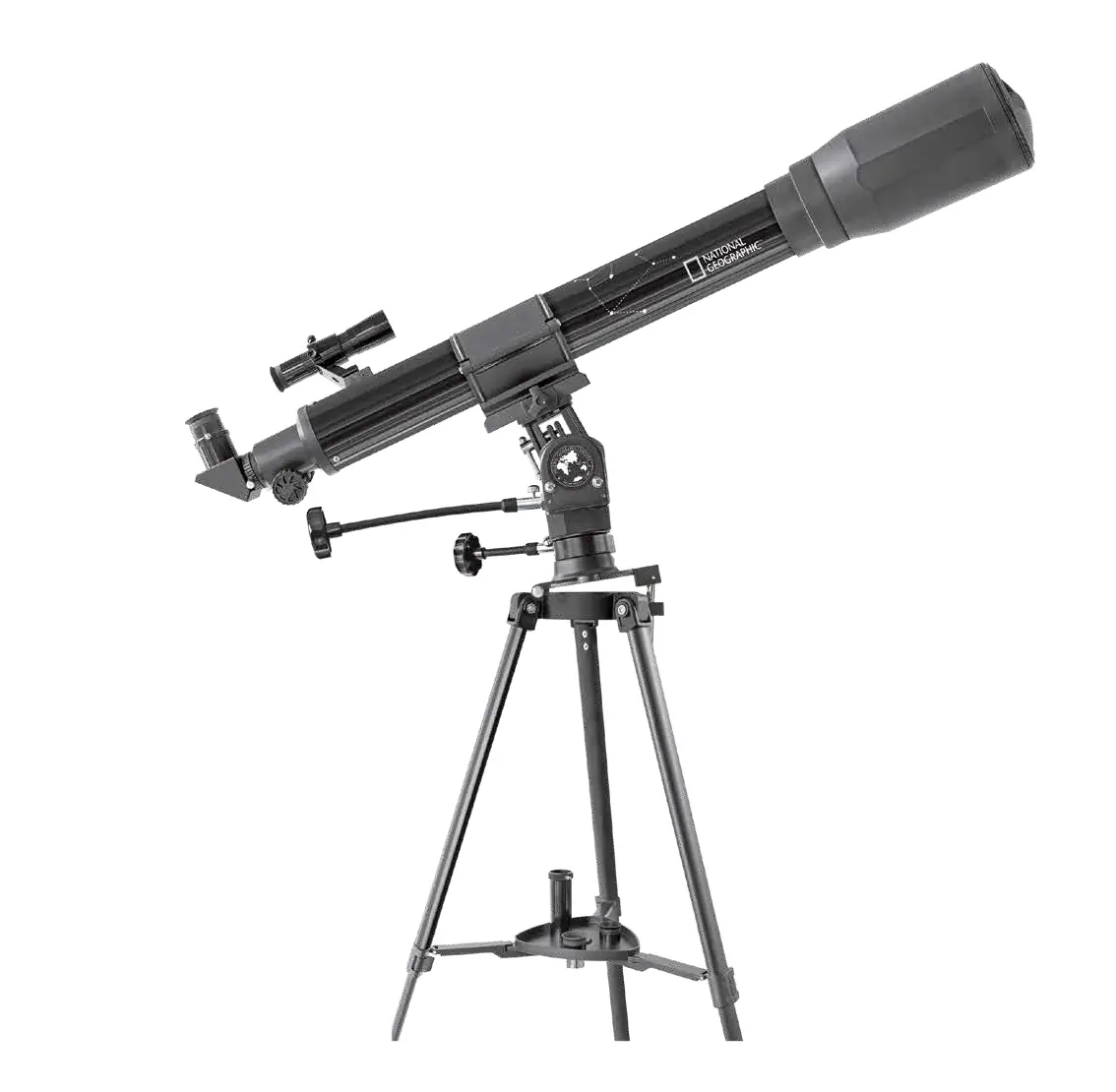
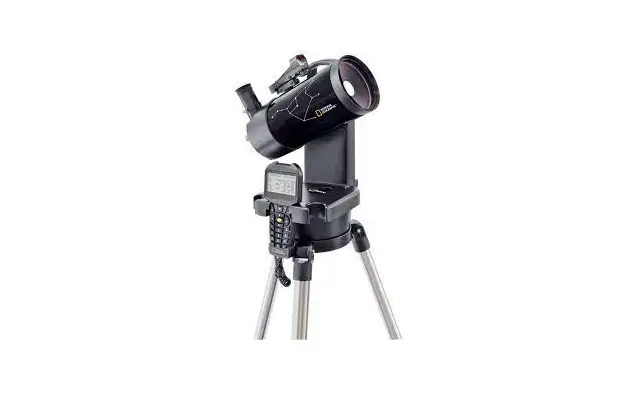
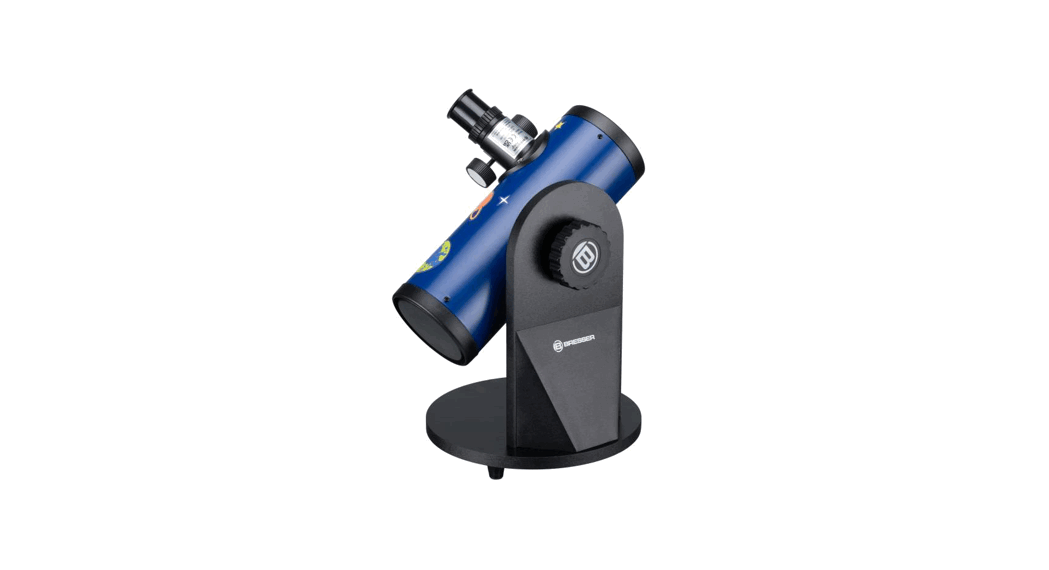
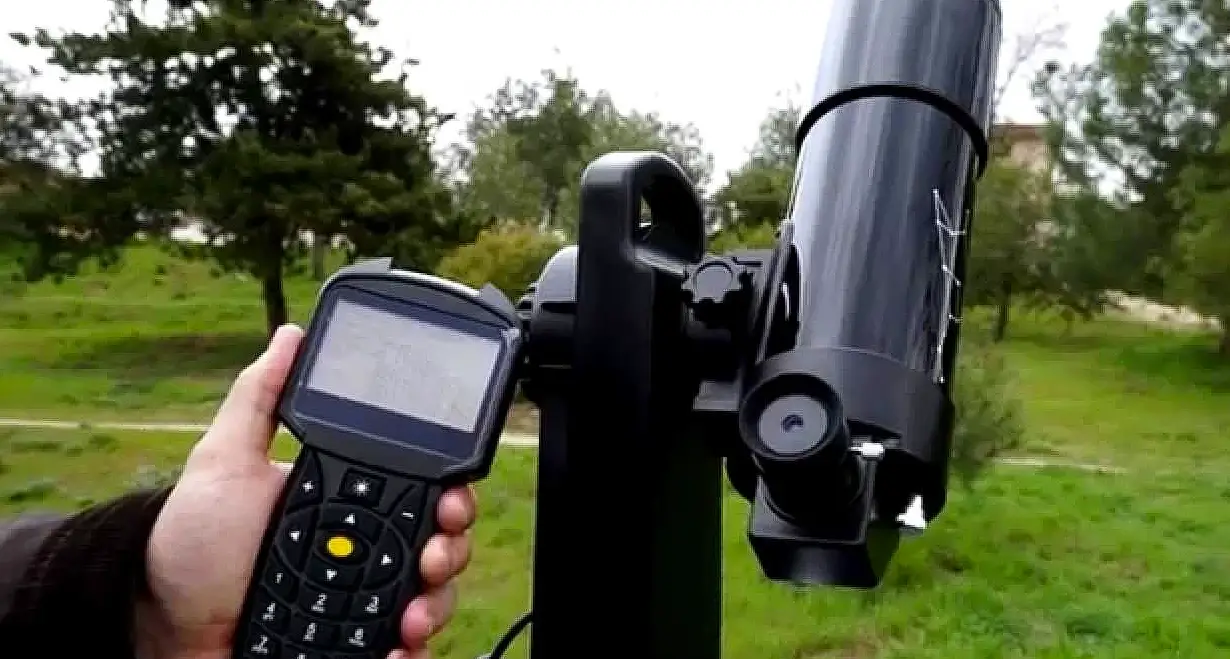
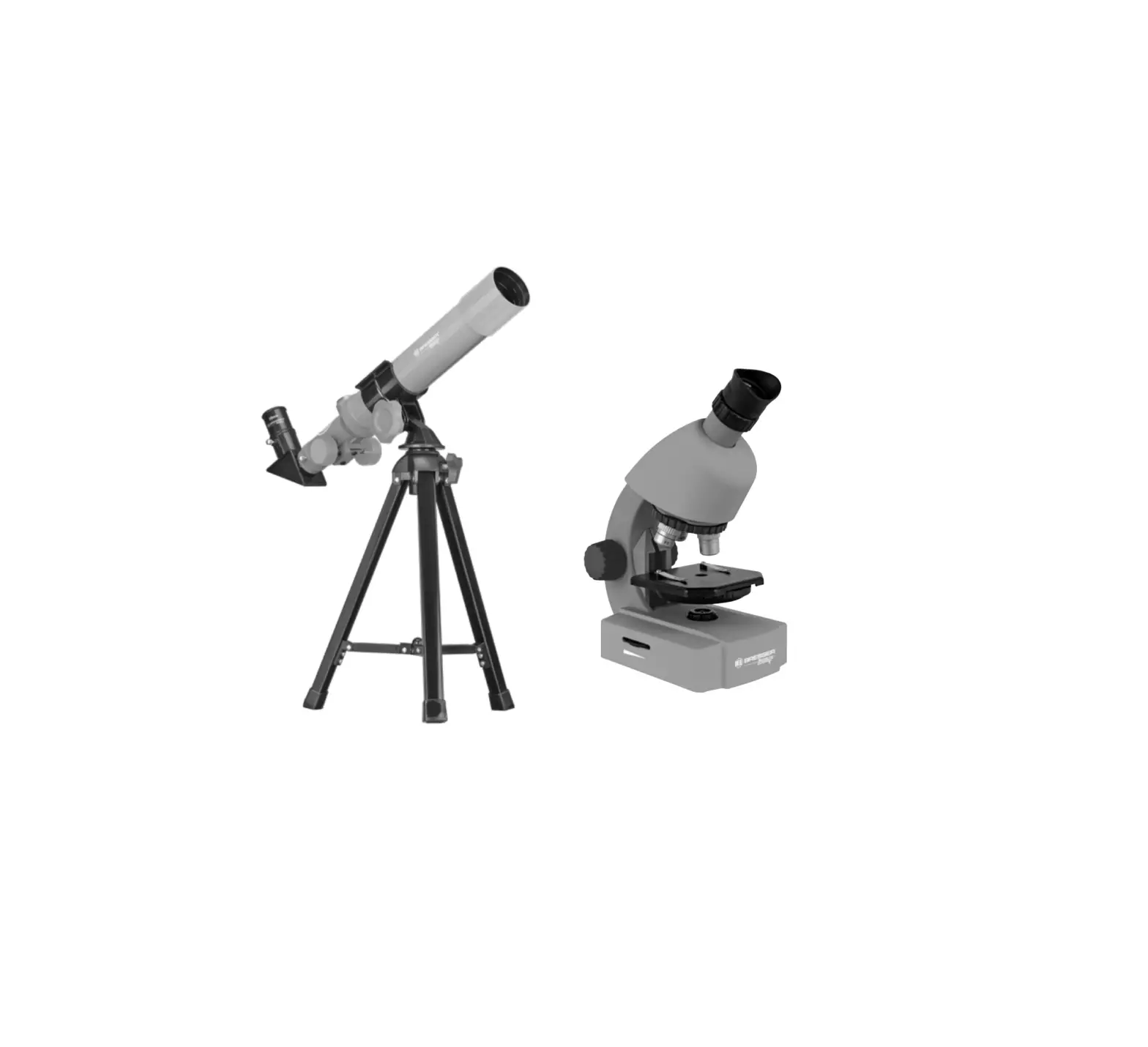
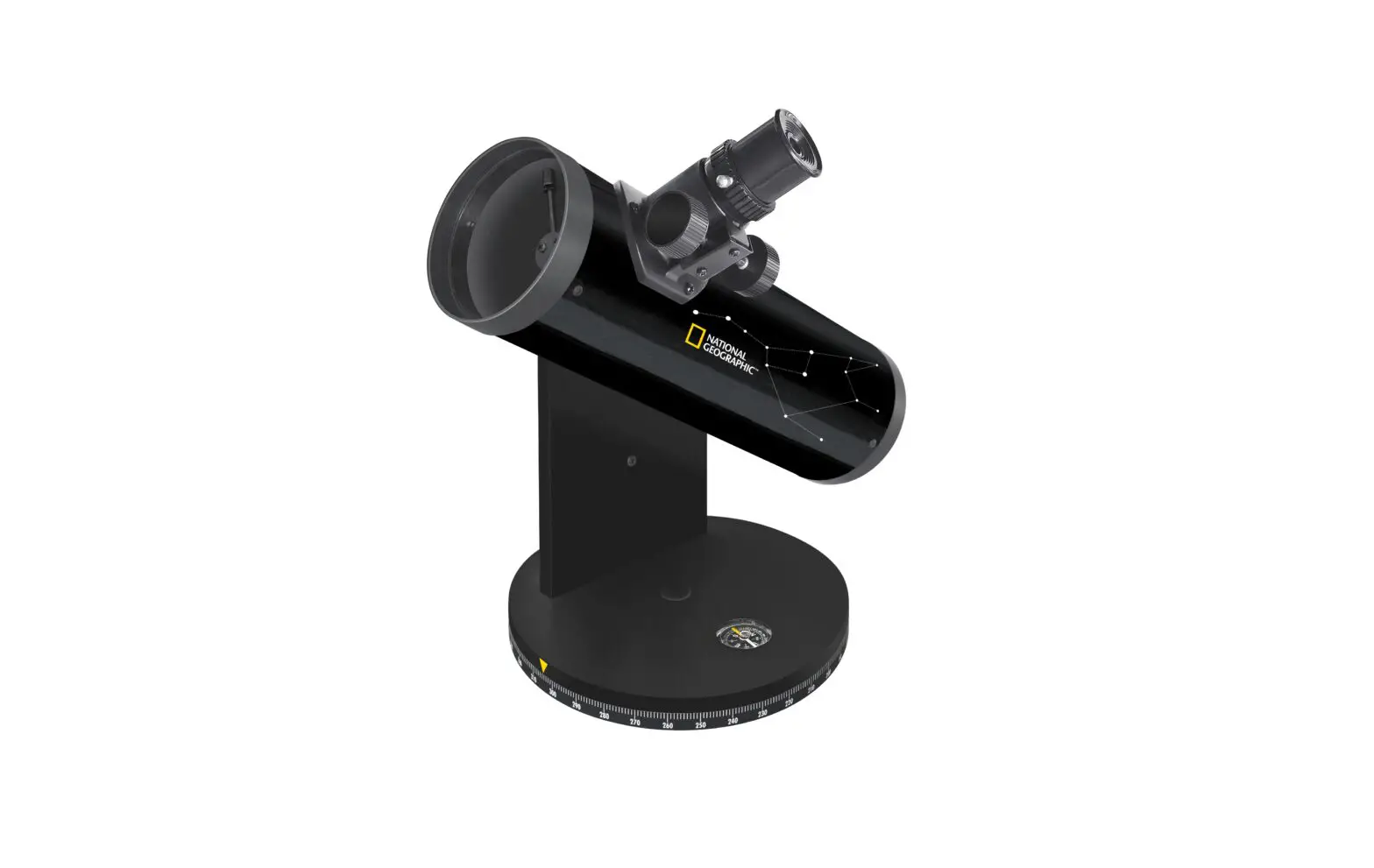
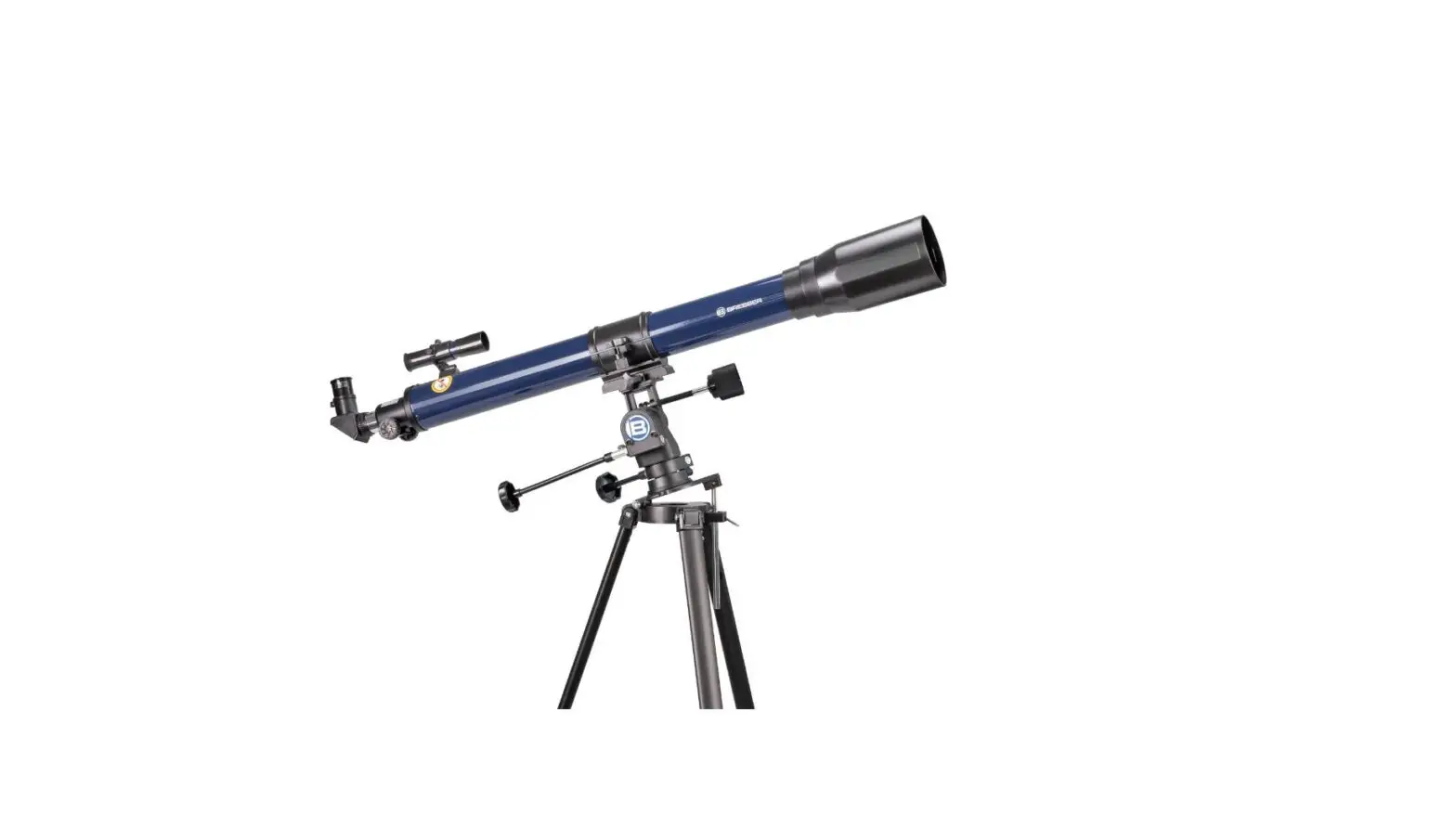
8850900 Telescope plus Microscope Set
Product Information: Telescope + Microscope Set
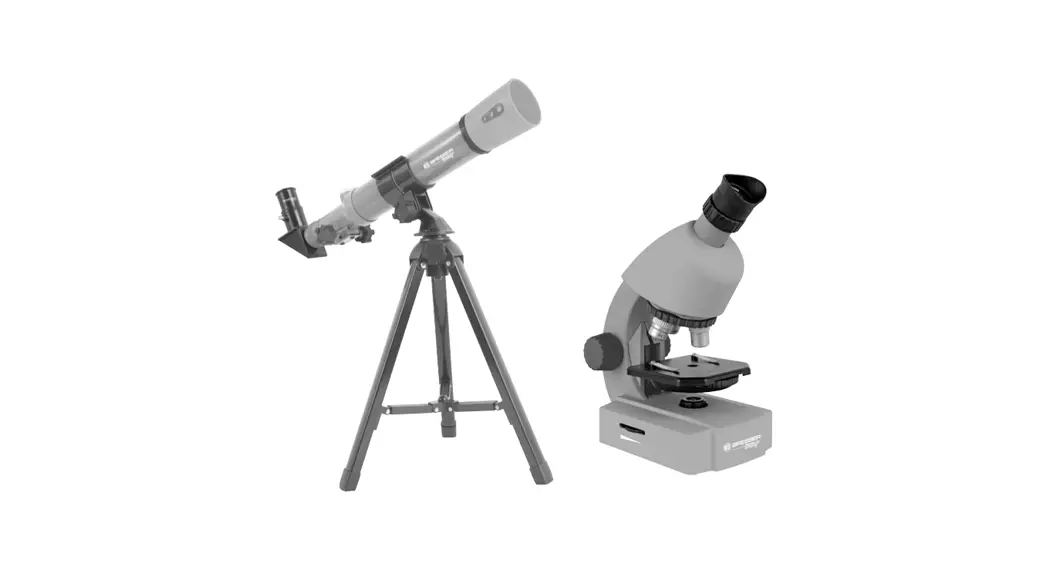
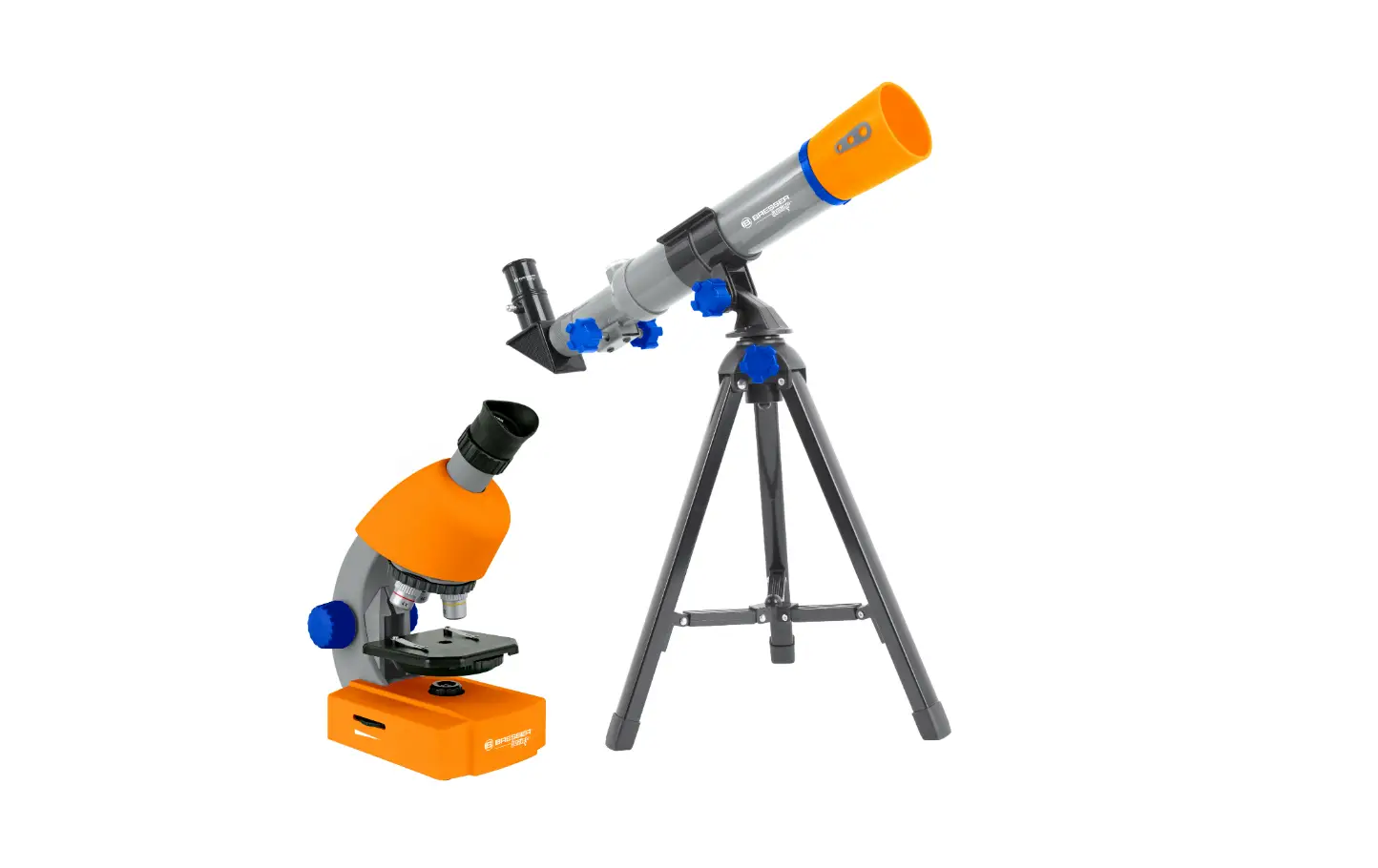
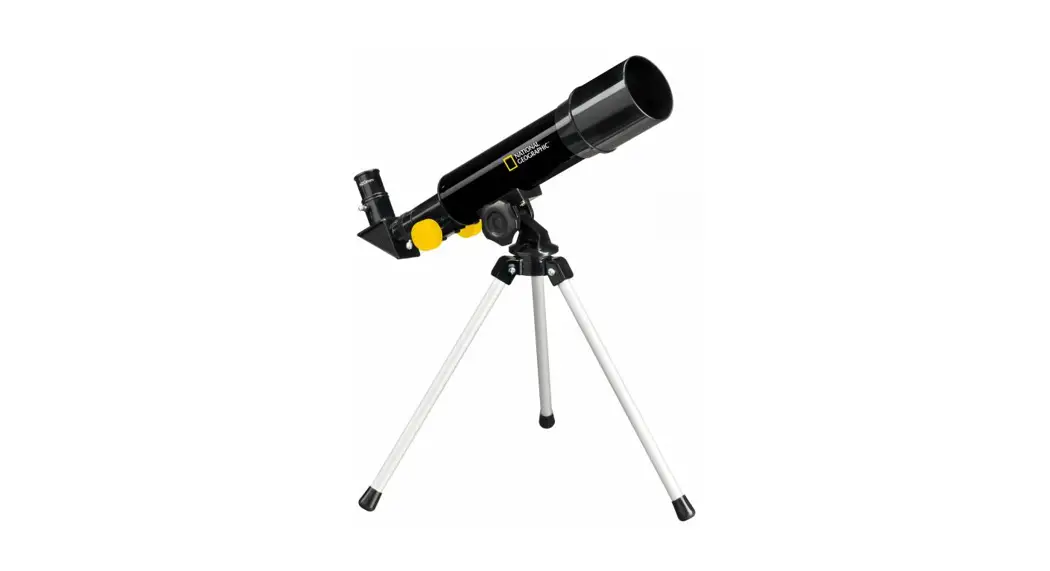
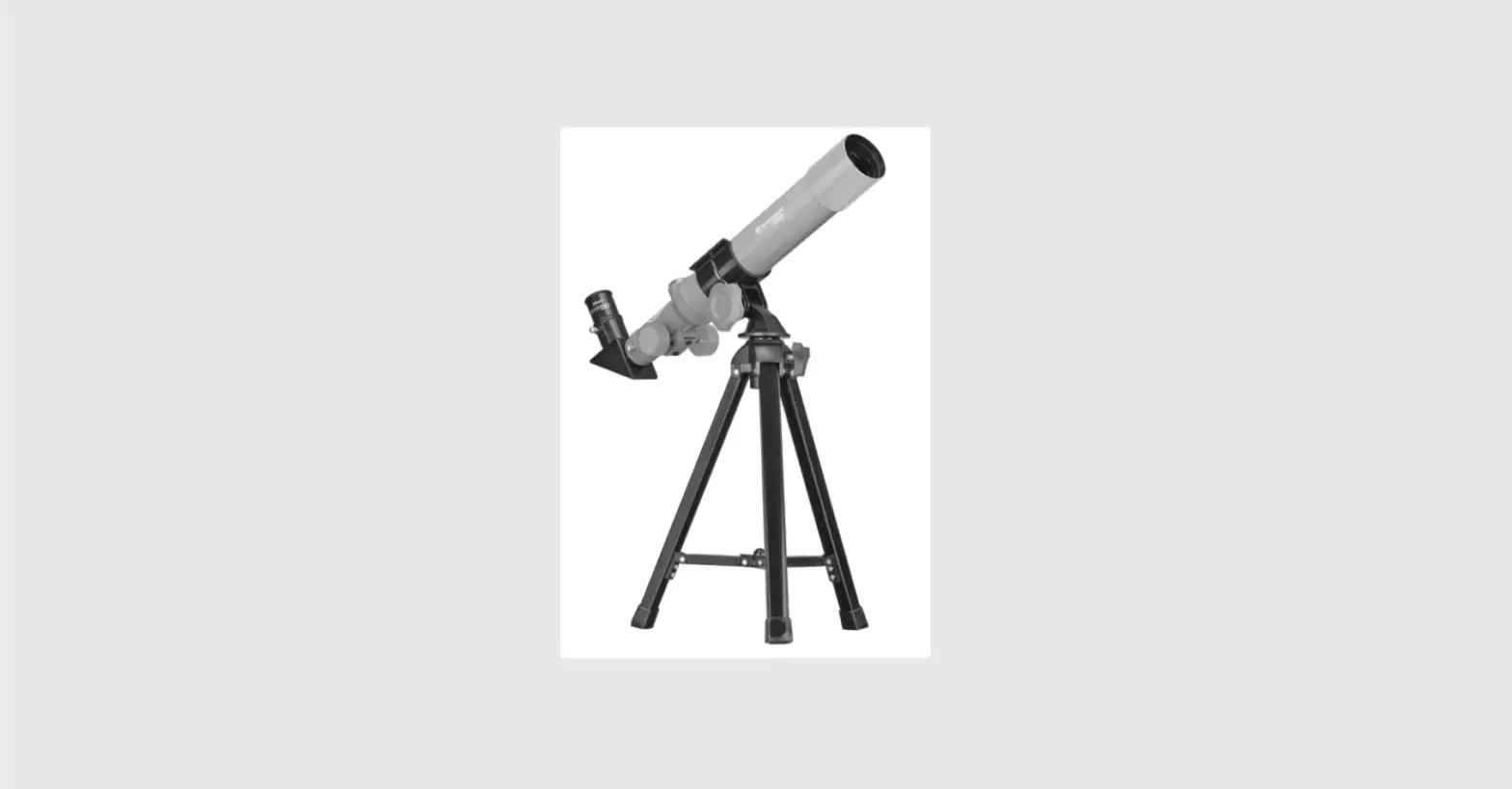
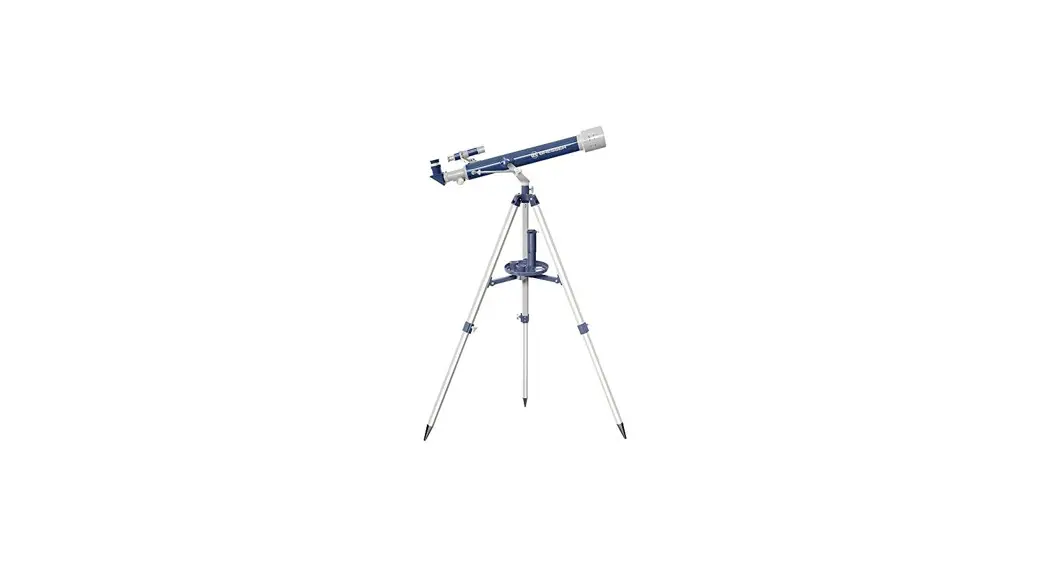
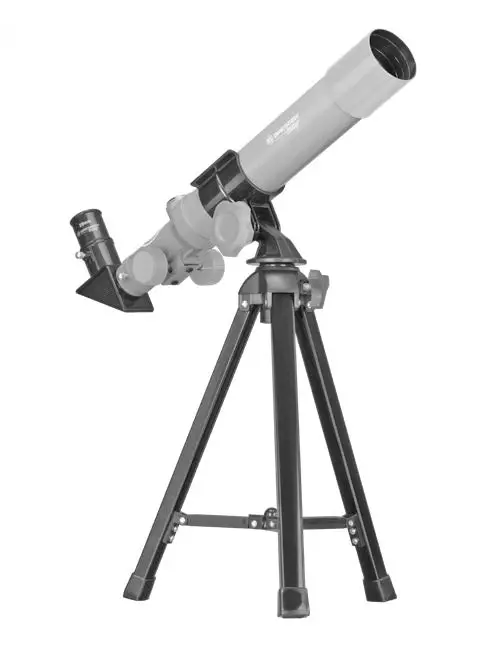
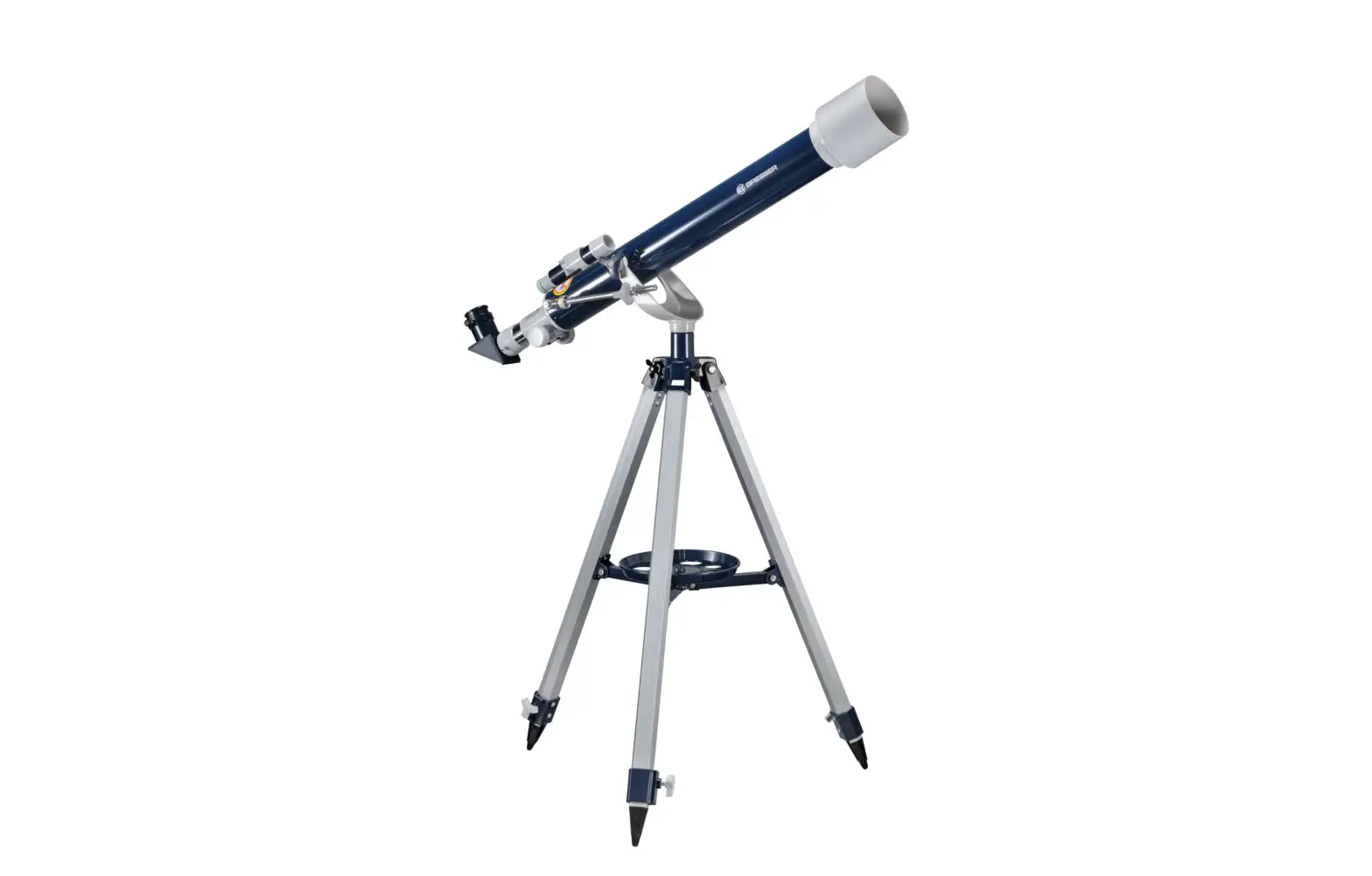
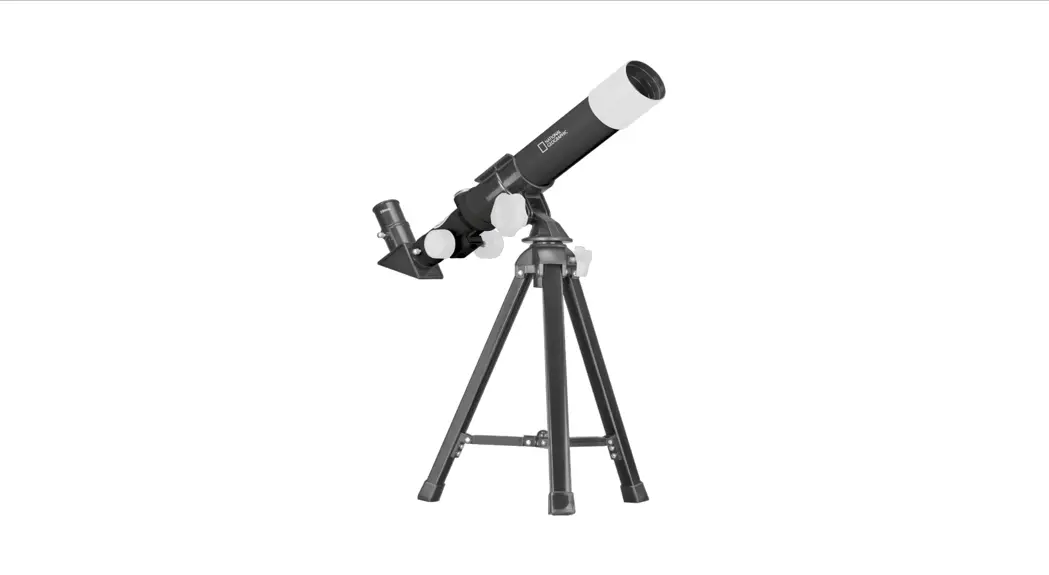
The Telescope + Microscope Set (Art. No. 8850900) is a product
that comes with a telescope and microscope. The set includes a
focus wheel, zenith mirror (diagonal), eyepieces (12.5 mm, 20 mm),
telescope tube, tube opening, objective lens, locating screw for
the vertical fine adjustment (for moving upward and downward),
locating screw for the vertical axis (for turning to the right and
left), tripod legs, compass, and smartphone holder.
Technical Specifications
- Distance from the Earth to the Orion Nebula: 1,344
light-years - Distance from the Earth to the Ring Nebula: 2,412
light-years
General Warnings
Never use this device to look directly at the sun or in the
direct proximity of the sun. Doing so may result in a risk of
blindness.
Assembly Instructions
- Choose a stable surface like a table to set up your
telescope. - Snap the telescope tube into the U-shaped clamp on the top of
the tripod head. - Place the zenith mirror (2) into the eyepiece holder and secure
it with the small screw on the connector (Fig. 1). - Set the eyepiece (3) into the opening of the zenith mirror (2)
(Fig. 1). - Use the screw to secure the eyepiece onto the zenith
mirror.
Product Usage Instructions
To use the telescope:
- Peile a well-visible object (e.g. a church tower) at some
distance using the eyepiece (3) of the telescope (4). - Adjust the focus using the focus wheel (1) until the object is
sharp.
To use the smartphone holder:
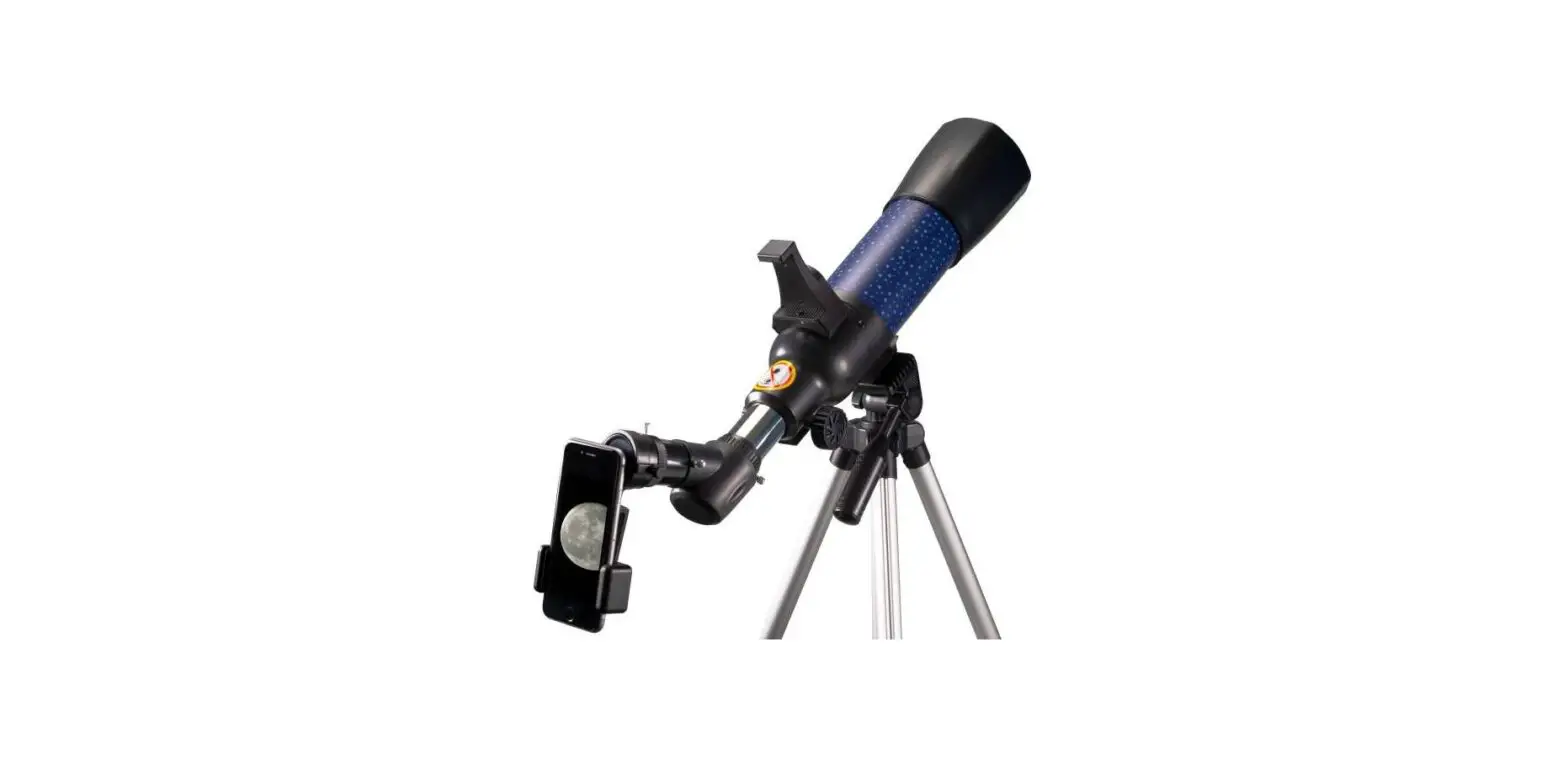
- Insert the eyepiece (3) into the smartphone holder (11) and
tighten the screw (X) on the clamping screw (Y) on the nozzle or
zenith mirror. - Center the smartphone precisely so that it is centered on your
display.
Cleaning Instructions
Refer to the product manual for cleaning instructions. Do not
use this device to look into apartments, for example.
Disposal Instructions
Refer to the product manual for disposal instructions.
Telescope + Microscope Set
Art. No. 8850900
DE Bedienungsanleitung EN Operating Instructions FR Mode d’emploi NL Handleiding IT Istruzioni per l’uso ES Instrucciones de uso
MANUAL DOWNLOAD:
(DE) WARNUNG: Schauen Sie mit diesem Gerät niemals direkt in die Sonne oder in die Nähe der Sonne. Es besteht ERBLINDUNGSGEFAHR!
(EN) WARNING: Never use this device to look directly at the
sun or in the direct proximity of the sun. Doing so may result in a risk of blindness.
(FR) AVERTISSEMENT! Ne regardez jamais avec cet apparareil directement ou à proximité du soleil ! Veillez y particulièrement,
lorsque l`appareil est utilisé par des enfants ! Il existe un DANGER DE PERTE DE LA VUE !
(NL) WAARSCHUWING! Kijk met dit optische instrument nooit direct naar of in de buurt van de zon! Let hier vooral op als het instrument door kinderen wordt gebruikt! Er bestaat VERBLINDINGSGEVAAR!
(IT) ATTENZIONE! Non guardare mai direttamente il sole o vicino al sole con questo apparecchio ottico! Prestare particolare attenzione quando l’apparecchio viene usato da bambini! Pericolo di ACCECAMENTO!
(ES) ADVERTENCIA! No utilice nunca este aparato óptico para mirar
directamente al sol a las inmediaciones de éste. Tome asimismo precauciones especiales
si va a ser utilizado por niños, pues existe el PELIGRO DE QUE SE QUEDEN CIEGOS.
(RU) ! ! , .
.
(PL) OSTRZEENIE: Przyrzdu nie wolno wykorzystywa do patrzenia w sposób bezporedni na sloce ani miejsca znajdujce si w jego bezporednim otoczeniu. Takie postpowanie moe prowadzi do utraty wzroku.
2
www.bresser.de/P8850900
SERVICE AND WARRANTY:
www.bresser.de/warranty_terms
TELESCOPE GUIDE:
i
www.bresser.de/guide
TELESCOPE FAQ:
www.bresser.de/faq
EXPERIMENTS:
www.bresser.de/downloads
DE Bedienungsanleitung…………………………3 / 29 EN Operating instructions ……………………….8 / 34 FR Mode d’emploi……………………………….12 / 38 NL Handleiding ………………………………….16 / 42 IT Istruzioni per l’uso ………………………….20 / 46 ES Instrucciones de uso ……………………….24 / 50 Garantie/Warranty/Garantía/Garanzia……………… 54
TELESKOP/TELESCOPE/TÉLESCOPE/TELESCOPIO/TELESCOPIO/ TELESCOOP//TELESKOP/TELESCÓPIO
f
1)
D
cb j
E g
h i
1
c
d
D
C
Fig. 1
3
Allgemeine Warnhinweise
· ERBLINDUNGSGEFAHR! Schauen Sie mit diesem Gerät niemals direkt in die Sonne oder in die Nähe der Sonne. Es besteht ERBLINDUNGSGEFAHR!
· ERSTICKUNGSGEFAHR! Kinder sollten das Gerät nur unter Aufsicht benutzen. Verpackungsmaterialien (Plastiktüten, Gummibänder, etc.) von Kindern fernhalten! Es besteht ERSTICKUNGSGEFAHR!
· BRANDGEFAHR! Setzen Sie das Gerät speziell die Linsen keiner direkten Sonneneinstrahlung aus! Durch die Lichtbündelung könnten Brände verursacht werden.
· Bauen Sie das Gerät nicht auseinander! Wenden Sie sich im Falle eines Defekts an Ihren Fachhändler. Er nimmt mit dem Service-Center Kontakt auf und kann das Gerät ggf. zwecks Reparatur einschicken.
· Setzen Sie das Gerät keinen hohen Temperaturen aus. · Das Gerät ist für den Privatgebrauch gedacht. Achten Sie die Privatsphäre Ihrer Mitmenschen schauen
Sie mit diesem Gerät zum Beispiel nicht in Wohnungen!
Teileübersicht
1. Scharfeinstellungsrad 2. Zenitspiegel 3. Okulare (12,5 mm, 20 mm) 4. Fernrohr (Teleskop-Tubus) 5. Tubusöffnung 6. Objektivlinse
7. Fixierschraube für die Höhenfeineinstellung (Auf- und Abwärtsbewegung)
8. Fixierschraube für die Vertikalachse (Rechtsund Linksdrehung)
9. Stativbeine 10. Kompass 11. Smartphone-Halterung
Montage
Bevor du beginnst, wählst du einen geeigneten Standort für dein Teleskop aus. Nutze hierfür einen stabilen Untergrund, z.B. einen Tisch). Das Teleskop Fernrohr jetzt in die U-förmige Klemme auf der Oberseite des Stativkopfes einrasten lassen. Nun kannst du den Zenitspiegel (2) in die Okularhalterung einsetzen und ihn mit der kleinen Schraube am Stutzen befestigen (Fig. 1). Das Okular (3) setzt du als nächstes in die
Öffnung des Zenitspiegels (2) ein (Fig. 1). Auch hier befindet sich eine Schraube, mit der du das Okular im Zenitspiegel festschrauben kannst.
Hinweis: Setze zuerst das Okular mit der größten Brennweite (z.B. 20 mm) in den Zenitspiegel ein. Die Vergrößerung ist dann zwar am geringsten, aber es wird dir leichter fallen, etwas zu beobachten.
Dein Teleskop benutzen
Um das Teleskop nach oben, nach unten und von Seite zu Seite zu bewegen, greife das Fernrohr und bewege den Tubus kontinuierlich, bis dein Ziel im Okular ins Blickfeld kommt. Bedenke, dass bedingt durch die Rotation der Erde, sich Objekte ziemlich schnell aus deinem Blickfeld bewegen werden. Sobald du das gewünschte Ziel gefunden und scharfgestellt hast, musst du das Objekt verfolgen, wenn es über den Nachthimmel fährt. Für einen genaueren Blick auf ein Objekt, kannst du das 12,5mm Okular verwenden. Die Vergrößerung erhöht sich dann von 20x auf 32x.
Welches ist das richtige Okular?
Wichtig ist zunächst, dass du für den Beginn deiner Beobachtungen immer ein Okular mit der höchsten Brennweite wählst. Du kannst dann nach und nach andere Okulare mit geringerer Brennweite wählen. Die Brennweite wird in Millimeter angegeben und steht auf dem jeweiligen Okular. Generell gilt: Je größer die Brennweite des Okulars, desto niedriger ist die Vergrößerung!
4
DE
Für die Berechnung der Vergrößerung gibt es eine einfache Rechenformel: Brennweite des Fernrohrs : Brennweite des Okulars = Vergrößerung
Die Vergrößerung ist auch von der Brennweite des Fernrohrs abhängig. Dieses Teleskop beinhaltet ein Fernrohr mit 400 mm Brennweite.
Beispiele: 400 mm : 20 mm = 20-fache Vergrößerung 400 mm : 12,5 mm = 32-fache Vergrößerung
Scharfeinstellungsrad
Schaue durch das Okular (3) des Fernrohrs (4) und peile ein gut sichtbares Objekt (z.B. einen Kirchturm) in einiger Entfernung an. Stelle es mit dem Scharfeinstellungsrad (1) scharf, wie es in Fig. 3 gezeigt wird.
Smartphone-Halterung
Setze das Okular (3) in die Smartphone-Halte-
rung (11) ein und ziehe die Schraube (X) an der
Halterung fest an. Anschließend setze die Smartphone-Halterung mit dem Okular in den Okular-Stutzen (2) ein und ziehe nun die
Klemmschrauben (Y) am Stutzen oder
Zenitspiegel handfest an. Starte nun die
X
Kamera-App auf deinem Smartphone. Drücke nun dein Smartphone auf die Halteplatte und stelle sicher, dass es richtig fest sitzt. Die
Kamera muss genau über dem Okular
aufliegen. Zentriere das Smartphone genau
Y
mittig über dem Okular, sodass das Bild genau
zentriert auf deinem Display zu sehen ist.
Eventuell ist es nötig, durch die Zoomfunktion das Bild Display füllend auf deinem Smartphone darzustel-
len. Die Saugnäpfe müssen trocken, sauber und frei von allen Arten von Staub und Schmutz sein. Wir
übernehmen keine Verantwortung für fallengelassene und gebrochene Smartphones aufgrund falscher
Bedienung.
Technische Daten
· Bauart: Achromatisch · Brennweite: 400 mm · Objektiv-Durchmesser: 40 mm
Hinweise zur Reinigung
· Reinigen Sie die Linsen (Okulare und/oder Objektive) nur mit einem weichen und fusselfreien Tuch (z. B. Microfaser). Das Tuch nicht zu stark aufdrücken, um ein Verkratzen der Linsen zu vermeiden.
· Zur Entfernung stärkerer Schmutzreste befeuchten Sie das Putztuch mit einer Brillen-
Reinigungsflüssigkeit und wischen damit die Linsen mit wenig Druck ab. · Schützen Sie das Gerät vor Staub und Feuchtigkeit! Lassen Sie es nach der Benutzung speziell bei
hoher Luftfeuchtigkeit bei Zimmertemperatur einige Zeit akklimatisieren, so dass die Restfeuchtigkeit abgebaut werden kann.
5
Mögliche Beobachtungsobjekte
Nachfolgend haben wir für dich einige sehr interessante Himmelsobjekte ausgesucht und erklärt.
Mond Der Mond ist der einzige natürliche Satellit der Erde. Durchmesser: 3.476 km / Entfernung von der Erde: 384.400 km
Der Mond ist nach der Sonne das zweithellste Objekt am Himmel. Da der Mond einmal im Monat um die Erde kreist, verändert sich ständig der Winkel zwischen der Erde, dem Mond und der Sonne; man sieht das an den Zyklen der Mondphasen. Die Zeit zwischen zwei aufeinander folgenden Neumondphasen beträgt etwa 29,5 Tage (709 Stunden).
Sternbild ORION / M42 – Orion Nebel Entfernung von der Erde: 1.344 Lichtjahre
Mit einer Entfernung von etwa 1.344 Lichtjahren ist der Orion-Nebel (M42) der hellste diffuse Nebel am Himmel, der mit dem bloßen Auge sichtbar ist, und ist somit ein lohnendes Objekt für Teleskope aller Größen, vom kleinsten Feldstecher bis zu den größten erdgebundenen Observatorien und dem Hubble Space Telescope. Der Nebel besteht zum Hauptteil aus einer riesigen Wolke aus Wasserstoffgas und Staub, die sich mit über 10 Grad gut über die Hälfte des Sternbildes des Orions erstreckt. Die Ausdehnung dieser gewaltigen Wolke beträgt mehrere hundert Lichtjahre.
Sternbild LEIER / M57 – Ringnebel Entfernung von der Erde: 2.412 Lichtjahre
Der berühmte Ringnebel M57 im Sternbild Leier wird oft als der Prototyp eines planetarischen Nebels angesehen; er gehört zu den Prachtstücken des Sommerhimmels der Nordhalbkugel. Neuere Untersuchungen haben gezeigt, dass es sich aller Wahrscheinlichkeit nach um einen Ring (Torus) aus hell leuchtender Materie handelt, die den Zentralstern umgibt (nur mit größeren Teleskopen sichtbar), und nicht um eine kugel- oder ellipsoidförmige Gasstruktur. Würde man den Ringnebel von der Seitenebene betrachten, würde er dem Dumbbell Nebel M27 ähneln. Wir blicken bei diesem Objekt genau auf den Pol des Nebels.
Sternbild Füchslein / M27 – Hantelnebel Entfernung von der Erde: 1.360 Lichtjahre
M27 oder der Hantelnebel im Füchslein war der erste planetarische Nebel, der überhaupt entdeckt wurde. Am 12. Juli 1764 entdeckte Charles Messier diese damals neue und faszinierende Art von Objekten. Wir sehen dieses Objekt fast genau von seiner Äquatorialebene. Würde man den Hantelnebel von einem der Pole sehen, würde er wahrscheinlich die Form eines Ringes aufweisen und dem Anblick ähneln, den wir von dem Ringnebel M57 kennen. Dieses Objekt kann man bereits bei halbwegs guten Wetterbedingungen und kleinen Vergrößerungen gut sehen.
Kleines Teleskop-ABC Was bedeutet eigentlich …
Brennweite: Alle Dinge, die über eine Optik (Linse) ein Objekt vergrößern, haben eine bestimmte Brennweite. Darunter versteht man den Weg, den das Licht von der Linse bis zum Brennpunkt zurücklegt. Der Brennpunkt wird auch als Fokus bezeichnet. Im Fokus ist das Bild scharf. Bei einem Teleskop werden die Brennweiten des Fernrohrs und des Okulars kombiniert.
6
DE
Linse: Die Linse lenkt das einfallende Licht so um, dass es nach einer bestimmten Strecke (Brennweite) im Brennpunkt ein scharfes Bild erzeugt.
Okular (3): Ein Okular ist ein deinem Auge zugewandtes System bestehend aus einer oder mehreren Linsen. Mit einem Okular wird das im Brennpunkt einer Linse entstehende scharfe Bild aufgenommen und nochmals vergrößert.
Für die Berechnung der Vergrößerung gibt es eine einfache Rechenformel: Brennweite des Fernrohrs / Brennweite des Okulars = Vergrößerung
Bei einem Teleskop ist die Vergrößerung sowohl von der Brennweite des Okulars als auch von der Brennweite des Fernrohrs abhängig.
Daraus ergibt sich anhand der Rechenformel folgende Vergrößerung, wenn du ein Okular mit 20 mm und ein Fernrohr mit 400 mm Brennweite verwendest: 400 mm : 20 mm = 20-fache Vergrößerung
Vergrößerung: Die Vergrößerung entspricht dem Unterschied zwischen der Betrachtung mit bloßem Auge und der Betrachtung durch ein Vergrößerungsgerät (z.B. Teleskop). Dabei ist die Betrachtung mit dem Auge einfach. Wenn nun ein Teleskop eine 30-fache Vergrößerung hat, so kannst du ein Objekt durch das Teleskop 30 Mal größer sehen als mit deinem Auge. Siehe auch ,,Okular”.
Zenitspiegel (2): Ein Spiegel, der den Lichtstrahl im rechten Winkel umleitet. Bei einem geraden Fernrohr kann man so die Beobachtungsposition korrigieren und bequem von oben in das Okular schauen. Das Bild erscheint durch einen Zenitspiegel zwar aufrecht stehend, aber seitenverkehrt.
ENTSORGUNG
Entsorgen Sie die Verpackungsmaterialien sortenrein. Beachten Sie bitte bei der Entsorgung des Geräts die aktuellen gesetzlichen Bestimmungen. Informationen zur fachgerechten Entsorgung erhalten Sie bei den kommunalen Entsorgungsdienstleistern oder dem Umweltamt.
Beachten Sie bitte bei der Entsorgung des Geräts die aktuellen gesetzlichen Bestimmungen. Informationen zur fachgerechten Entsorgung erhalten Sie bei den kommunalen Entsorgungsdienstleistern oder dem Umweltamt.
EG-Konformitätserklärung
Eine ,,Konformitätserklärung” in Übereinstimmung mit den anwendbaren Richtlinien und entsprechenden Normen ist von der Bresser GmbH erstellt worden. Der vollständige Text der EGKonformitätserklärung ist unter der folgenden Internetadresse verfügbar: www.bresser.de/download/8850900/CE/8850900_CE.pdf
7
General Warnings
· Risk of blindness — Never use this device to look directly at the sun or in the direct proximity of the sun. Doing so may result in a risk of blindness.
· Choking hazard — Children should only use the device under adult supervision. Keep packaging material, like plastic bags and rubber bands, out of the reach of children, as these materials pose a choking hazard.
· Risk of fire — Do not place the device, particularly the lenses, in direct sunlight. The concentration of light could cause a fire.
· Do not disassemble the device. In the event of a defect, please contact your dealer. The dealer will contact the Service Centre and can send the device in to be repaired, if necessary.
· Do not expose the device to high temperatures. · The device is intended only for private use. Please heed the privacy of other people. Do not use this
device to look into apartments, for example.
Parts overview
1. Focus wheel 2. Zenith mirror (diagonal) 3. Eyepieces (12.5 mm, 20 mm) 4. Telescope (Telescope tube) 5. Tube opening 6. Objective lens
7. Locating screw for the vertical fine adjustment (for moving upward and downward)
8. Locating screw for the vertical axis (for turning to the right and left)
9. Tripod legs 10. Compass 11. Smartphone holder
Assembly
You should take some time to decide where you would like to set up your telescope. Choose a stable surface like a table. Snap the telescope tube into the U-shaped clamp on the top of the tripod head. You can now place the zenith mirror (2) into the eyepiece holder and secure it with the small screw on the connector (Fig. 1). Next, set the eyepiece (3) into the opening of the zenith mirror (2) (Fig. 1). Here too, there is a screw with which you can screw the eyepiece onto the zenith mirror.
Note: First, put the eyepiece with the largest focal length (e.g. 20 mm) onto the zenith mirror. While you’ll get the lowest amount of magnification, it will be easier for you to view things.
Using your telescope
To move the scope up, down and side to side, grip the telescope and steadily move the tube until your target comes into view in the eyepiece. It is important to remember that the rotation of the Earth means objects will move out of your eyepiece fairly quickly. Once you have found and focused on your desired target, you will have to track the object as it journeys across the night sky. For a closer look at an object, you can insert the 12.5mm eyepiece. The magnification will increase from 20x to 32x.
Which eyepiece is right?
It is important that you always choose an eyepiece with the highest focal width at the beginning of your observation. Afterward, you can gradually move to eyepieces with smaller focal widths. The focal width is indicated in millimetres and is written on each eyepiece. In general, the following is true: the larger the focal width of an eyepiece, the smaller the magnification. There is a simple formula for calculating the magnification: Focal width of the telescope tube : Focal width of the eyepiece = Magnification
8
EN
The magnification also depends on the focal width of the telescope tube. This telescope contains a tube with a focal width of 400 mm.
Examples: 400 mm / 20 mm = 20X magnification 400 mm / 12.5 mm = 32X magnification
Focus wheel
Look through the telescope eyepiece (3) and hone in on a far away object that you can see well (for instance, a church tower). Focus in on the object with the focus knob (1) in the way shown in Fig. 3.
Smartphone holder
Insert the eyepiece (3) into the smartphone
holder (11) and tighten the screw (X) to the
bracket firmly. Then set the smartphone holder with the eyepiece into the eyepiece connection (2) and tighten the clamping screws (Y) by
hand firmly. Now start your smartphone
camera app and press your smartphone on the
X
plate. Make sure that it is properly secured. The camera should rest just above the eyepiece. Place the smartphone exactly over
the eyepiece, so that the image is exactly
centered on your display. It may be necessary
Y
to use the zoom function to fill out the whole
screen of your smartphone. The suction cups
must be dry, clean and free from all kinds of dust and dirt. We assume no responsibility for dropped and
broken smartphones due to incorrect handling.
Technical data
· Design: achromatic · Focal length: 400 mm · Objective diameter: 40 mm
Notes on cleaning
· Clean the eyepieces and lenses only with a soft, lint-free cloth, like a microfibre cloth. To avoid scratching the lenses, use only gentle pressure with the cleaning cloth.
· To remove more stubborn dirt, moisten the cleaning cloth with an eyeglass-cleaning solution, and wipe the lenses gently.
· Protect the device from dust and moisture. After use, particularly in high humidity, let the device acclimatise for a short period of time, so that the residual moisture can dissipate before storing.
Possible observation targets
The following section details several interesting and easy-to-find celestial objects you may want to observe through your telescope.
The Moon The moon is Earth’s only natural satellite. Diameter: 3,476 km / Distance: 384,400 km from Earth (average)
9
The moon has been known to humans since prehistoric times. It is the second brightest object in the sky, after the sun. Because the moon circles the Earth once per month, the angle between the Earth, the moon and the sun is constantly changing; one sees this change in the phases of the moon. The time between two consecutive new moon phases is about 29.5 days (709 hours).
Constellation Orion: The Orion Nebula (M 42) Distance: 1,344 light years from Earth
Though it is more than 1,344 light years from Earth, the Orion Nebula (M 42) is the brightest diffuse nebula in the sky. It is visible even with the naked eye and a worthwhile object for telescopes of all types and sizes. The nebula consists of a gigantic cloud of hydrogen gas with a diameter of hundreds of light years.
Constellation Lyra: The Ring Nebula (M 57) Distance: 2,412 light years from Earth
The famous Ring Nebula (M57) in the Lyra constellation is often viewed as the prototype of a planetary nebula. It is one of the magnificent features of the Northern Hemisphere’s summer sky. Recent studies have shown that it is probably comprised of a ring (torus) of brightly shining material that surrounds the central star (only visible with larger telescopes), and not a gas structure in the form of a sphere or an ellipse. If you were to look at the Ring Nebula from the side, it would look like the Dumbbell Nebula (M 27). When viewed from Earth, we are looking directly at the pole of the nebula.
Constellation Vulpecula (Little Fox): The Dumbbell Nebula (M 27) Distance: 1,360 light years from Earth
The Dumbbell Nebula (M 27) was the first planetary nebula ever discovered. On 12 July 1764, Charles Messier discovered this new and fascinating class of objects. We see this object almost directly from its equatorial plane. If we could see the Dumbbell Nebula from one of its poles, we would probably see the shape of a ring, something very similar to what we know as the Ring Nebula (M 57). In reasonably good weather, we can see this object well, even with low magnification.
Telescope ABC’s
What do the following terms mean?
Eyepiece (3): An eyepiece is a system made for your eye and comprised of one or more lenses. In an eyepiece, the clear image that is generated in the focal point of a lens is captured and magnified still more.
There is a simple formula for calculating the magnification: Focal length of the telescope tube / Focal length of the eyepiece = Magnification
In a telescope, the magnification depends on both the focal length of the telescope tube and the focal length of the eyepiece. From this formula, we see that if you use an eyepiece with a focal length of 20 mm and a telescope tube with a focal length of 400 mm, you will get the following magnification: 400 mm / 20 mm = 20 times magnification
10
EN
Focal length: Everything that magnifies an object via an optic (lens) has a certain focal length. The focal length is the length of the path the light travels from the surface of the lens to its focal point. The focal point is also referred to as the focus. In focus, the image is clear. In the case of a telescope, the focal length of the telescope tube and the eyepieces are combined.
Lens: The lens turns the light that falls on it around in such a way so that the light gives a clear image in the focal point after it has traveled a certain distance (focal length).
Magnification: The magnification corresponds to the difference between observation with the naked eye and observation through a magnifying device like a telescope. If a telescope configuration has a magnification of 30x, then an object viewed through the telescope will appear 30 times larger than it would with the naked eye. See also ‘Eyepiece’.
Zenith mirror (diagonal) (2): A mirror that deflects the ray of light 90 degrees. With a horizontal telescope tube, this device deflects the light upwards so that you can comfortably observe by looking downwards into the eyepiece. The image in a diagonal mirror appears upright, but rotated around its vertical axis (mirror image).
DISPOSAL
Dispose of the packaging materials properly, according to their type, such as paper or cardboard. Contact your local waste-disposal service or environmental authority for information on the proper disposal.
Please take the current legal regulations into account when disposing of your device. You can get more information on the proper disposal from your local waste-disposal service or environmental authority.
EC Declaration of Conformity
Bresser GmbH has issued a “Declaration of Conformity” in accordance with applicable guidelines and corresponding standards. The full text of the EU declaration of conformity is available at the following internet address: www.bresser.de/download/8850900/CE/8850900_CE.pdf
UKCA Declaration of Conformity
Bresser GmbH has issued a ,,Declaration of Conformity” in accordance with applicable guidelines and corresponding standards. The full text of the UKCA declaration of conformity is available at the following internet address: www.bresser.de/download/8850900/UKCA/8850900_UKCA.pdf
Bresser UK Ltd. · Suite 3G, Eden House, Enterprise Way, Edenbridge, Kent TN8 6HF, Great Britain
11
Consignes générales de sécurité
· RISQUE DE CECITE ! Ne jamais regarder directement le soleil à travers cet appareil en le pointant directement en sa direction. L’observateur court un RISQUE DE CECITE !
· RISQUE D’ETOUFFEMENT ! Les enfants ne doivent utiliser cet appareil que sous surveillance. Maintenez les enfants éloignés des matériaux d’emballage (sacs plastiques, bandes en caoutchouc, etc.) ! RISQUE D’ETOUFFEMENT !
· RISQUE D’INCENDIE ! Ne jamais orienter l’appareil en particuliers les lentilles de manière à capter directement les rayons du soleil ! La focalisation de la lumière peut déclencher des incendies.
· Ne pas démonter l’appareil ! En cas de défaut, veuillez vous adresser à votre revendeur spécialisé. Celui-ci prendra contact avec le service client pour, éventuellement, envoyer l’appareil en réparation.
· Ne pas exposer l’appareil à des températures trop élevées. · Les unité sont destinées à un usage privé. Respectez la sphère privée de vos concitoyens et n’utilisez pas
ces unité pour, par exemple, observer ce qui se passe dans un appartement !
Vue d’ensemble des pièces
1. Commande de mise au point 2. Miroir zénith 3. Oculaires (12,5 mm, 20 mm) 4. Lunette (Tubetélescope) 5. Ouverture du tube 6. Lentilles de l’objectif
7. Vis de fi xation pour le réglage de haute précision (mouvement en amont et en aval)
8. Vis de fi xation pour l’axe vertical (rotation à droite et à gauche)
9. Trépied 10. Boussole 11. Support pour Smartphone
Montage
Avant de commencer, tu dois chercher un endroit adapté pour ton télescope. Choisis pour cela une surface stable (une table, par exemple). Emboîtez le tube du télescope dans l’attache en U située au-dessus du tré-
pied. Maintenant tu peux installer le miroir zénith (2) dans le support de l’oculaire et le fixer sur les supports avec la petite vis (Fig. 1). Installe ensuite l’oculaire (3) dans l’ouverture du miroir zénith (2) (Fig. 1). Ici il y
a également une vis avec laquelle tu peux fixer l’oculaire sur le miroir zénith.
Indication : Installe d’abord l’oculaire avec la distance focale la plus élevée (par ex. 20 mm) dans le miroir zénith. Le grossissement sera par la suite plus petit, certes, mais il sera plus facile pour toi d’observer un objet.
Utilisation du télescope
Pour ajuster vers le haut, le bas, la gauche et la droite, saisissez le tube du télescope et bougez-le en poussant régulièrement jusqu’à ce que votre cible arrive dans le champ de l’oculaire. N’oubliez pas que du fait de la rotation de la Terre, les objets sortiront assez rapidement du champ de l’oculaire. Quand vous aurez localisé et centré l’objet recherché, vous devrez donc le suivre au fur et à mesure de sa trajectoire dans le ciel nocturne. Pour voir l’objet de plus près, vous pouvez insérez l’oculaire de 12,5 mm. Le grossissement passera de 20x à 32x.
Quel est le bon oculaire ?
Tout d’abord, il est important que tu choisisses un oculaire avec la distance focale la plus élevée pour commencer tes observations. Tu peux ensuite choisir d’autres oculaires avec une distance focale moins importante. La distance focale est donnée en millimètre et est indiquée sur l’oculaire en question. Informations générales : Plus la distance focale de l’oculaire est élevée, moins important est le grossissement ! Pour le calcul du grossissement, il existe une formule facile :
12
FR
Distance focale de la lunette : Distance focale de l’oculaire = grossissement Le grossissement dépend également de la distance focale de la lunette. Ce télescope comprend une lunette avec une distance focale de 400 mm.
Exemples: 400 mm / 20 mm = 20X grossissement
400 mm / 12,5 mm = 32X grossissement
Commande de mise au point
Regarde à travers l’oculaire (3) de la lunette (4) et vise un objet bien visible (par ex. un clocher) quelque soit
la distance. Mets le au point avec la roue de focalisation (1) comme indiqué dans Fig. 3.
Support pour smartphone
Placez l’oculaire (3) dans le support du
smartphone (11) et serrez à la main la vis (X)
sur le support. Placez ensuite le support du smartphone avec l’oculaire dans le manchon d’oculaire (2) et serrez à la main les vis de
fixation (Y) au manchon ou au renvoi coudé.
Démarrez maintenant l’appli de caméra de
X
votre smartphone. Poussez maintenant votre smartphone sur la tablette à accessoires et assurez-vous qu’il est bien fixé. La caméra doit
se trouver exactement au-dessus de l’oculaire.
Centrez le smartphone exactement au-dessus
Y
de l’oculaire en sorte que l’image soit visible
de façon exactement centrée sur l’écran. Il
peut s’avérer nécessaire d’afficher l’image sur la totalité de l’écran de votre smartphone en faisant un
zoom avant. Les ventouses doivent être sèches, propres et exemptes de toute saleté et de toute
poussière. Nous déclinons toute responsabilité pour les smartphones qui seraient tombés et se seraient
cassés à cause d’une mauvaise manipulation.
Données techniques
Modèle: astronomique achromatique, Distance focale: 400 mm, Diamètre obj.: 40 mm
REMARQUE concernant le nettoyage
· Les lentilles (oculaires et/ou objectifs) ne doivent être nettoyé qu’avec un chiffon doux et ne peluchant pas (p. ex. microfibres). Le chiffon doit être passé sans trop le presser sur la surface, afin d’éviter de rayer les lentilles.
· Pour éliminer les traces plus coriaces, le chiffon peut être humidifié avec un produit liquide destiné au nettoyage de lunettes de vue avant d’essuyer la lentille avec le chiffon en exerçant une pression légère.
· Protégez l’appareil de la poussière et de l’humidité ! Après usage, et en particulier lorsque l’humidité de l’air est importante, il convient de laisser l’appareil reposer quelques minutes à température ambiante, de manière à ce que l’humidité restante puisse se dissiper.
13
Objets à observer possibles
Ci-après nous avons sélectionné et expliqué pour vous quelques corps célestes et amas stellaire très intéressants.
Lune La lune est le seul satellite naturel de la terre. Diamètre: 3476 Km / Distance: 384 400 Km de la terre.
La lune est connue depuis des temps préhistoriques. Elle est, après le soleil, le deuxième objet le plus brillant dans le ciel. Comme la lune fait le tour de la terre une fois par mois l`angle entre la terre, la lune et le soleil se modifie en permanence; on s`en aperçoit dans les cycles des quartiers de lune. La période entre deux phases lunaires successives de la Nouvelle Lune est de 29,5 jours env. (709 heures).
Constellation ORION / M42 Distance : 1344 années lumière de la terre.
Avec une distance de 1344 années lumière env.la nébuleuse Orion (M42) est la nébuleuse diffuse la plus brillante dans le ciel – visible à l`oeil nu, et un objet valable pour des télescopes de toutes les tailles, des jumelles les plus petites jusqu’aux observatoires terrestres les plus grands et le Hubble Space Telescope.
Il s’agit de la partie principale d`un nuage nettement plus grand composé d`hydrogène et de poussière qui s`étend de 10 degrés au-delà de la moitié de la constellation de l`Orion. L`étendu de ce nuage immense est de plusieurs centaines d`années lumière.
Constellation LEIER / M57 Distance : 2412 années lumière de la terre. La nébuleuse annulaire très connue M57 dans la constellation Leier est considérée souvent comme le prototype d`une nébuleuse planétaire. Elle fait partie des plus beaux objets du ciel d`été de l`hémisphère nord. Des examens plus récents ont montré qu`il s`agit, de toute vraisemblance, d`un anneau (Torus) de matière très rayonnante qui entoure l`étoile centrale (visible uniquement avec des télescopes plus grands), et non d`une structure gazeuse sphérique ou ellipsoïdale. Si l`on regardait la nébuleuse annulaire de profil elle ressemblerait à la nébuleuse M27 Dumbell. Avec cet objet nous voyons précisément le pôle de la nébuleuse.
Constellation Füchslein / M27 Distance : 1360 années lumière de la terre. La nébuleuse M27 Dumbbell ou Hantelbebel dans le Füchslein était la première nébuleuse planétaire jamais découverte. Le 12. juillet 1764 Charles Messier a découvert cette nouvelle et fascinante classe d`objets. Nous voyons cet objet presque entièrement au niveau son équateur. Si l`on voyait la nébuleuse Dumbell de l`un des pôles il présenterait probablement la forme d`un anneau et ressemblerait à ce que nous connaissons de la nébuleuse annulaire M57. On peut déjà bien apercevoir cet objet avec des grossissements peu élevés lors de conditions météorologiques à peu près bonnes.
Petit abécédaire du télescope
Que signifie …
Oculaire (3): Un oculaire est un système orienté vers ton oeil composé d’une ou de plusieurs lentilles. Avec un oculaire, l’image nette du centre d’une lentille est enregistrée et à nouveau grossie.
14
FR
Pour le calcul du grossissement, il existe une formule facile: Distance focale de la lunette / Centre de l’oculaire = grossissement Dans un télescope, le grossissement dépend autant de la distance focale de l’oculaire que de la distance focale de la lunette. Puis, l’on obtient le grossissement suivant, à l’aide de la formule de calcul, si tu utilises un oculaire avec une distance focale de 20 mm et une lunette avec une distance focale de 400 mm. 400 mm : 20 mm = Grossissement 20fois
Distance focale: Toutes les choses, qui grossissent un objet sur une optique (lentille) ont une distance focale définie. Cela permet de comprendre le chemin que la lumière de la lentille emprunte jusqu’au centre. Le centre est également appelé foyer. Dans le foyer, l’image est nette. Dans un télescope, les distances focales de la lunette et de l’oculaire sont combinées.
Grossissement: Le grossissement correspond à la différence entre l’observation à l’oeil nu et l’observation à travers un appareil de grossissement (par ex. téléscope). Ainsi il est facile de contempler avec l’oeil. Si un télescope a désormais un grossissement 30 fois, tu peux voir un objet avec un grossissement 30 fois plus élevé qu’avec ton oeil. Voir également « oculaire ».
Lentille: La lentille change la direction de la lumière incidente de sorte qu’elle engendre une image nette après une certaine distance (distance focale) dans le centre.
Miroir zénith (2): Un miroir qui dévie le rayon de lumière dans l’angle à droite. Avec une lunette juste, on peut ainsi corriger la position d’observation et regarder tranquillement dans l’oculaire par au dessus. L’image à travers un miroir zénith apparaît certes à la verticale, mais inversée latéralement.
ELIMINATION
Eliminez l’emballage en triant les matériaux. Pour plus d’informations concernant les règles applicables en matière d’élimination de ce type des produits, veuillez vous adresser aux services communaux en charge de la gestion des déchets ou de l’environnement.
Lors de l’élimination de l’appareil, veuillez respecter les lois applicables en la matière. Pour plus d’informations concernant l’élimination des déchets dans le respect des lois et réglementations applicables, veuillez vous adresser aux services communaux en charge de la gestion des déchets.
Déclaration de conformité CE
Bresser GmbH a émis une « déclaration de conformité » conformément aux lignes directrices applicables et aux normes correspondantes. Le texte complet de la déclaration UE de conformité est disponible a l’adresse internet suivante: www.bresser.de/download/8850900/CE/8850900_CE.pdf
15
Algemene waarschuwingen
· VERBLINDINGSGEVAAR! Kijk met dit toestel nooit direct naar de zon of naar de omgeving van de zon. Er bestaat VERBLINDINGSGEVAAR!
· VERSTIKKINGSGEVAAR! Kinderen mogen dit toestel alleen onder toezicht gebruiken. Verpakkingsmaterialen (Plastic zakken, elastiekjes, etc.) uit de buurt van kinderen houden! Er bestaat VERSTIKKINGSGEVAAR!
· BRANDGEVAAR! Stel het toestel met name de lenzen niet aan direct zonlicht bloot! Door de lichtbundeling kan brand ontstaan.
· Neem het toestel niet uit elkaar! Neem bij defecten a.u.b. contact op met de verkoper. Deze zal contact opnemen met een servicecenter en kan het toestel indien nodig voor reparatie terugsturen.
· Stel het apparaat niet bloot aan hoge temperaturen. · Deze toestel is alleen bedoeld voor privé-gebruik. Houd altijd de privacy van uw medemens in gedachten
kijk met dit toestel bijvoorbeeld niet in de woningen van anderen!
Onderdelen lijst
1. Focus-aandrijving 2. Zenitspiegel 3. Oculairen (12,5 mm, 20 mm) 4. Verrekijker (tubus van de telescoop) 5. Buisopening
6. Objectieflens
7. Fixeerschroef voor de hoogte-fi jnafstelling (op en neer)
8. Fixeerschroef voor de verticale as (rechts en links draaien)
9. Statiefbeen 10. Kompas 11. Smartphone houder
Montage
Voordat je begint, moet je een goede locatie voor je telescoop kiezen. Gebruik hiervoor een stabiele ondergrond, b.v. een tafel. Klik de telescoopbuis vast in de U-vormige klem aan de bovenkant van de statiefkop. Plaats de zenitspiegel (2) in de oculairhouder en bevestig hem met de kleine schroef aan de buis (Fig. 1). Vervolgens schuif je het oculair (3) in de opening van de zenitspiegel (2) (Fig. 1). Ook hier bevindt zich een schroef, waarmee je het oculair in de zenitspiegel kunt vastschroeven.
Opmerking: Plaats om te beginnen het oculair met de grootste brandpuntsafstand (bijv. 20 mm) in de zenitspiegel. De vergroting is dan wel het kleinst, maar je kunt zo gemakkelijker op een voorwerp focusseren.
Je telescoop gebruiken
Om de telescoop omhoog, omlaag en zijdelings te bewegen, grijp de telescoop vast en beweeg de buis gestaag totdat je doel in het oculair wordt weergegeven. Het is belangrijk om te onthouden dat de Aarde ronddraait. De objecten zullen aldus redelijk snel uit het beeld van je oculair verdwijnen. Eenmaal je je gewenste doel hebt gevonden en scherp hebt gesteld, volg zijn reis door de nachthemel. Om een object in meer detail te zien, breng het 12,5mm oculair aan. De vergroting neemt toe van 20x naar 32x.
Welk oculair moet ik kiezen?
Op de eerste plaats moet je aan het begin van al je observaties altijd een oculair met de grootste brandpuntsafstand kiezen. Daarna kun je dan steeds een ander oculair met een kleinere brandpuntsafstand nemen. De brandpuntsafstand wordt in millimeter weergegeven en staat op het oculair vermeld. Over het algemeen geldt: Hoe groter de brandpuntsafstand van het oculair, des te kleiner is de vergroting! Om de vergroting te berekenen kun je een eenvoudige rekenformule gebruiken: Brandpuntsafstand van de verrekijker : brandpuntsafstand van het oculair = de vergrotingsfactor
16
NL
Dat de vergroting ook afhangt van de brandpuntsafstand van de verrekijker. Deze telescoop heeft een brandpuntsafstand van 400 mm.
Voorbeelden: 400 mm / 20 mm = 20X vergroting 400 mm / 12,5 mm = 32X vergroting
Focus-aandrijving
Kijk door het oculair (3) van de telescoop (4) en richt hem op een goed zichtbaar object (bijv. een kerktoren) op enige afstand. Stel het beeld scherp met de scherpteregeling (1) zoals in Fig. 3 getoond.
Smartphone-houder
Zet het oculair (3) in de smartphone-houder
(11) en draai de schroef (X) op de houder
stevig aan. Zet daarna de smartphone-houder met het oculair in het oculair-aansluitstuk (2) en draai nu de klemschroef (Y) van het
aansluitstuk of zenitspiegel stevig aan. Start
nu de camera-app van uw smartphone. Druk nu
X
uw smartphone op de houder en controleer of hij echt goed vast zit. De camera moet precies over het oculair heen vallen. Centreer uw
smartphone precies in het midden van het
oculair, zodat het beeld exact gecentreerd op
Y
uw display te zien is. Het kan eventueel nodig
zijn het beeld met de zoomfunctie over het
gehele scherm van uw smartphone weer te geven. De zuignappen moeten droog, schoon en vrij van alle
soorten stof en vuil zijn. Wij accepteren geen aansprakelijkheid voor smartphones die gevallen en
gebroken zijn als gevolg van verkeerd gebruik.
Technische gegevens
· Constructie: achromatisch · Brandpuntsafstand: 400 mm · Objectief diameter: 40 mm
TIPS voor reiniging
· Reinig de lenzen (oculair en/of objectief) alleen met een zachte en pluisvrije doek (b. v. microvezel). Druk niet te hard op de doek om het bekrassen van de lens te voorkomen.
· Om sterke bevuiling te verwijderen kunt u de poetsdoek met een brillenreinigingsvloeistof bevochtigen en daarmee de lens poetsen zonder veel kracht te zetten.
· Bescherm het toestel tegen stof en vocht! Laat het toestel na gebruik zeker bij hoge luchtvochtigheid enige tijd op kamertemperatuur acclimatiseren zodat alle restvocht geëlimineerd wordt.
17
Suggesties voor te observeren hemellichamen
In het volgende hebben we voor u een paar bijzonder interessante hemellichamen en sterrenhopen uitgezocht en van uitleg voorzien.
Maan De maan is de enige natuurlijke satelliet van de aarde. Diameter: 3.476 km / Afstand: 384.400 km van de aarde verwijderd
De maan is sinds prehistorische tijden bekend. Na de zon is zij het meest heldere lichaam aan de hemel. Omdat de maan in een maand om de aarde draait, verandert de hoek tussen de aarde, de maan en de zon voortdurend; dat is aan de cycli van de maanfasen te zien. De tijd tussen twee op elkaar volgende nieuwemaanfasen bedraagt ongeveer 29,5 dag (709 uur).
Sterrenbeeld ORION / M42 Afstand: 1.344 lichtjaar van de aarde verwijderd
Met een afstand van circa 1.344 lichtjaar is de Orionnevel (M42) de meest heldere diffuse nevel aan de hemel – met het blote oog zichtbaar, en een bijzonder lonend object om met telescopen in alle uitvoeringen te bekijken, van de kleinste verrekijker tot de grootste aardse observatoria en de Hubble Space Telescope.
Wij zien het belangrijkste gedeelte van een nog veel grotere wolk van waterstofgas en stof, die zich met meer dan 10 graden over ruim de helft van het sterrenbeeld Orion uitstrekt. Deze enorme wolk heeft een omvang van meerdere honderden lichtjaren.
Sterrenbeeld LIER / M57 Afstand: 2.412 lichtjaar van de aarde verwijderd
De beroemde ringnevel M57 in het sterrenbeeld Lier wordt vaak gezien als het prototype van een planetaire nevel; hij hoort bij de hoogtepunten van de zomerhemel van het noordelijk halfrond. Recent onderzoek toont aan dat het waarschijnlijk een ring (torus) van helder oplichtend materiaal betreft die de centrale ster omringt (alleen met grotere telescopen waar te nemen), en niet een bol- of ellipsvormige gasstructuur. Als men de ringnevel van de zijkant zou bekijken, dan zag hij er ongeveer zo uit als de Halternevel M27. Wij kijken precies op de pool van de nevel.
Sterrenbeeld VOS / M27 Afstand: 1.360 lichtjaar van de aarde verwijderd
De Dumbbell-nevel M27 of Halternevel in het sterrenbeeld Vosje was de allereerste planetaire nevel die werd ontdekt. Op 12 juli 1764 ontdekte Charles Messier deze nieuwe en fascinerende klasse hemellichamen. Bij dit object kijken wij bijna precies op de evenaar. Zouden we echter naar een van de polen van de Halternevel kijken, dan had hij waarschijnlijk de vorm van een ring en zou ongeveer hetzelfde beeld geven, als we van de ringnevel M57 kennen. Dit object is bij matig goed weer en kleine vergrotingen reeds goed zichtbaar.
Kleine telescoop-woordenlijst Wat betekent eigenlijk…
Brandpuntsafstand: Alle dingen, die via een optisch systeem (met een lens) een object vergroten, hebben een bepaalde brandpuntsafstand. We verstaan hieronder de weg die het licht van de lens tot het brandpunt aflegt. Het brand-
18
NL
punt wordt ook wel de focus genoemd. In de focus is het beeld scherp. In een telescoop worden de brandpuntsafstanden van de kijker en van het oculair gecombineerd.
Lens: De lens buigt het binnenvallende licht zo om, dat er na een bepaalde afstand (de brandpuntsafstand) in het brandpunt een scherp beeld ontstaat.
Oculair (3): Een oculair is een naar je oog toe gericht systeem van één of meer lenzen. Het oculair neemt het in het brandpunt van een lens optredende scherpe beeld over en vergroot het nog eens uit.
Om de vergroting te berekenen kun je een eenvoudige rekenformule gebruiken: Brandpuntsafstand van de verrekijker / brandpuntsafstand van het oculair = de vergrotingsfactor
Bij een telescoop is de vergroting zowel afhankelijk van de brandpuntsafstand van het oculair als van de brandpuntsafstand van de telescoopbuis zelf.
Als je nu een oculair met 20 mm brandpuntsafstand en een telescoopbuis met 400 mm brandpuntsafstand neemt, krijg je aan de hand van de rekenformule de volgende vergroting: 400 mm : 20 mm = 20-voudige vergroting
Vergroting: De vergroting is het verschil tussen het beeld met het blote oog en het beeld door een vergrotingsinstrument (bijv. een telescoop). De waarneming met het blote oog staat gelijk aan 1. Als je nu een telescoop met een 30-voudige vergrotingsfactor hebt, dan zie je het object door de telescoop 30 keer zo groot als met je ogen. Zie ook ,,Oculair”.
Zenitspiegel (2): Een spiegel die de lichtstraal in een rechte hoek ombuigt. Bij een rechte telescoop wordt hiermee de observatiestand gecorrigeerd, zodat je gemakkelijk van boven in het oculair kunt kijken. Het beeld dat de zenitspiegel doorgeeft is weliswaar rechtopstaand, maar gespiegeld.
EG-conformiteitsverklaring
Een “conformiteitsverklaring” in overeenstemming met de van toepassing zijnde richtlijnen en overeenkomstige normen is door Bresser GmbH afgegeven. De volledige tekst van de EG-verklaring van overeenstemming is beschikbaar op het volgende internetadres: www.bresser.de/download/8850900/CE/8850900_CE.pdf
19
Avvertenze di sicurezza generali
· PERICOLO PER LA VISTA! Mai utilizzare questo apparecchio per fissare direttamente il sole o altri oggetti nelle sue vicinanze. PERICOLO PER LA VISTA!
· PERICOLO DI SOFFOCAMENTO! I bambini possono utilizzare l’apparecchio soltanto sotto la vigilanza di un adulto. Tenere i materiali di imballaggio (sacchetti di plastica, elastici, ecc.) fuori dalla portata dei bambini! PERICOLO DI SOFFOCAMENTO!
· PERICOLO DI INCENDIO! Non esporre l’apparecchio, in particolare le lenti, ai raggi solari diretti. La compressione della luce può provocare un incendio.
· Non smontare l’apparecchio! In caso di guasto, rivolgersi al proprio rivenditore specializzato. Egli provvederà a contattare il centro di assistenza e se necessario a spedire l’apparecchio in riparazione.
· Non esporre l’apparecchio a temperature elevate. · L’apparecchio è stata realizzato solo per l’uso privato. Rispettare la privacy delle altre persone: ad esem-
pio non utilizzare l’apparecchio per guardare negli appartamenti altrui.
Sommario
1. Ghiera della messa a fuoco 2. Diagonale a specchio 3. Oculari (12,5 mm, 20 mm) 4. Cannocchiale (tubo ottico del telescopio) 5. Apertura del tubo ottico
6. Lente dell’obiettivo 7. Vite del movimento micrometrico in altezza 8. Sicura dell’azimut 9. Gamba dello stativo 10. Bussola 11. Supporto Smartphone
Assemblaggio
Prima di iniziare, scegli un punto di installazione adatto per il tuo telescopio. A tale scopo, utilizza una base
stabile, ad es. un tavolo. Fissa il tubo del telescopio nel morsetto a U fissato alla testa del treppiede.Ora puoi inserire la diagonale a specchio (2) nel portaoculari e fissarla al portaoculari con la vite piccola (Fig. 1). Successivamente inserisci l’oculare (3) nell’ap-ertura della diagonale a specchio (2) (Fig. 1). Anche qui
si trova una vite con la quale si può fissare l`oculare alla diagonale a specchio.
Importante: Inserisci inizialmente nella diagonale a specchio l`oculare con la focale maggiore (per es. 20 mm). L’ingrandimento risulterà al minimo, ma ti sarà più facile osservare.
Utilizzo del telescopio
Per spostare il telescopio verso l’alto, verso il basso e lateralmente, afferra il tubo e muovilo gradualmente finché l’obiettivo non appare nell’oculare. Ricordati che, a causa della rotazione terrestre, gli oggetti scompariranno dall’oculare piuttosto rapidamente. Dopo aver trovato e messo a fuoco l’obiettivo desiderato, dovrai seguirlo lungo la sua traiettoria nel cielo notturno. Per un’osservazione ravvicinata dell’oggetto puoi inserire l’oculare da 12,5 mm. L’ingrandimento aumenterà da 20x a 32x.
Quale oculare usare?
Per prima cosa è importante cominciare sempre le tue osservazioni con l’oculare con la maggiore distanza focale. Successivamente potrai passare ad altri oculari con una focale minore. La distanza focale è indicata in millimetri ed è riportata su ciascun oculare. In generale vale quanto segue: quanto maggiore è la distanza focale dell’oculare, tanto più basso è l’ingrandimento. Per calcolare l’ingrandimento si usa una semplice formula:
Distanza focale del tubo ottico : focale dell’oculare = ingrandimento
20
IT
l’ingrandimento dipende anche dalla focale del tubo ottico del telescopio. Questo telescopio ha un tubo ottico con una focale di 400 mm.
Esempi: 400 mm / 20 mm = 20X ingrandimento 400 mm / 12,5 mm = 32X ingrandimento
Ghiera della messa a fuoco
Guarda attraverso l`oculare (3) del tubo ottico del telescopio (4) e punta un oggetto ben visibile (per esempio il campanile di una chiesa) posto ad una certa distanza. Metti a fuoco l`immagine con l`apposita ruota (1) come illustrato nella Fig 3.
Dati tecnici: · Tipo: acromatico · Distanza focale: 400 mm · Diametro obiettivo: 40 mm
Supporto per smartphone
Inserire l`oculare (3) nel supporto per lo
smartphone (11) e serrare la vite (X) sul
supporto. Al termine, inserire il supporto dello smartphone con l`oculare nei rispettivi supporti oculare (2) e stringere manualmente
le viti di fissaggio (Y) nei supporti o nel
diagonale a specchio. Lanciare l`applicazione
X
della fotocamera dallo smartphone. Premere lo smartphone sulla piastra di appoggio e assicurarsi che sia correttamente in sede. La
fotocamera deve trovarsi esattamente sopra
l`oculare. Centrare con precisione lo smartpho-
Y
ne sull`oculare in modo che l`immagine venga
riprodotta nel display perfettamente centrata.
Potrebbe essere necessario rappresentare con la funzione zoom l`immagine a schermo intero nello
smartphone. Le ventose devono essere asciutte, pulite e libere da qualsiasi tipo di polvere e sporco. Il
produttore declina qualsiasi responsabilità per eventuali cadute o rotture dello smartphone a causa di un
utilizzo inadeguato.
NOTE per la pulizia
· Pulire le lenti (gli oculari e/o gli obiettivi) soltanto con un panno morbido e privo di pelucchi (es. in mi-
crofibra). Non premere troppo forte il panno per evitare di graffiare le lenti. · Per rimuovere eventuali residui di sporco più resistenti, inumidire il panno per la pulizia con un liquido
per lenti e utilizzarlo per pulire le lenti esercitando una leggera pressione. · Proteggere l’apparecchio dalla polvere e dall’umidità! Dopo l’uso, in particolare in presenza di un’eleva-
ta percentuale di umidità dell’aria, lasciare acclimatare l’apparecchio a temperatura ambiente in modo da eliminare l’umidità residua.
21
Possibili oggetti di osservazione
Qui di seguito abbiamo indicato alcuni corpi celesti e ammassi stellari molto interessanti che abbiamo selezionato e spiegato apposta per Lei.
Luna La Luna è l’unico satellite naturale della Terra. Diametro: 3.476 km / Distanza: 384.400 km dalla terra
La Luna era conosciuta già dalla preistoria. È il secondo oggetto più luminoso nel cielo dopo il Sole. Siccome la Luna compie un giro completo intorno alla Terra in un mese, l’angolo tra la Terra, la Luna e il Sole cambia continuamente; ciò si vede anche dai cicli delle fasi lunari. Il periodo di tempo che intercorre tra due fasi successive di luna nuova è di circa 29,5 giorni (709 ore).
Costellazione ORIONE / M42 Distanza: 1.344 anni luce dalla terra
Con una distanza di circa 1.344 anni luce la nebulosa di Orione è la nebulosa diffusa più luminosa nel cielo. Visibile anche ad occhio nudo, costituisce comunque un degno oggetto di osservazione ai telescopi di ogni dimensione, dal più piccolo cannocchiale ai più grandi osservatori terrestri, fino all’Hubble Space Telescope.
Si tratta della parte principale di una nuvola in realtà ben più grossa di idrogeno e polvere che si estende per più di 10 gradi su più della metà della costellazione di Orione. L’estensione di questa nuvola gigantesca è di diverse centinaia di anni luce.
Costellazione LIRA / M57 Distanza: 2.412 anni luce dalla terra La famosa nebulosa anulare M57 viene spesso citata come esempio di nebulosa planetaria e di oggetto estivo da osservare nell`emisfero boreale. Recenti scoperte invece hanno confermato che si tratta, con tutta probabilità, di un anello (toro) di materia luminosa che circonda la stella centrale, e non un inviluppo sferoidale o ellissoidale. Osservandola dal piano su cui poggia l`anello, dovrebbe quindi assomigliare molto alla Nebulosa Manubrio M27 invece noi la vediamo in prossimità di uno degli assi polari
Costellazione Vulpecula / M27 Distanza: 1.360 anni luce dalla terra La Nebulosa Manubrio M27 o il Manubrio nella Vulpecula è stata la prima nebulosa planetaria ad essere scoperta. Il 12 luglio 1764 Charles Messier scoprì questa nuova classe affascinante di oggetti. Noi vediamo questo oggetto quasi esattamente dal suo piano equatoriale. Osservando la Nebulosa Manubrio da uno dei poli, la sua forma dovrebbe ricordare probabilmente la forma di un anello e quindi assomigliare alla nebulosa anulare M57 che già conosciamo. Questo oggetto è ben visibile anche in presenza di condizioni metereologiche quasi buone con ingrandimenti modesti.
Breve ABC del telescopio
Che cosa significa ….
… oculare (3)? Un oculare è il sistema, costituito da una o più lenti, che è rivolto verso l’occhio. Con l`oculare l`immagine nitida originata nel punto focale di una lente viene acquisita e ulteriormente ingrandita.
22
IT
Per calcolare l’ingrandimento si usa una semplice formula: distanza focale del tubo ottico: focale dell’oculare = ingrandimento In un telescopio l`ingrandimento dipende sia dalla distanza focale dell`oculare sia dalla distanza focale del tubo ottico. Quindi, sulla base della formula, con un oculare con una focale di 20 mm e un tubo ottico con una distanza focale di 400 mm si ha il seguente ingrandimento: 400 mm / 20 mm = ingrandimento 20X
… diagonale a specchio (2)? La diagonale a specchio è costituita da uno specchio che devia la luce ad angolo retto. In un tubo ottico diritto con la diagonale a specchio è possibile correggere la posizione di osservazione e guardare comodamente nell’oculare dall’alto. Quando si utilizza una diagonale a specchio, l’immagine è correttamente orientata dal basso verso l`alto, ma la sinistra e la destra sono invertite.
… distanza focale? Tutti gli oggetti che ingrandiscono un oggetto mediante una lente presentano una determinata distanza focale. Con tale termine si intende il percorso che la luce compie dalla lente al punto focale. Il punto focale è detto anche “fuoco”. Nel fuoco l`immagine è nitida. In un telescopio la distanza focale del tubo ottico e quella dell’oculare si combinano.
… ingrandimento? L’ingrandimento corrisponde alla differenza tra l’osservazione ad occhio nudo e l’osservazione compiuta con uno strumento di ingrandimento (per es. il telescopio). L’ingrandimento facilita l’osservazione. Pertanto, se un telescopio ha un ingrandimento di 30 volte (30X) attraverso di esso puoi vedere l’oggetto 30 volte più grande di come lo vedi ad occhio nudo. Vedi anche “Oculare”.
… lente? La lente devia la luce incidente in modo tale dopo aver percorso una terminata distanza (distanza focale) quest`ultima origina un’immagine nitida nel punto focale.
ELIMINATION
Eliminez l’emballage en triant les matériaux. Pour plus d’informations concernant les règles applicables en matière d’élimination de ce type des produits, veuillez vous adresser aux services communaux en charge de la gestion des déchets ou de l’environnement. Lors de l’élimination de l’appareil, veuillez respecter les lois applicables en la matière. Pour plus d’informations concernant l’élimination des déchets dans le respect des lois et réglementations applicables, veuillez vous adresser aux services communaux en charge de la gestion des déchets.
Dichiarazione di conformità CE
Bresser GmbH ha redatto una “dichiarazione di conformità” in linea con le disposizioni applicabili e le rispettive norme. Su richiesta, è visionabile in qualsiasi momento. Il testo completo della dichiarazione di conformita UE e disponibile al seguente indirizzo Internet: www.bresser.de/download/8850900/CE/8850900_CE.pdf
23
Advertencias de carácter general
· ¡Existe PELIGRO DE CEGUERA! No mire nunca directamente al sol o cerca de él con este aparato. ¡Existe PELIGRO DE CEGUERA!
· ¡Existe PELIGRO DE ASFIXIA! Los niños solo deberían utilizar el aparato bajo supervisión. Mantener los materiales de embalaje (bolsas de plástico, bandas de goma) alejadas del alcance de los niños. ¡Existe PELIGRO DE ASFIXIA!
· ¡PELIGRO DE INCENDIO! No exponer el aparato especialmente las lentes a la radiación directa del sol. La concentración de la luz puede provocar incendios.
· No desmonte el aparato. En caso de que exista algún defecto, le rogamos que se ponga en contacto con su distribuidor autorizado. Este se pondrá en contacto con el centro de servicio técnico y, dado el caso, podrá enviarle el aparato para su reparación.
· No exponga el aparato a altas temperaturas. · La aparato están concebidos para el uso privado. Respete la privacidad de las personas de su entorno
por ejemplo, no utilice este aparato para mirar en el interior de viviendas.
Resumen
1. Modo de enfoque 2. Espejo cenital 3. Oculares (12,5 mm, 20 mm) 4. Telescopio (tubo del telescopio) 5. Abertura del tubo
6. Lente de objetivo 7. Tornillo de sujeción 8. Seguro azimut 9. Pata del trípode 10. Brújula 11. Soporte para teléfonos Smartphone
Montaje
Antes de empezar debes elegir un lugar apropiado para tu telescopio. Usa para ello un soporte estable, p. ej. una mesa. Encaja el tubo del telescopio en la pinza en forma de U situada en la cabeza del trípode. Ahora puedes colocar el espejo cenital (2) en el soporte del ocular y sujetarlo al tubo con el tornillito (Fig. 1). A continuación coloca el ocular (3) en la abertura del espejo cenital (2) (Fig. 1). También aquí hay un tornillo con el que puedes atornillar el ocular al espejo cenital.
Indicación: de momento, coloca el ocular en el espejo cenital con la mayor distancia focal (p. ej. 20 mm). Aunque éste sea el menor aumento, es la manera más fácil de que puedas ver algo.
Funcionamiento del telescopio
Para mover el campo de visión del telescopio hacia arriba, abajo y de lado a lado, sujeta el telescopio y mueve el tubo paulatinamente hasta que tu objetivo se vea por el ocular. Es importante que recuerdes que la rotación de la tierra hace que los objetos salgan del ocular bastante rápido. Cuando hayas encontrado y enfocado el objetivo que deseas, deberás seguirlo en su desplazamiento por el cielo nocturno. Para ver un objeto más de cerca, puedes insertar el ocular de 12,5 mm. El aumento se incrementará de 20x a 32x.
¿Cuál es el ocular correcto?
Ante todo, es importante que para el comienzo de tus observaciones elijas siempre un ocular con la mayor distancia focal. Después puedes ir cambiando poco a poco a oculares de menor distancia focal. La distancia focal se indica en milímetros y se encuentra en el correspondiente ocular. En general vale lo siguiente: a mayor distancia focal del ocular, menor será el aumento. Para el cálculo del aumento existe una sencilla fórmula aritmética:
Distancia focal del telescopio : Distancia focal del ocular = Aumento
24
ES
El aumento también depende de la distancia focal del telescopio. Este telescopio tiene una distancia focal de 400 mm.
Ejemplos: 400 mm / 20 mm = 20X aumento 400 mm / 12,5 mm = 32X aumento
Modo de enfoque
Mira por el ocular (3) del telescopio (4) y dirige la mirada a un objeto bien visible (p. ej. un campanario). Ajusta la nitidez con el tornillo micrométrico (1) como se muestra en la Fig. 3.
Sujeción para el smartphone
Coloque el ocular (3) en la fijación para su
smartphone (11) y enrosque las roscas (X) al
soporte. Seguidamente coloque la sujeción para su smartphone con el ocular en el puesto previsto para apoyar el ocular (2) y ajuste los
tornillos de fijación (Y) al apoyo o al prisma.
Inicie ahora el app para la cámara de su
X
smartphone. Disponga ahora su smartphone en la placa de soporte y asegúrese de que está bien sujeto. La cámara tiene que estar
posicionada justo encima del ocular. Posicione
su smartphone bien centrado encima del
Y
ocular de tal manera que la imagen se vea bien
centrada en su pantalla. Puede que sea
necesario ajustar la imagen en su pantalla mediante la función de zoom. Las ventosas deben estar secas,
limpias y sin polvo o suciedad. No nos responsabilizamos en el caso de que su smartphone se caiga y
pueda romperse a causa de una manipulación incorrecta.
Datos técnicos
· Modelo: acromático · Distancia focal: 400 mm · Diámetro objetivo: 40 mm
NOTE per la pulizia
· Pulire le lenti (gli oculari e/o gli obiettivi) soltanto con un panno morbido e privo di pelucchi (es. in mi-
crofibra). Non premere troppo forte il panno per evitare di graffiare le lenti. · Per rimuovere eventuali residui di sporco più resistenti, inumidire il panno per la pulizia con un liquido
per lenti e utilizzarlo per pulire le lenti esercitando una leggera pressione. · Proteggere l’apparecchio dalla polvere e dall’umidità! Dopo l’uso, in particolare in presenza di
un’elevata percentuale di umidità dell’aria, lasciare acclimatare l’apparecchio a temperatura ambiente in modo da eliminare l’umidità residua.
25
Posibles objetos de observación
A continuación, le incluimos una recopilación de algunos cuerpos celestes y constelaciones que puede observar con el telescopio.
La luna La luna es el único satélite natural de la tierra. Diámetro: 3.476 km / Distancia: 384.400 km de la tierra
La luna se conoce desde tiempos prehistóricos. Después del sol, es el segundo objeto celeste más claro. Como la luna da una vuelta alrededor de la tierra cada mes, el ángulo entre la tierra, la luna y el se modifica continuamente; esto se ve en los ciclos de las fases lunares. El tiempo transcurrido entre dos fases de luna nueva consecutivos es de aproximadamente 29,5 días (709 horas).
Constelación ORION / M42 Distancia: 1.344 años luz de la tierra
Con una distancia de aproximadamente 1.344 años luz la nebulosa Orión (M42) es la nebulosa difusa más clara del cielo, visible a simple vista, así como un objeto que puede alcanzarse con telescopios de todos los tamaños, desde los binoculares más sencillos hasta los observatorios terrestres más grandes y el telescopio Hubble Space.
Se trata en su mayor parte de una gran nube de gas de hidrógeno y polvo que se extiende a 10 grados a través de la constelación de Orión. La extensión de esta potente nebulosa es de varios cientos de años luz.
Constelación LEIER / M42 Distancia: 2.412 años luz de la tierra
La famosa nebulosa del anillo M57 de la constelación de Lyra se considera con frecuencia el prototipo de una nebulosa planetaria; pertenece a las grandes bellezas del cielo de verano del hemisferio norte. Algunas investigaciones recientes han demostrado que, con toda probabilidad, se trata de un anillo de materia clara y brillante que rodea a la estrella central (sólo visible con telescopios de gran tamaño), y no de una estructura gaseosa en forma esférica o elíptica. Si la nebulosa del anillo se contemplara desde el lateral, se asemejaría a la nebulosa Dumbbell M27. En este objetos miramos exactamente al polo de la nebulosa.
Constelación de Vulpécula / M27 Distancia: 1.360 años luz de la tierra La nebulosa Dumbbell M27 fue la primera nebulosa planetaria que se descubrió en el cielo. El 12 de julio de 1764 Charles Messier descubrió esta nueva y fascinante clase de objetos. En este caso vemos este objeto prácticamente desde su plano ecuatorial. Si la nebulosa se contemplara desde uno de los polos, probablemente presentaría la forma de un anillo y se asemejaría en su aspecto a lo que conocemos de la nebulosa del anillo M57. Este objeto puede verse bien incluso con oculares de poco aumento, siempre y cuando las condiciones atmosféricas sean adecuadas.
Pequeño ABC del telescopio Qué significa realmente…
Ocular (3): Un ocular es un sistema adaptado para tus ojos compuestos de una o varias lentes. Con un ocular se toma la imagen nítida producida en el punto focal de una lente y se aumenta de nuevo.
26
ES
Para el cálculo del aumento existe una sencilla fórmula aritmética: Distancia focal del telescopio : Distancia focal del ocular = Aumento
En un telescopio el aumento depende tanto de la distancia focal del ocular como de la distancia focal del telescopio. Así, por medio de la fórmula aritmética se obtiene el siguiente aumento si empleas un ocular con 20 mm y un telescopio con 400 mm de distancia focal: 400 mm / 20 mm = aumento de 20X
Aumento: El aumento corresponde a la diferencia entre la contemplación a simple vista y la contemplación mediante un aparato de ampliación (p. ej. telescopio). Así la contemplación con los ojos es sencilla. Si dispones de un telescopio de 30X aumentos, entonces con él podrás ver un objeto 30 veces mayor de lo que lo ves con los ojos. Véase también ,,Ocular”.
Distancia focal: Todas las cosas que aumentan un objeto mediante una óptica (lente), tienen una determinada distancia focal. Por ello se entiende el camino que recorre la luz desde la lente hasta el punto focal. El punto focal también se denomina foco. En foco, la imagen es nítida. En un telescopio se combinan las distancias focales del telescopio y del ocular.
Espejo cenital (2): Un espejo que desvía al rayo de luz en ángulo recto. En un telescopio recto se puede corregir así la posición de observación y mirar cómodamente desde arriba del ocular. No obstante, la imagen que se obtiene a través de un espejo cenital aparece vertical, pero con los lados invertidos.
Lente: La lente desvía la luz incidente de modo que tras un determinado recorrido (distancia focal) genera una imagen nítida en el punto focal.
SMALTIMENTO
Smaltire i materiali di imballaggio in maniera differenziata. Le informazioni su uno smaltimento conforme sono disponibili presso il servizio di smaltimento comunale o l’Agenzia per l’ambiente locale. Per lo smaltimento dell’apparecchio osservare le disposizioni di legge attuali. Le informazioni su uno smaltimento conforme sono disponibili presso il servizio di smaltimento comunale o l’Agenzia per l’ambiente locale.
Declaración de conformidad de la Unión Europea (CE)
Bresser GmbH ha emitido una “Declaración de conformidad” de acuerdo con las directrices y normas correspondientes. El texto completo de la declaración de conformidad de la UE está disponible en la siguiente dirección de Internet: www.bresser.de/download/8850900/CE/8850900_CE.pdf
27
MANUAL DOWNLOAD:
MICROSCOPE FAQ:
www.bresser.de/P8850900
SERVICE AND WARRANTY:
www.bresser.de/faq
EXPERIMENTS:
www.bresser.de/warranty_terms
MICROSCOPE GUIDE:
i
www.bresser.de/downloads
www.bresser.de/guide
ACHTUNG! Nicht für Kinder unter 3 Jahren geeignet. Kleine Teile, Erstickungsgefahr. Beinhaltet funktionale scharfkantige Kanten und Spitzen! WARNING! Not for children under three years. Choking hazard small parts. Contains functional sharp edges and points! Avvertimento! Non adatto a bambini di età inferiore a tre anni. Contiene piccole parti. Pericolo di soffocamento. Contiene spigoli vivi e punte funzionali!
DE Bedienungsanleitung…………………………3 / 29 EN Operating instructions ……………………….8 / 34 FR Mode d’emploi……………………………….12 / 38 NL Handleiding ………………………………….16 / 42 IT Istruzioni per l’uso ………………………….20 / 46 ES Instrucciones de uso ……………………….24 / 50
Garantie/Warranty/Garantía/Garanzia……………… 54 28
MIKROSKOP/MICROSCOPE/MICROSCOPE/MICROSCOPIO/MICROSCOPIO/ MICROSCOOP//MIKROSKOP/MICROSCÓPIO
B
1&
C
D
G
EF
1
G
F
H
3x AA
1$ 1)
I 1
J 1@
1&
1@
1% 1^
29
Allgemeine Warnhinweise
· ERSTICKUNGSGEFAHR! Dieses Produkt beinhaltet Kleinteile, die von Kindern verschluckt werden können! Es besteht ERSTICKUNGSGEFAHR!
· GEFAHR eines STROMSCHLAGS! Dieses Gerät beinhaltet Elektronikteile, die über eine Stromquelle (Batterien) betrieben werden. Lassen Sie Kinder beim Umgang mit dem Gerät nie unbeaufsichtigt! Die Nutzung darf nur, wie in der Anleitung beschrieben, erfolgen, andernfalls besteht GEFAHR eines STROMSCHLAGS!
· BRAND-/EXPLOSIONSGEFAHR! Setzen Sie das Gerät keinen hohen Temperaturen aus. Benutzen Sie nur die empfohlenen Batterien. Gerät und Batterien nicht kurzschließen oder ins Feuer werfen! Durch übermäßige Hitze und unsachgemäße Handhabung können Kurzschlüsse, Brände und sogar Explosionen ausgelöst werden!
· VERÄTZUNGSGEFAHR! Batterien gehören nicht in Kinderhände! Achten Sie beim Einlegen der Batterie auf die richtige Polung. Ausgelaufene oder beschädigte Batterien verursachen Verätzungen, wenn Sie mit der Haut in Berührung kommen. Benutzen Sie gegebenenfalls geeignete Schutzhandschuhe.
· Bauen Sie das Gerät nicht auseinander! Wenden Sie sich im Falle eines Defekts an Ihren Fachhändler. Er nimmt mit dem Service-Center Kontakt auf und kann das Gerät ggf. zwecks Reparatur einschicken.
· Für die Arbeit mit diesem Gerät werden häufig scharfkantige und spitze Hilfsmittel eingesetzt. Bewahren Sie deshalb dieses Gerät sowie alle Zubehörteile und Hilfsmittel an einem für Kinder unzugänglichen Ort auf. Es besteht VERLETZUNGSGEFAHR!
Teileübersicht
1. Zoom-Okular 2. Scharfeinstellungsrad 3. Revolverkopf mit Objektiven 4. Objekttisch 5. Ein-/Aus-Schalter (Beleuchtung) 6. Elektrische Beleuchtung 7. Fuß mit Batteriefach 8. Batteriefach 9. Deckgläser
10. Dauerpräparate 11. Sammelbehälter, Artemia-Eier (Urzeitkrebse),
Hefe 12. Mikroskop-Besteck 13. Blendenrad (Filterscheibe) 14. Messbecher 15. Lupendose 16. MicroCut 17. Smartphone-Halterung
1. Was ist ein Mikroskop?
Das Mikroskop besteht aus zwei Linsen-Systemen: Dem Okular und dem Objektiv. Wir stellen uns, damit es einfacher zu verstehen ist, diese Systeme als je eine Linse vor. In Wirklichkeit bestehen aber sowohl das Okular (1) als auch die Objektive im Revolver (3) aus mehreren Linsen. Die untere Linse (Objektiv) vergrößert das Präparat und es entsteht dabei eine vergrößerte Abbildung dieses Präparates. Dieses Bild, welches man nicht sieht, wird von der zweiten Linse (Okular, 1) nochmals vergrößert und dann siehst du das ,,Mikroskop-Bild”.
30
DE
2. Aufbau und Standort
Bevor du beginnst, wählst du einen geeigneten Standort zum Mikroskopieren aus. Zum einen ist es wichtig, dass genügend Licht da ist, zum anderen empfiehlt es sich, das Mikroskop auf eine stabile Unterlage zu stellen, da sich auf einem wackeligen Untergrund keine zufrieden stellenden Ergebnisse erzielen lassen.
3. Normale Beobachtung
Für die normale Beobachtung stellst du das Mikroskop an einen hellen Platz (Fenster, Tischlampe). Das Scharfeinstellungsrad (2) wird bis zum oberen Anschlag gedreht und der Objektiv-Revolver (3) wird auf die kleinste Vergrößerung eingestellt. Schalte nun die Beleuchtung über den Schalter am Mikroskopfuß ein. Zur Beleuchtung findest du weitere Tipps im nächsten Abschnitt. Jetzt schiebst du ein Dauerpräparat unter die Klemmen auf dem Objekttisch (4), genau unter das Objektiv. Wenn du nun durch das Okular (1) blickst, siehst du das vergrößerte Präparat. Es ist vielleicht ein noch etwas verschwommenes Bild. Die Bildschärfe wird durch langsames Drehen am Scharfeinstellungsrad (2) eingestellt. Nun kannst du eine höhere Vergrößerung auswählen, indem du den Objektiv-Revolver drehst und auf ein anderes Objektiv einstellst.
Bei veränderter Vergrößerung muss die Bildschärfe neu eingestellt werden und je höher die Vergrößerung, desto mehr Licht wird für eine gute Bildausleuchtung benötigt. Das Blendenrad (13) unterhalb des Mikroskoptisches (4) hilft dir bei der Betrachtung sehr heller oder klarsichtiger Präparate. Drehe dazu am Blendenrad (13) bis der beste Kontrast erreicht ist.
4. Betrachtung (Elektrische Beleuchtung)
Zur Beobachtung mit der elektrischen Beleuchtung (6) benötigst du 3 AA Batterien mit 1,5 V, die im Batteriefach (8) am Mikroskop-Fuß (7) eingesetzt werden. Das Batteriefach wird mit Hilfe von einem Kreuzschraubenzieher geöffnet. Achte beim einlegen der Batterien auf die richtige Polarität (+/- Angabe). Der Batteriefachdeckel muss nun zuerst rechts in die kleine Öffnung gesteckt werden damit der Deckel genau passt. Jetzt kannst du die Schraube anziehen. Die Beleuchtung wird eingeschaltet, indem du den Schalter am Mikroskopfuß betätigst. Jetzt kannst du auf die gleiche Weise wie unter Punkt 3 (Normale Beobachtung) beschrieben eine Beobachtung vornehmen.
31
TIPP: Je höher die eingestellte Vergrößerung, desto mehr Licht wird für eine gute Bildausleuchtung benötigt. Beginne deshalb deine Experimente immer mit einer kleinen Vergrößerung.
5. Smartphone-Halterung
Die Smartphone-Halterung wird auf das Okular aufgesteckt.
Die Saugnäpfe müssen sauber und frei von Staub und Schmutz sein. Ein leichtes Anfeuchten ist hilfreich. Drücke nun dein Smartphone auf die Halteplatte und stelle sicher, dass es richtig fest sitzt. Als Sicherung solltest du es mit einer Gummischlaufe befestigen. Smartphones mit einer rauen Oberfläche halten weniger gut als welche mit einer glatten Oberfläche.
Starte nun die Kamera-App. Die Kamera muss genau über dem Okular aufliegen. Zentriere das Smartphone genau mittig über dem Okular, sodass das Bild genau zentriert auf deinem Display zu sehen ist. Eventuell ist es nötig, durch die Zoomfunktion das Bild Display füllend darzustellen. Eine leichte Abschattung an den Rändern ist möglich.
Nimm das Smartphone nach dem Gebrauch wieder von der Halterung ab!
HINWEIS: Achte darauf, dass das Smartphone nicht von der Halterung rutschen kann. Bei Beschädigungen durch ein herabgefallenes Smartphone übernimmt die Bresser GmbH keine Haftung!
6. Beobachtungsobjekt Beschaffenheit und Präparierung
Mit diesem Gerät, einem Durchlichtmikroskop, können durchsichtige beobachtet werden. Das Bild des jeweiligen Beobachtungsobjektes wird über das Licht “transportiert”. Daher entscheidet die richtige Beleuchtung, ob du etwas sehen kannst oder nicht! Bei durchsichtigen (transparenten) Objekten (z.B. Einzeller) scheint das Licht von unten durch die Öffnung im Mikroskoptisch und dann durch das Beobachtungsobjekt. Der Weg des Lichts führt weiter durch Objektiv und Okular, wo wiederum die Vergrößerung erfolgt und gelangt schließlich ins Auge. Dies bezeichnet man als Durchlichtmikroskopie.Viele Kleinlebewesen des Wassers, Pflanzenteile und feinste tierische Bestandteile sind von Natur aus transparent, andere müssen erst noch entsprechend präpariert werden. Sei es, dass sie mittels einer Vorbehandlung oder Durchdringung mit geeigneten Stoffen (Medien) durchsichtig gemacht werden oder dadurch, dass sie in feinste Scheibchen geschnitten (Handschnitt, Microcutschnitt) und dann untersuchen werden.
7. Experimente
Im Internet findest du unter folgendem Link Broschüren mit interessanten Experimenten, die du ausprobieren kannst. Wie züchtet man Urzeitkrebse? Herstellung von Salzkristallen und vieles mehr.
http://www.bresser.de/downloads
Mikroskop-Zubehör findest du z.B. hier: http://www.bresser.de/P8859480
32
DE
Hinweise zur Reinigung
· Trennen Sie das Gerät vor der Reinigung von der Stromquelle (Batterien entfernen)! · Reinigen Sie das Gerät nur äußerlich mit einem trockenen Tuch. Benutzen Sie keine
Reinigungsflüssigkeit, um Schäden an der Elektronik zu vermeiden. · Schützen Sie das Gerät vor Staub und Feuchtigkeit! · Entfernen Sie Batterien aus dem Gerät, wenn es längere Zeit nicht benutzt wird!
EG-Konformitätserklärung
Eine ,,Konformitätserklärung” in Übereinstimmung mit den anwendbaren Richtlinien und entsprechenden Normen ist von der Bresser GmbH erstellt worden. Der vollständige Text der EG-Konformitätserklärung ist unter der folgenden Internetadresse verfügbar: www.bresser.de/download/8850900/CE/8850900_CE.pdf
Entsorgung
Entsorgen Sie die Verpackungsmaterialien sortenrein. Beachten Sie bitte bei der Entsorgung des Geräts die aktuellen gesetzlichen Bestimmungen. Informationen zur fachgerechten Entsorgung erhalten Sie bei den kommunalen Entsorgungsdienstleistern oder dem Umweltamt. Werfen Sie Elektrogeräte nicht in den Hausmüll! Gemäß der Europäischen Richtlinie 2012/19/EG über Elektro- und Elektronik-Altgeräte und deren Umsetzung in nationales Recht müssen verbrauchte Elektrogeräte getrennt gesammelt und einer umweltgerechten Wiederverwertung zugeführt werden. Entladene Altbatterien und Akkus müssen vom Verbraucher in Batteriesammelgefäßen entsorgt werden. Informationen zur Entsorgung alter Geräte oder Batterien, die nach dem 01.06.2006 produziert wurden, erfahren Sie beim kommunalen Entsorgungsdienstleister oder Umweltamt.
Batterien und Akkus dürfen nicht im Hausmüll entsorgt werden, sondern Sie sind zur Rückgabe gebrauchter Batterien und Akkus gesetzlich verpflichtet. Sie können die Batterien nach Gebrauch entweder in unserer Verkaufsstelle oder in unmittelbarer Nähe (z.B. im Handel oder in kommunalen Sammelstellen) unentgeltlich zurückgeben.
Batterien und Akkus sind mit einer durchgekreuzten Mülltonne sowie dem chemischen Symbol des Schadstoffes bezeichnet.
1 Batterie enthält Cadmium
2 Batterie enthält Quecksilber
Cd¹
Hg²
Pb³ 3 Batterie enthält Blei
33
General Warnings
· Choking hazard — This product contains small parts that could be swallowed by children. This poses a choking hazard.
· Risk of electric shock — This device contains electronic components that operate via a power source (batteries). Only use the device as described in the manual, otherwise you run the risk of an electric shock.
· Risk of fire/explosion — Do not expose the device to high temperatures. Use only the recommended batteries. Do not short-circuit the device or batteries, or throw them into a fire. Excessive heat or improper handling could trigger a short-circuit, a fire or an explosion.
· Risk of chemical burn — Make sure you insert the batteries correctly. Empty or damaged batteries could cause burns if they come into contact with the skin. If necessary, wear adequate gloves for protection.
· Do not disassemble the device. In the event of a defect, please contact your dealer. The dealer will contact the Service Centre and can send the device in to be repaired, if necessary.
· Tools with sharp edges are often used when working with this device. Because there is a risk of injury from such tools, store this device and all tools and accessories in a location that is out of the reach of children.
Parts overview
1. Zoom Eyepiece 2. Focus knob 3. Objective turret 4. Stage 5. On/off switch (illumination) 6. Electronic light source 7. Base with battery compartment 8. Battery compartment 9. Cover plates
10. Prepared slides 11. Specimen vials, brine shrimp eggs (Artemia),
yeast 12. Microscope instruments 13. Wheel with pinhole apertures / Filter wheel 14. Measuring cup
15. Magnifier box 16. MicroCut 17. Smartphone holder
1. What is a microscope?
A microscope contains two lens systems: the eyepiece and the objective. We’re presenting these systems as one lens each so that the concept is easier to understand. In reality, however, the eyepiece (1) and the objective in the turret (3) are made up of multiple lenses.
The lower lens (objective) produces a magnified image of the prepared specimen. The picture, which you can’t see, is magnified once more by the second lens (eyepiece, 1), which you can see as the `microscope picture’.
2. Assembly and location
Before you start, choose an ideal location for using your microscope. It’s important that you choose a spot with enough light for normal observation. Furthermore, it is recommended that you place the microscope on a stable surface, because a shaky surface will not lead to satisfactory results.
34
EN
3. Normal observation
For normal observation, place the microscope in a bright location (near a window or desk lamp, for example). Turn the focus knob (2) to the upper stop, and set the objective turret (3) to the lowest magnification. Now, turn on the light using the switch on the microscope base. You’ll find further tips about the light source in the next section. Now, place a prepared slide under the clips on the stage (4), directly under the objective (1). When you take a look through the eyepiece, you can see the magnified specimen. At this point, you still might see a slightly fuzzy picture. Adjust the image sharpness by slowly turning the focus knob (2). You can now select a higher magnification by turning the objective turret and selecting a different objective. When you do so, note that the sharpness of the picture must be adjusted again for the higher magnification. Also, the higher the magnification, the more light you will need for good illumination of the picture. The wheel with pinhole apertures (13) below the microscope stage (4) will help you in viewing very bright or clear-sighted preparations. Turn the wheel (13) till the best contrast is achieved.
4. Observation (electronic light source)
For observation with the electronic light source (6) you need to insert 3 AA batteries 1.5 V, in the battery compartment (8) on the base of the microscope (7). The battery compartment is opened using a Phillips screwdriver. Insert the batteries with the correct polarity (+/- indication). Put the battery cover first into the small opening so that the lid fits perfectly. Now you can tighten the screw. The lighting is switched on when you turn the switch on the microscope base. Now you can observe in the same way as described in the previous section. TIP: The higher the magnification you use the more light is required for a good illumination of the picture. Therefore, always start your experiments with a low magnification.
35
5. Smartphone holder
Attach the smartphone holder to the eyepiece.
The suction cups must be clean and free from dust and dirt. A slight moistening is helpful. Now press your smartphone on the retaining plate and make sure that it is properly secured. As a backup, you should secure it with a rubber strap. Smartphones with a rough surface will not hold as good as smartphones with a smooth surface.
Now start the Camera app. The camera needs to rest just above the eyepiece. Center the smartphone exactly over the eyepiece, so the image can be seen precisely centered on your screen. In some cases you need to adjust with the zoom function to display the image fullscreen. A light shading at the edges is possible.
Take the smartphone carefully off the holder after use.
NOTE: Make sure that the smartphone can not slip out of the holder. Bresser GmbH assumes no liability for any damages caused by a dropped smartphone.
6. Condition and prepare viewed objects
This microscope features transmitted light, so that transparent specimens can be examined. If opaque specimens are being examined, the light from below goes through the specimen, lens and eyepiece to the eye and is magnified en route (direct light principle). Some small water organisms, plant parts and animal components are transparent by nature, but many others require pretreatment — that is, you need to make a thinnest possible slice of the object by hand cutting or using a microtome, and then examine this sample.
7. Experiments
Use the following web link to find interesting experiments you can try out. How do you hatch brine shrimp? How to make salt crystals and much more.
http://www.bresser.de/downloads Microscope accessories can be found here: http://www.bresser.de/P8859480
36
EN
Notes on Cleaning
· Before cleaning the device, disconnect it from the power supply by removing the batteries. · Only use a dry cloth to clean the exterior of the device. To avoid damaging the electronics, do not use any
cleaning fluid. · Protect the device from dust and moisture. · The batteries should be removed from the unit if it has not been used for a long time.
UKCA Declaration of Conformity
Bresser GmbH has issued a ,,Declaration of Conformity” in accordance with applicable guidelines and corresponding standards. The full text of the UKCA declaration of conformity is available at the following internet address: www.bresser.de/download/8850900/UKCA/8850900_UKCA.pdf
Bresser UK Ltd. · Suite 3G, Eden House, Enterprise Way, Edenbridge, Kent TN8 6Hf, Great Britain
EC Declaration of Conformity
Bresser GmbH has issued a “Declaration of Conformity” in accordance with applicable guidelines and corresponding standards. The full text of the EU declaration of conformity is available at the following internet address: www.bresser.de/download/8850900/CE/8850900_CE.pdf
Disposal
Dispose of the packaging materials properly, according to their type, such as paper or cardboard. Contact your local waste-disposal service or environmental authority for information on the proper disposal.
Do not dispose of electronic devices in the household garbage! As per Directive 2012/19/EC of the European Parliament on waste electrical and electronic equipment and its adaptation into German law, used electronic devices must be collected separately and recycled in an environmentally friendly manner. Empty, old batteries must be disposed of at battery collection points by the consumer. You can find out more information about the disposal of devices or batteries produced after 6 January 2006 from your local waste-disposal service or environmental authority.
In accordance with the regulations concerning batteries and rechargeable batteries, disposing of them in the normal household waste is explicitly forbidden. Please make sure to dispose of your used batteries as required by law — at a local collection point or in the retail market. Disposal in domestic waste violates the Battery Directive.
Batteries that contain toxins are marked with a sign and a chemical symbol.
1 battery contains cadmium
2 battery contains mercury
Cd¹
Hg²
Pb³ 3 battery contains lead
37
Consignes générales de sécurité
· RISQUE D’ETOUFFEMENT! Ce produit contient des petites pièces, qui pourraient être avalées par des enfants. Il y a un RISQUE D’ETOUFFEMENT.
· RISQUE D’ELECTROCUTION ! Cet appareil contient des pièces électroniques raccordées à une source d’alimentation électrique (batteries). L’utilisation de l’appareil doit se faire exclusivement comme décrit dans ce manuel, faute de quoi un RISQUE d’ELECTROCUTION peut exister !
· RISQUE D’EXPLOSION / D’INCENDIE ! Ne pas exposer l’appareil à des températures trop élevées. N’utilisez que les batteries conseillées. L’appareil et les batteries ne doivent pas être court-circuitées ou jeter dans le feu ! Toute surchauffe ou manipulation inappropriée peut déclencher courts-circuits, incendies voire conduire à des explosions!
· RISQUE DE BLESSURE ! En équipant l’appareil des batteries, il convient de veiller à ce que la polarité des batteries soit correcte. Les batteries endommagées ou ayant coulées causent des brûlures par acide, lorsque les acides qu’elles contiennent entrent en contact direct avec la peau. Le cas échéant, il convient d’utiliser des gants de protection adaptés.
· Ne pas démonter l’appareil ! En cas de défaut, veuillez vous adresser à votre revendeur spécialisé. Celui-ci prendra contact avec le service client pour, éventuellement, envoyer l’appareil en réparation.
· L’utilisation de cet appareil exige souvent l’utilisation d’accessoires tranchants et/ou pointus. Ainsi, il convient de conserver l’appareil et ses accessoires et produits à un endroit se trouvant hors de la portée des enfants. RISQUES DE BLESSURES !
Vue d’ensemble des pièces
1. Oculaire zoom 2. Molette de mise au point 3. Tourelle porte-objectifs 4. Platine avec pinces 5. Interrupteur marche/arrêt (Eclairage) 6. Eclairage électrique 7. Base avec compartiment de la batterie 8. Compartiment à piles
9. Lamelles
10. Lames porte-objet 11. Récipient, Oeufs de crevette (Artemia), Levure 12. Ustensiles pour microscope 13. Roue avec des ouvertures sténopés 14. Tasses de mesure 15. Boîte à loupe 16. MicroCut 17. Adaptateur pour Smartphone
1. Qu’est ce qu’un microscope ?
Le microscope est composé de deux lots de lentilles : l’oculaire et l’objectif. Pour simplifier, nous allons considérer que chaque lot n’a qu’une seule lentille. En vérité, l’oculaire (1), tout comme les objectifs sur la tourelle (3), sont des groupes de lentilles. La lentille inférieure (objectif) grossit l’objet et permet d’obtenir une reproduction agrandie de celui-ci. Cette image, qui n’est pas encore visible, est à nouveau grossie par la seconde lentille (oculaire 1) et apparaît alors comme «image microscopique».
2. Montage et mise en place
Avant de commencer, cherche une place adaptée pour ton microscope. D’une part, il est important que cet endroit soit bien éclairé. De plus, je te conseille de poser le microscope sur un emplacement stable étant donné qu’il est impossible d’obtenir un bon résultat sur une base qui bouge.
38
FR
3. Observation normale
Pour une observation normale, tu dois poser ton microscope sur un emplacement bien éclairé (près d’une fenêtre ou d’une lampe). La molette de mise au point (2) doit être vissée jusqu’à sa butée supérieure et le porte-objectifs réglé sur le plus petit grossissement. Maintenant, allumer la lumière en utilisant l’interrupteur sur la base du microscope. En ce qui concerne la lampe, tu trouveras d’autres conseils dans le chapitre suivant. Glisse maintenant une lamelle porte-objet sous la pince sur la platine (4) exactement au-dessous de l’objectif. Lorsque tu regardes à travers l’oculaire (1), tu vois ton échantillon grossi. L’image est éventuellement encore floue. Le réglage de la netteté se fait en tournant doucement la molette de mise au point (2). Maintenant, tu peux choisir un grossissement plus important en tournant le porte-objectifs et en choisissant ainsi un autre objectif. Après le changement du grossissement, tu dois à nouveau faire une mise au point et, plus le grossissement est important, plus le besoin en lumière est important pour obtenir un bon éclairage de l’échantillon. La roue avec des ouvertures sténopé (13) en dessous de la platine du microscope (4) vous aidera à visualiser préparations très vives ou clairvoyants. Tournez la roue (13) jusqu’à ce que le meilleur contraste soit obtenu.
4. Observation (Eclairage électrique)
Pour l`observation de la source de lumière électronique (6), vous devez insérer trois piles AA 1.5V, dans le compartiment de la batterie (8) sur la base du microscope (7). Le compartiment des piles est ouvert à l`aide d`un tournevis cruciforme. Insérez les piles avec la polarité (+/- d`indication). Mettez le couvercle de la batterie en premier dans la petite ouverture pour que le couvercle s’adapte parfaitement. Maintenant, vous pouvez serrer la vis. L`éclairage s’allume lorsque vous allumez l`interrupteur sur la base du microscope. Maintenant, vous pouvez observer dans la même manière que décrit dans la section précédente.
39
Conseil : plus le grossissement est important, plus le besoin en lumière est important pour obtenir un bon éclairage de l’échantillon. Commence donc toujours tes expériences avec le plus petit grossissement.
5. Adaptateur pour Smartphone
L’adaptateur de Smartphone est fixé à l’oculaire du microscope.
Les ventouses doivent être propres et exemptes de poussière et de saleté. Une légère humidification est utile. Maintenant, appuyez votre Smartphone sur la plaque de retenue et assurez-vous qu’il est bien fixé. Pour sécuriser le montage, vous devez le fixer avec le bracelet en caoutchouc. Les Smartphones avec une surface rugueuse sont moins bien adaptés à ce type de montage que les Smartphones avec une surface lisse.
Maintenant, lancez l’application Appareil photo. La caméra doit se trouver juste au-dessus de l’oculaire. Centrez le Smartphone exactement au-dessus de l’oculaire, de telle sorte que l’image soit précisément au centre de votre écran. Dans certains cas, vous devrez jouer avec la fonction du zoom pour afficher l’image en plein écran. Un léger ombrage sur les bords est possible.
Retirez soigneusement le Smartphone de son support après utilisation.
REMARQUE: Assurez-vous que le Smartphone ne puisse pas glisser hors du support. Bresser GmbH décline toute responsabilité pour tout dommage causé en cas de chute du Smartphone.
6. Objet de l`observation Qualité et préparation
Avec ce microscope, un dit microscrope à éclairage par transmission, vous pouvez observer des objets transparents. Pour les objets transparents la lumière arrive par le bas sur l`objet sur la platine porte-échantillon, est agrandie par les lentilles de l`objectif et de l`oculaire et atteint ensuite notre oeil (principe de la lumière transmise).
l Beaucoup de microorganismes de l`eau, des parties de plantes et des composants animales les plus fins ont naturellement une structure transparente, d`autres doivent être préparés à cette fin. Soit nous les préparons à la transparence à travers un prétraitement ou la pénétration avec des matériaux adéquats (mediums) soit en découpant des tranches les plus fines d`elles (sectionnement manuel, microcut) et que nous les examinons ensuite.
7. Expériences
Utilisez le lien Internet suivant pour découvrir toutes les expériences passionnantes que vous pouvez faire. Comment faire éclore les crevettes saumurées ? Comment faire des cristaux de sel et bien plus encore.
http://www.bresser.de/downloads
Les accessoires pour microscope peuvent être trouvés ici : http://www.bresser.de/P8859480
40
FR
REMARQUE concernant le nettoyage
· Avant de nettoyer l’appareil, veuillez le couper de son alimentation électrique (batteries) ! · Ne nettoyez l’appareil que de l’extérieur en utilisant un chiffon sec. Ne pas utiliser de liquides de
nettoyage, afin d’éviter d’endommager les parties électroniques. · Protégez l’appareil de la poussière et de l’humidité ! · Les batteries doivent être retirées de l’appareil lorsque celui-ci est destiné à ne pas être utilisé un
certain temps.
Déclaration de conformité CE
Bresser GmbH a émis une « déclaration de conformité » conformément aux lignes directrices applicables et aux normes correspondantes. Le texte complet de la déclaration UE de conformité est disponible a l’adresse internet suivante: www.bresser.de/download/8850900/CE/8850900_CE.pdf
ELIMINATION
Eliminez l’emballage en triant les matériaux. Pour plus d’informations concernant les règles applicables en matière d’élimination de ce type des produits, veuillez vous adresser aux services communaux en charge de la gestion des déchets ou de l’environnement.
Lors de l’élimination du produit et de ses accessoires, de son emballage ou de la mode d’emploi associée, respecter les règles d’élimination complémentaires applicables en France :
Ne jamais éliminer les appareils électriques avec les ordures ménagères ! Conformément à la directive européenne 2012/19/CE sur les appareils électriques et électroniques et ses transpositions aux plans nationaux, les appareils électriques usés doivent être collectés séparément et être recyclés dans le respect des réglementations en vigueur en matière de protection de l’environnement. Les batteries déchargées et les accumulateurs usés doivent être apportés par leurs utilisateurs dans les points de collecte prévus à cet effet. Pour plus d’informations concernant les règles applicables en matière d’élimination des batteries produites après la date du 01.06.2006, veuillez vous adresser aux services communaux en charge de la gestion des déchets ou de l’environnement. En conformité avec les règlements concernant les piles et les piles rechargeables, jeter ces produits avec les déchets ménagers normaux est strictement interdit. Veuillez à bien déposer vos piles usagées dans des lieux prévus à cet effet par la Loi, comme un point de collecte locale ou dans un magasin de détail (une élimination de ces produits avec les déchets domestiques constituerait une violation des directives sur les piles et batteries).
Les piles qui contiennent des toxines sont marquées avec un signe et un symbole chimique.
1 pile contenant du cadmium
2 pile contenant du mercure
Cd¹
Hg²
Pb³ 3 pile contenant du plomb
41
Algemene waarschuwingen
· VERSTIKKINGSGEVAAR! Dit product bevat kleine onderdelen die door kinderen kunnen worden ingeslikt! Er bestaat VERSTIKKINGSGEVAAR!
· GEVAAR VOOR ELEKTRISCHE SCHOK! Dit toestel bevat elektronische onderdelen die door een elektriciteitsbron (batterijen) worden gevoed. Het toestel mag alleen gebruikt worden zoals in de handleiding wordt beschreven, anders bestaat er GEVAAR op een STROOMSTOOT!
· BRAND-/EXPLOSIEGEVAAR! Stel het apparaat niet bloot aan hoge temperaturen. Gebruik uitsluitend de aanbevolen batterijen. Sluit het apparaat en de batterijen niet kort en gooi deze niet in het vuur! Te hoge temperaturen en ondeskundig gebruik kunnen leiden tot kortsluitingen, branden en zelfs explosies!
· GEVAAR VOOR INBRANDEND ZUUR! Let bij het plaatsen van de batterijen op de juiste richting van de polen. Lekkende of beschadigde batterijen veroorzaken irritaties wanneer deze met de huid in aanraking komen. Gebruik in dat geval alleen hiervoor goedgekeurde beschermingshandschoenen.
· Neem het toestel niet uit elkaar! Neem bij defecten a.u.b. contact op met de verkoper. Deze zal contact opnemen met een servicecenter en kan het toestel indien nodig voor reparatie terugsturen.
· Tijdens het gebruik van dit toestel worden regelmatig scherpe hulpmiddelen gebruikt. Bewaar dit toestel en alle toebehoren en hulpmiddelen dus op een voor kinderen ontoegankelijke plaats. Er bestaat GEVAAR VOOR VERWONDINGEN!
Onderdelen lijst
1. Oculair zoom 2. Scherpteregeling 3. Revolverkop met objectieven 4. Objecttafel 5. Aan-/Uit-schakelaar (Verlichting) 6. Elektrische verlichting 7. Voet met batterijvak 8. Batterijvak
9. Dekglaasjes
10. Preparaten voor meermalig gebruik 11. Container, Artemia-eieren, Gist 12. Microscoopbestek 13. Instelwieltje 14. Maatbekers 15. Loepdoos 16. MicroCut 17. Smartphone houder
1. Wat is een microscoop?
De microscoop bestaat uit twee lenssystemen: het oculair en het objectief. Om het gemakkelijker te maken, stellen wij ons deze systemen elk als één lens voor. In werkelijkheid bestaan echter zowel het oculair (1) als de objectieven in de revolver (3) uit meerdere lenzen. De onderste lens (het objectief) vergroot het preparaat en er ontstaat een vergrote afbeelding van het preparaat. Dit beeld, dat je niet ziet, wordt door de tweede lens (het oculair, (1) nog eens vergroot en dan zie je het ,,microscoop-beeld”.
2. Waar en hoe zet je de microscoop neer?
Voordat je begint, kies je een geschikte plaats uit, om met de microscoop te kunnen werken. Aan de ene kant is het belangrijk dat er voldoende licht is. Verder adviseer ik, de microscoop op een stabiele ondergrond neer te zetten, omdat je op een wiebelende ondergrond geen goede resultaten kunt krijgen.
42
NL
3. Normale observatie
Voor de normale observatie zet je de microscoop op een goed verlichte plaats (raam, bureaulamp). Draai de scherpteregeling (2) tot aan de bovenste aanslag en stel de objectiefrevolver (3) op de kleinste vergroting in. Doe nu de lamp aan met de schakelaar op de voet van de microscoop. Nu schuif je een duurzaam preparaat onder de klemmen op de objecttafel (4), precies onder het objectief. Wanneer je door het oculair (1) kijkt, zie je nu het uitvergrote preparaat. Het beeld zal eerst nog wazig zijn. De scherpte stel je in, door langzaam aan de scherpteregeling te draaien. Nu kun je een hogere vergroting kiezen, doordat je aan de objectiefrevolver draait en een ander objectief voor het oculair haalt. Als je de vergrotingsfactor verandert, moet je ook de scherpte opnieuw instellen, en hoe hoger de vergroting, hoe meer licht er nodig is om de afbeelding goed te kunnen bekijken. Het instelwieltje (13) onder de microscooptafel (4) helpt bij het bekijken van zeer felle of doorzichtige preparaten. Draai daarvoor aan het instelwieltje (13) tot het beste contrast bereikt is.
4. Observatie (Elektrische verlichting)
Om dingen te bekijken met het elektrische licht (6) heb je 3 AA batterijen van 1,5 V nodig, die in het batterijvak (8) in de voet van de microscoop (7) worden geplaatst. Het batterijvak dient met een kruiskopschroevendraaier geopend te worden. Let bij het plaatsen van de batterijen op de juiste polariteit (+/- ). Het deksel van het batterijvak moet nu eerst rechts in de kleine opening gezet worden zodat het deksel precies past. Nu kun je het schroefje aandraaien. De verlichting wordt ingeschakeld met behulp van de schakelaar op de voet van de microscoop. TIP: Hoe hoger de vergroting die je gebruikt, hoe meer licht nodig is voor een goede belichting van de foto. Daarom altijd uw experimenten beginnen met een lage vergroting.
43
5. Smartphone houder
De smartphone houder zal aan het oculair worden bevestigd.
De zuignappen moet schoon en vrij van stof en vuil zijn. Een lichte bevochtiging nuttig. Druk nu op uw smartphone op de bevestigingsplaat en zorg ervoor dat het goed is beveiligd. Als back-up, moet je het vast met één rubberen band. Smartphones met een ruw oppervlak te houden minder goed dan smartphones met een glad oppervlak.
Nu start de camera app. De camera moet rusten net boven het oculair. Centreer de smartphone precies boven het oculair, zodat het beeld gezien nauwkeurig kan worden gecentreerd op uw scherm. In sommige gevallen moet je aan te passen met de zoom-functie om het beeld volledig scherm weer te geven. Een lichtafschermende aan de randen mogelijk. Neem de smartphone voorzichtig uit de houder na gebruik.
LET OP: Zorg ervoor dat de smartphone niet kan wegglijden uit de houder. Bresser GmbH aanvaardt geen aansprakelijkheid voor eventuele schade veroorzaakt door een afgevallen smartphone.
6. Te observeren object Aard en preparatie
Met deze microscoop, een zogenaamde doorlichtmicroscoop, kunnen doorzichtige objecten bekeken worden. Bij doorzichtige voorwerpen (transparante) valt het licht van beneden door het voorwerp op de objecttafel, wordt door de objectief- en oculairlenzen vergroot en geraakt dan in ons oog (doorlichtprincipe). Veel kleine waterdiertjes, plantendelen en delicate onderdelen van dieren zijn al van nature transparant, andere objecten moeten echter eerst worden geprepapeerd. Dit kan door ze voor te behandelen of te doordrenken met hiervoor geschikte middelen (media), waardoor ze doorzichtig worden of door ze in plakjes te snijden (met de hand of met de microcut) en deze plakjes dan te onderzoeken. In het volgende gedeelte worden deze methoden uit de doeken gedaan.
7. Experimenten
Voor het uit proberen van interessante experimenten klik op de volgende web link. Hoe kweek je oerkrabben? Hoe maak je zoutkristallen en nog veel meer.
http://www.bresser.de/downloads
Microscoop accessoires vindt u hier: http://www.bresser.de/P8859480
44
NL
TIPS voor reiniging
· Koppel het toestel los van de stroomvoorziening (batterijen verwijderen) voordat u het reinigt! · Reinig het toestel alleen uitwendig met een droge doek. Gebruik geen vloeistoffen, om schade aan de
elektronica te vermeiden. · Bescherm het toestel tegen stof en vocht! · Verwijder de batterijen uit het toestel wanneer deze langere tijd niet gebruikt wordt.
EG-conformiteitsverklaring
Een “conformiteitsverklaring” in overeenstemming met de van toepassing zijnde richtlijnen en overeenkomstige normen is door Bresser GmbH afgegeven. De volledige tekst van de EG-verklaring van overeenstemming is beschikbaar op het volgende internetadres: www.bresser.de/download/8850900/CE/8850900_CE.pdf
AFVAL
Scheid het verpakkingsmateriaal voordat u het weggooit. Informatie over het correct scheiden en weggooien van afval kunt u bij uw gemeentelijke milieudienst inwinnen.
Gooi elektronische apparaten niet bij het huisvuil! Volgens de Europese richtlijn 2012/19/EG over elektrische en elektronische apparaten en de toepassing hiervan in nationale wetten moeten afgedankte elektrische apparaten gescheiden worden ingezameld en op milieuvriendelijke wijze worden afgevoerd. Lege batterijen en accu’s moeten door de gebruiker in een batterijenverzamelbak worden weggegooid. Informatie over het weggooien van oude apparaten en batterijen, die na 01-06-2006 zijn geproduceerd, kunt u bij uw gemeentelijke milieudienst inwinnen.
Batterijen en accu’s mogen niet worden weggegooid in de vuilnisbak. U bent wettelijk verplicht om gebruikte batterijen in te leveren. U kunt de gebruikte batterijen in onze winkel of in de onmiddellijke omgeving, bijv. bij gemeentelijke Inzamelpunten gratis inleveren. Batterijen en accu’s zijn gemarkeerd met een doorgestreepte vuilnisbak en het chemische symbool van de verontreinigingende stoffen.
1 batterij bevat cadmium
2 batterij bevat kwik
Cd¹
Hg²
Pb³ 3 accu bevat lood
45
Avvertenze di sicurezza generali
· PERICOLO DI SOFFOCAMENTO! Il prodotto contiene piccoli particolari che potrebbero venire ingoiati dai bambini! PERICOLO DI SOFFOCAMENTO!
· RISCHIO DI FOLGORAZIONE! Questo apparecchio contiene componenti elettronici azionati da una sorgente di corrente (batterie). L’utilizzo deve avvenire soltanto conformemente a quanto descritto nella guida, in caso contrario esiste il PERICOLO di SCOSSA ELETTRICA!
· PERICOLO DI INCENDIO/ESPLOSIONE! Non esporre l’apparecchio a temperature elevate. Utilizzare esclusivamente le batterie consigliate. Non cortocircuitare o buttare nel fuoco l`apparecchio e le batterie! Un surriscaldamento oppure un utilizzo non conforme può provocare cortocircuiti, incendi e persino esplosioni!
· RISCHIO DI CORROSIONE! Per inserire le batterie rispettare la polarità indicata. Le batterie scariche o danneggiate possono causare irritazioni se vengono a contatto con la pelle. Se necessario indossare un paio di guanti di protezione adatto.
· Non smontare l’apparecchio! In caso di guasto, rivolgersi al proprio rivenditore specializzato. Egli provvederà a contattare il centro di assistenza e se necessario a spedire l’apparecchio in riparazione.
· Per l’utilizzo di questo apparecchio vengono spesso utilizzati strumenti appuntiti e affilati. Pertanto, conservare l’apparecchio e tutti gli accessori e strumenti fuori dalla portata dei bambini. PERICOLO DI LESIONE!
Sommario
1. Oculare zoom 2. Ghiera della messa a fuoco 3. Torretta portaobiettivi con obiettivi 4. Tavolino portaoggetti 5. Interruttore acceso/spento (Illuminazione) 6. Illuminazioni elettrica 7. Piede con vano batterie 8. Vano batterie 9. Coprivetrini
10. Vetrini preparati 11. Recipiente di raccolta, uova di gamberetto
(Artemia), lievito 12. Set di attrezzi da microscopia 13. Rotella del diaframma 14. Misurini 15. Scatola con lente d’ingrandimento 16. MicroCut 17. Supporto Smartphone
1. Che cos’è un microscopio?
Il microscopio consiste in due sistemi di lenti: l’oculare e l’obiettivo. Per semplificare la spiegazione supponiamo che entrambi questi sistemi siano costituiti da una lente sola. In realtà tanto l’oculare (1) quanto gli obiettivi (2) nella torretta portaobiettivi (3) sono costituiti da più lenti. La lente inferiore (obiettivo) ingrandisce il preparato e si genera così un’immagine ingrandita del preparato. Questa immagine, che in realtà non si vede, viene ulteriormente ingrandita da una seconda lente (oculare, 1). Questa è quindi l’immagine che vedi al microscopio.
2. Struttura e ubicazione
Prima di cominciare, scegli una posizione adatta per effettuare le tue osservazioni al microscopio. Da una parte, è importante che ci sia luce a sufficienza. Inoltre ti consigliamo di posizionare il microscopio su un piano di appoggio stabile perché altrimenti eventuali movimenti oscillatori potrebbero compromettere i risultati dell’osservazione.
46
IT
3. Osservazione normale
Per effettuare una normale osservazione posiziona il microscopio in un posto luminoso (vicino ad una finestra o ad una lampada da tavolo). Gira verso l’alto la ghiera di regolazione della messa a fuoco (2) fino all’arresto e regola la torretta portaobiettivi (3) sull’ingrandimento minore. Accendere la luce dall’interruttore previsto sul piede del microscopio. Su questo argomento troverai ulteriori suggerimenti al capitolo successivo. Spingi un vetrino preparato sotto le clip del tavolino portaoggetti (4) e posizionalo esattamente sotto l’obiettivo. Guardando attraverso l’oculare (1), vedrai il preparato ingrandito. L’immagine potrebbe non essere ancora sufficientemente nitida. Per regolare la messa a fuoco gira lentamente la ghiera (2). Ora puoi scegliere un ingrandimento maggiore, girando la torretta portaobiettivi e utilizzando un altro obiettivo. Ricorda però che quando modifichi l’ingrandimento devi regolare nuovamente la messa a fuoco e che quanto maggiore è l’ingrandimento, tanta più luce è necessaria per ottenere un`immagine ben illuminata. La rotella del diaframma (13) sotto il tavolino del microscopio (4) facilita l’osservazione di preparati molto chiari o trasparenti. Girare la rotella del diaframma (13) fino ad ottenere il miglior livello di contrasto.
4. Osservazione (Illuminazione elettrica)
Per eseguire l’osservazione con l’ausilio della luce elettrica (6), inserire 3 batterie AA da 1,5 V nel vano batterie (8) nel piede del microscopio (7). Il vano batterie si apre con l’ausilio di un cacciavite a croce. Durante l’inserimento delle batterie, verificarne la corretta polarità (segno +/-). Il coperchio del vano batterie deve essere prima inserito a destra nella piccola apertura e adattato con precisione. A questo punto si può serrare la vite. La luce si accende dall’interruttore previsto sul piede del microscopio. SUGGERIMENTO: Quanto maggiore è l’ingrandimento impostato, tanta più luce è necessaria affinché l’immagine sia ben illuminata. Inizia quindi sempre i tuoi esperimenti con un ingrandimento basso.
47
5. Supporto Smartphone
Il titolare smartphone verrà allegato all’oculare.
Le ventose devono essere puliti e privi di polvere e sporcizia. Una leggera umidificazione è utile. Ora premete il vostro smartphone sul piastra di supporto e assicurarsi che sia fissata correttamente. Come un backup, è necessario fissarlo con un cinturino in gomma. Smartphone con una superficie ruvida detengono meno buono di smartphone con una superficie liscia.
Ora avviare l’applicazione Fotocamera. La telecamera deve trovarsi appena sopra l’oculare. Centrare lo smartphone esattamente sopra l’oculare, in modo da l’immagine può essere vista esattamente centrata sullo schermo. In alcuni casi è necessario regolare con la funzione di zoom per visualizzare l’immagine a schermo intero. Un ombreggiatura luce ai bordi è possibile.
Prendere lo smartphone con cautela il supporto dopo l’uso.
NOTA: Assicurarsi che lo smartphone non può scivolare fuori dal supporto. Bresser GmbH non si assume alcuna responsabilità per eventuali danni causati da uno smartphone caduto.
6. Oggetto delle osservazioni Natura e preparazione
Con il presente microscopio, un microscopio cosiddetto “a luce trasmessa”, è possibile osservare oggetti trasparenti. Nel caso di oggetti trasparenti la luce arriva da sotto attraversando l`oggetto sul tavolino portaoggetti, viene ingrandita dalle lenti dell’obiettivo e dell’oculare e raggiunge infine l’occhio (principio della luce trasmessa). Molti piccoli esseri viventi acquatici, parti di piante e le parti animali più minute hanno per natura questa caratteristica della trasparenza, mentre altri oggetti devono essere preparati in modo opportuno e cioè rendendoli trasparenti per mezzo di un pretrattamento o con la penetrazione di sostanze adatte (mezzi) o tagliandoli a fettine sottilissime (taglio manuale o con microcut).
7. Esperimenti
Utilizzare il seguente collegamento della web per trovare interessanti esperimenti che si possono provare. Come si schiudono i gamberetti in salamoia? Come fare i cristalli di sale e molto altro ancora.
http://www.bresser.de/downloads
Gli accessori per microscopio si trovano qui: http://www.bresser.de/P8859480
48
IT
NOTE per la pulizia
· Prima di procedere con la pulizia, staccare l’apparecchio dalla sorgente di corrente (rimuovere le batterie)!
· Pulire l’apparecchio soltanto con un panno asciutto. Non utilizzare liquidi detergenti per evitare danni ai componenti elettronici.
· Proteggere l’apparecchio dalla polvere e dall’umidità! · Togliere le batterie dall’apparecchio nel caso non venga utilizzato per un periodo prolungato!
Dichiarazione di conformità CE
Bresser GmbH ha redatto una “dichiarazione di conformità” in linea con le disposizioni applicabili e le rispettive norme. Su richiesta, è visionabile in qualsiasi momento. Il testo completo della dichiarazione di conformita UE e disponibile al seguente indirizzo Internet: www.bresser.de/download/8850900/CE/8850900_CE.pdf
SMALTIMENTO
Smaltire i materiali di imballaggio in maniera differenziata. Le informazioni su uno smaltimento conforme sono disponibili presso il servizio di smaltimento comunale o l’Agenzia per l’ambiente locale.
Non smaltire gli apparecchi elettronici con i rifiuti domestici! Secondo la Direttiva Europea 2012/19/CE riguardante gli apparecchi elettrici ed elettronici usati e la sua applicazione nel diritto nazionale, gli apparecchi elettronici usati devono essere raccolti in maniera differenziata e destinati al riciclaggio ecologico. Le batterie e gli accumulatori scarichi devono essere smaltiti dall’utilizzatore negli appositi contenitori di raccolta. Le informazioni degli apparecchi o delle batterie usate prodotte dopo il 01.06.2006 sono disponibili presso il servizio di smaltimento o l’Agenzia per l’ambiente locale.
Le batterie normali e ricaricabili devono essere correttamente smaltiti come sta previsto dalla legge. È possibile tornare batterie inutilizzati presso il punto di vendita o cedere in centri di raccolta organizzati dai comuni per la raccolta gratuitamente.
Le batterie normali e ricaricabili sono contrassegnati con il simbolo corrispondente disposte per lo smaltimento e il simbolo chimico della sostanza inquinante.
1 Batteria contiene cadmio
2 Batteria contiene mercurio
Cd¹
Hg²
Pb³ 3 Batteria contiene piombo
49
Advertencias de carácter general
· RIESGO DE AXFISIA Este producto contiene piezas pequeñas que un niño podría tragarse. Hay RIESGO DE AXFISIA.
· ¡PELIGRO DE DESCARGA ELÉCTRICA! Este aparato contiene componentes electrónicos que funcionan mediante una fuente de electricidad (pilas). No deje nunca que los niños utilicen el aparato sin supervisión. El uso se deberá realizar de la forma descrita en el manual; de lo contrario, existe PELIGRO de DESCARGA ELÉCTRICA.
· ¡PELIGRO DE INCENDIO/EXPLOSIÓN! No exponga el aparato a altas temperaturas. Utilice exclusivamente las pilas recomendadas. ¡No cortocircuitar ni arrojar al fuego el aparato o las pilas! El calor excesivo y el manejo inadecuado pueden provocar cortocircuitos, incendios e incluso explosiones.
· ¡PELIGRO DE ABRASIÓN! No dejar las pilas al alcance de los niños. Al colocar las pilas, preste atención a la polaridad. Las pilas descargadas o dañadas producen causticaciones al entrar en contacto con la piel. Dado el caso, utilice guantes protectores adecuados.
· No desmonte el aparato. En caso de que exista algún defecto, le rogamos que se ponga en contacto con su distribuidor autorizado. Este se pondrá en contacto con el centro de servicio técnico y, dado el caso, podrá enviarle el aparato para su reparación.
· ¡PELIGRO de lesiones corporales! Para trabajar con este aparato se emplean con frecuencia instrumentos auxiliares afilados y punzantes. Por ello, guarde este aparato y todos los accesorios e instrumentos auxiliares en un lugar fuera del alcance de los niños. ¡Existe PELIGRO DE LESIONES!
Resumen
1. Ocular Zoom e Visor 2. Tornillo micrométrico 3. Cabeza revólver con objetivos 4. Platina 5. Interruptor de encendido/apagado (
Iluminación) 6. Iluminación eléctrica 7. Base con compartimento de pilas 8. Compartimento de las pilas 9. Cubiertas de cristal
10. Preparaciones permanentes 11. Recipiente colector, huevos de gamba (Arte-
mia), levadura 12. Instrumental de microscopio 13. Rueda de transmisión de luz 14. Tazas de medición 15. Caja de lupa 16. MicroCut 17. Soporte de Smartphone
1. ¿Qué es un microscopio?
El microscopio se compone de dos sistemas de lentes: el ocular y el objetivo. Para que sea más fácil de entender, nos representamos estos sistemas como si cada uno fuera una lente. Sin embargo, tanto el ocular (1) como los objetivos que hay en el revólver (3) se componen de varias lentes. La lente inferior (objetivo) aumenta la preparación, de modo que se genera una representación aumentada de dicha preparación. Esta imagen, que no se ve, vuelve a ser aumentada por la segunda lente (ocular, 1), y es entonces cuando ves la «imagen de microscopio».
50
ES
2. Montaje y lugar de observación
Antes de empezar debes elegir un lugar apropiado para practicar observaciones con tu microscopio. Por una parte, es importante que haya luz suficiente. Además te recomiendo que coloques el microscopio sobre una base estable, ya que si el soporte se tambalea no se pueden obtener resultados visuales satisfactorios.
3. Observación normal
Para la observación normal, debes colocar el microscopio en un lugar donde haya claridad (junto una ventana o un flexo). Gira el tornillo micrométrico (2) hasta el tope superior y ajusta el revólver con objetivos (3) al aumento más pequeño. Ahora, encienda la luz usando el interruptor en la base del microscopio. Encontrarás más consejos sobre la lámpara en el siguiente apartado. Ahora debes introducir una preparación permanente bajo las pinzas que hay sobre la platina (4), justo debajo del objetivo. Si miras ahora por el ocular (1), podrás ver la preparación aumentada. Quizá veas la imagen algo difusa todavía. Puedes ajustar la nitidez de imagen girando lentamente el tornillo micrométrico (2). Ahora puedes seleccionar un aumento mayor girando el revólver con objetivos y ajustando un objetivo distinto. Al hacerlo, ten en cuenta que al modificar el aumento también es necesario ajustar de nuevo la nitidez de imagen, y cuanto mayor sea el aumento, más luz se necesitará para que la imagen esté bien iluminada. La rueda de transmisión de luz (13) debajo de la platina del microscopio (4) le ayudará con la visualización de preparaciones muy brillantes o claras. Gire la rueda (13) hasta que se logre el mejor contraste.
4. Observación (Iluminación eléctrica)
Para la observación con la fuente de luz electrónica (6) necesita insertar 3 AA pilas de 1.5V, en el compartimento de las pilas (8) en la base del microscopio (7). El compartimento de las pilas se abre usando un
51
destornillado Phillips. Inserte las pilas con la polaridad correcta (+/- indicación). Coloque primero la tapa de las pilas en la pequeña abertura para que la tapa encaje perfectamente. Ahora puede apretar el tornillo. La iluminación se enciende cuando se enciende el interruptor de la base del microscopio. Ahora puede observar del mismo modo descrito en la sección anterior.
CONSEJO: Cuanto mayor sea el aumento ajustado, mayor cantidad de luz se necesitará para que la imagen tenga una buena iluminación. Por tanto, comienza tus experimentos siempre con un aumento pequeño.
5. Smartphone holder
El soporte de Smartphone se conecta al ocular. Las ventosas deben estar limpias y libres de polvo y suciedad. Humedecerlas ligeramente es útil. Ahora apriete el smartphone en la placa y asegúrese de que esté bien sujeto. Como protección sujételo con una correa de goma. Los Smartphones con una superficie áspera se sujetan peor que los que tienen una superficie lisa.
Ponga en marcha ahora la App de la cámara La cámara necesita estar colocada justo por encima del ocular. Coloque el Smartphone centrado exactamente sobre el ocular, para que la imagen se pueda ver centrada en la pantalla. Puede ser necesario visualizar las imágenes en la pantalla, cuando se usa la función de zoom. Es posible que se observe un sombreado claro en los bordes.
¡Coja el Smartphone del soporte después de su uso!
NOTA: Asegúrese de que el smartphone no puede salirse del soporte. ¡Bresser GmbH no se responsabilizará de los daños que sufra su Smartphone por una caída!
6. Objeto de observación Adecuación y preparación
contemplarse objetos transparentes. En caso de materia transparente, la luz cae en la platina a través del propio objeto. Gracias a las lentes tanto del objetivo, como del ocular, éste se aumenta y llega así a nuestro ojo (Principio de la luz transmitida).
Muchos microorganismos del agua, así como diversos componentes de plantas y animales de diminuto son transparentes por naturaleza, mientras que otros deben prepararse según corresponda antes de observarlos. En el apartado siguiente le explicaremos cuáles son los métodos que debe seguir en cada caso, independientemente de si los convierte en transparentes mediante un pretratamiento o la inyección de sustancias (fluidos) adecuados o de si se decide recortar láminas extremadamente finas de los mismos (manual o con un microcut) para observarlas a continuación.
7. Experimentos
Utilice el siguiente link para encontrar experimentos interesantes que probar. ¿Cómo se incuba la gamba de salmuera? Cómo hacer cristales de sal y mucho más. http://www.bresser.de/downloads
52
ES
Los accesorios para microscopios se pueden encontrar aquí: http://www.bresser.de/P8859480
INSTRUCCIONES de limpieza
· Antes de limpiar el aparato, desconéctelo de la fuente de electricidad (quite las pilas). · Limpie solamente el exterior del aparato con un paño seco. No utilice productos de limpieza para evitar
daños en el sistema electrónico. · ¡Proteja el aparato del polvo y la humedad! · Se deben retirar las pilas del aparato si no se va a usar durante un periodo prolongado.
Declaración de conformidad
Bresser GmbH ha emitido una “Declaración de conformidad” de acuerdo con las directrices y normas correspondientes. El texto completo de la declaración de conformidad de la UE está disponible en la siguiente dirección de Internet: www.bresser.de/download/8850900/CE/8850900_CE.pdf
ELIMINACIÓN
Elimine los materiales de embalaje separados por tipos. Obtendrá información sobre la eliminación reglamentaria en los proveedores de servicios de eliminación municipales o en la agencia de protección medioambiental.
¡No elimine los electrodomésticos junto con la basura doméstica! Conforme a la directiva europea 2012/19/UE sobre aparatos eléctricos y electrónicos usados y a su aplicación en la legislación nacional, los aparatos eléctricos usados se deben recoger por separado y conducir a un reciclaje que no perjudique al medio ambiente. Las pilas y baterías descargadas deben ser llevadas por los consumidores a recipientes de recogida para su eliminación. En los proveedores de servicios de eliminación municipales o en la agencia de protección medioambiental podrá obtener información sobre la eliminación de aparatos o pilas usados fabricados después del 01-06-2006.
De acuerdo con la normativa en materia de pilas y baterías recargables, está explicitamente prohibido depositarlas en la basura normal. Por favor, preste atención a lo que la normativa obliga cuando usted quiera deshacerse de estos productos – sobre puntos de recogida municipal o en el mercado minorista (disposición sobre violación de la Directiva en materia de los residuos domésticos- pilas y baterías-). Las pilas y baterías que contienen productos tóxicos están marcados con un signo y un símbolo químico.
1 pila que contiene cadmio
2 pila que contiene mercurio
Cd¹
Hg²
Pb³ 3 pila que contiene plomo
53
(DE) Garantie & Service
Die reguläre Garantiezeit beträgt 2 Jahre und beginnt am Tag des Kaufs. Um von einer verlängerten, freiwilligen Garantiezeit wie auf dem Geschenkkarton angegeben zu profitieren, ist eine Registrierung auf unserer Website erforderlich.
Die vollständigen Garantiebedingungen sowie Informationen zu Garantiezeitverlängerung und Serviceleistungen können Sie unter www.bresser.de/garantiebedingungen einsehen.
(EN) Warranty and Service
The regular warranty period is 2 years and begins on the day of purchase. To benefit from an extended voluntary warranty period as stated on the gift box, registration on our website is required.
You can consult the full warranty terms as well as information on extending the warranty period and details of our services at www.bresser.de/warranty_terms.
(FR) Garantie et Service
La période de garantie normale est de 2 ans et commence le jour de l’achat. Pour bénéficier d’une période de garantie prolongée (prestation non obligatoire) telle qu’indiquée sur la boite cadeau, une inscription sur notre site internet est nécessaire.
Vous pouvez consulter l’intégralité des conditions de garantie ainsi que les informations sur l’extension de la période de garantie et le détail de nos services via le lien suivant : www.bresser.de/warranty_terms.
(NL) Garantie & Service
De reguliere garantieperiode bedraagt 2 jaar en begint op de dag van aankoop. Om gebruik te maken van een verlengde vrijwillige garantieperiode zoals aangegeven op de geschenkverpakking is aangegeven dient het product op onze website geregistreerd te worden.
De volledige garantievoorwaarden en informatie over de verlenging van de garantieperiode en servicediensten kunt u bekijken op www.bresser.de/warranty_terms.
(IT) Garanzia e assistenza
Il periodo di garanzia regolare è di 2 anni a decorrere dalla data di acquisto. Per prolungare volontariamenteil periodo di garanzia come indicato sulla confezione regalo è necessario registrarsi al nostro sitoWeb.
Le condizioni di garanzia complete e maggiori informazioni sul prolungamento della garanzia e suiservizi sono disponibili all’indirizzo www.bresser.de/warranty_terms.
54
(ES) Garantía y servicio
El período regular de garantía es 2 anos iniciándose en el día de la compra. Para beneficiarse de unperíodo de garantía más largo y voluntario tal y como se indica en la caja de regalo es necesario registrarseen nuestra página web. Las condiciones completas de garantía, así como información relativa a la ampliación de la garantía y servicios, puede encontrarse en www.bresser.de/warranty_terms.
(PT) Garantia e Serviço
O período normal da garantia é de 2 anos a partir da data da compra. Para beneficiar de uma extensão da garantia, conforme indicado na caixa, tem de se registar no nosso website. Pode consultar os termos completos da garantia, bem como a informação acerca da extensão da garantia e mais detalhes dos nossos serviços em: www.bresser.de/warranty_terms.
(PL) Gwarancja i serwis
Standardowy okres gwarancji wynosi 2 lata i rozpoczyna si w dniu zakupu. Aby skorzysta z przedluonego okresu dobrowolnej gwarancji, jak podano na pudelku podarunkowym, wymagana jest rejestracja na naszej stronie internetowej. Pelne warunki gwarancji oraz informacje na temat przedluenia okresu gwarancji i szczególy naszych uslug mona znale na stronie www.bresser.de/warranty_terms.
(RU)
2 , . , , . , www.bresser.de/warranty_terms
55
Contact
Bresser GmbH Gutenbergstraße 2 46414 Rhede · Germany www.bresser.de @BresserEurope
Bresser UK Ltd.
Suite 3G, Eden House Enterprise Way, Edenbridge, Kent TN8 6HF, Great Britain
Irrtümer und technische Änderungen vorbehalten. · Errors and technical changes reserved. Sous réserve d’erreurs et de modifications techniques. · Con riserva di errori e modifiche tecniche. Queda reservada la posibilidad de incluir modificaciones o de que el texto contenga errores.
Manual_8850900_Tele-Micro-Set_de-en-nl-fr-it-es_BRESSER-JR_v022023a
References
 konsoleH :: Login
 Bresser | Downloads | Expand Your Horizon
-
Bresser | FAQ | Expand Your Horizon
-
bresser.de/garantiebedingungen
-
Bresser | Ratgeber | Expand Your Horizon
-
Bresser | BRESSER JUNIOR Mikroskop & Teleskop Set | Expand Your Horizon
-
Bresser | BRESSER JUNIOR smartes Mikroskopie-Zubehörset mit QR-Code für Zusatzinfos | Expand Your Horizon
-
bresser.de/warranty_terms
 konsoleH :: Login
 Bresser | Downloads | Expand Your Horizon