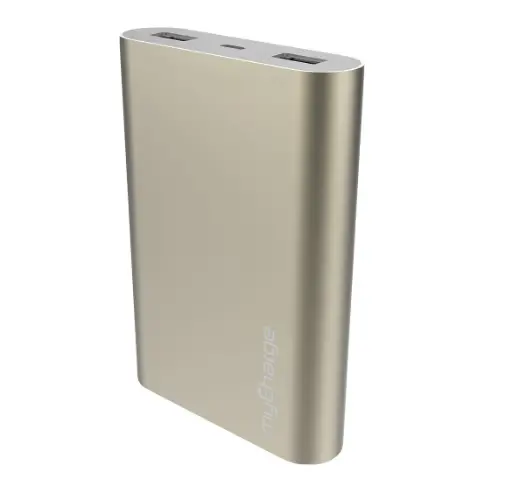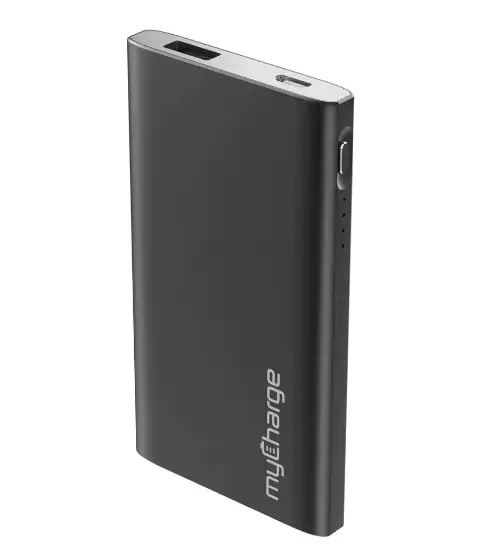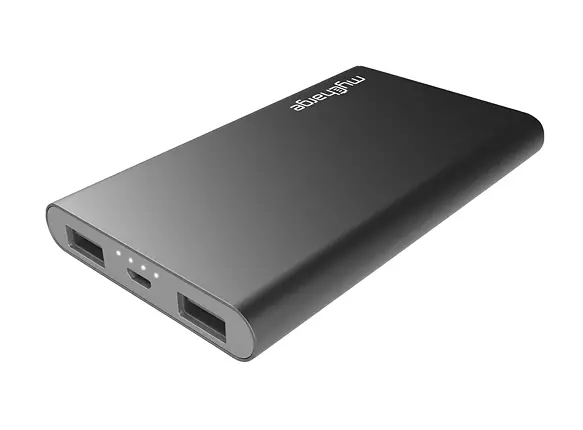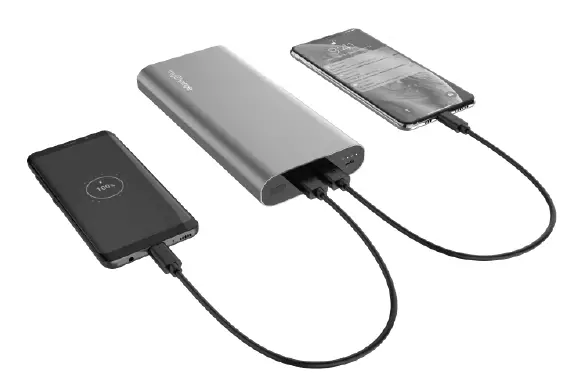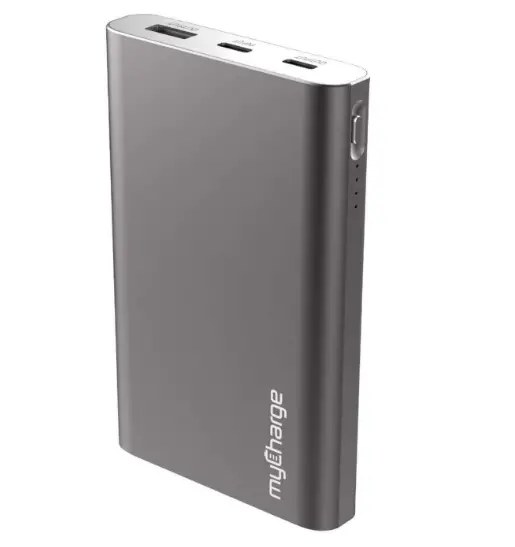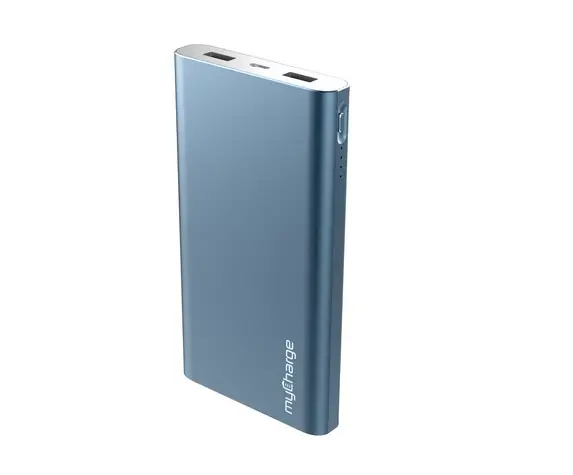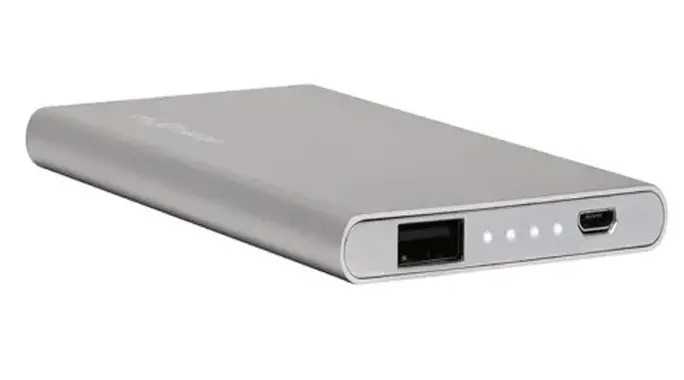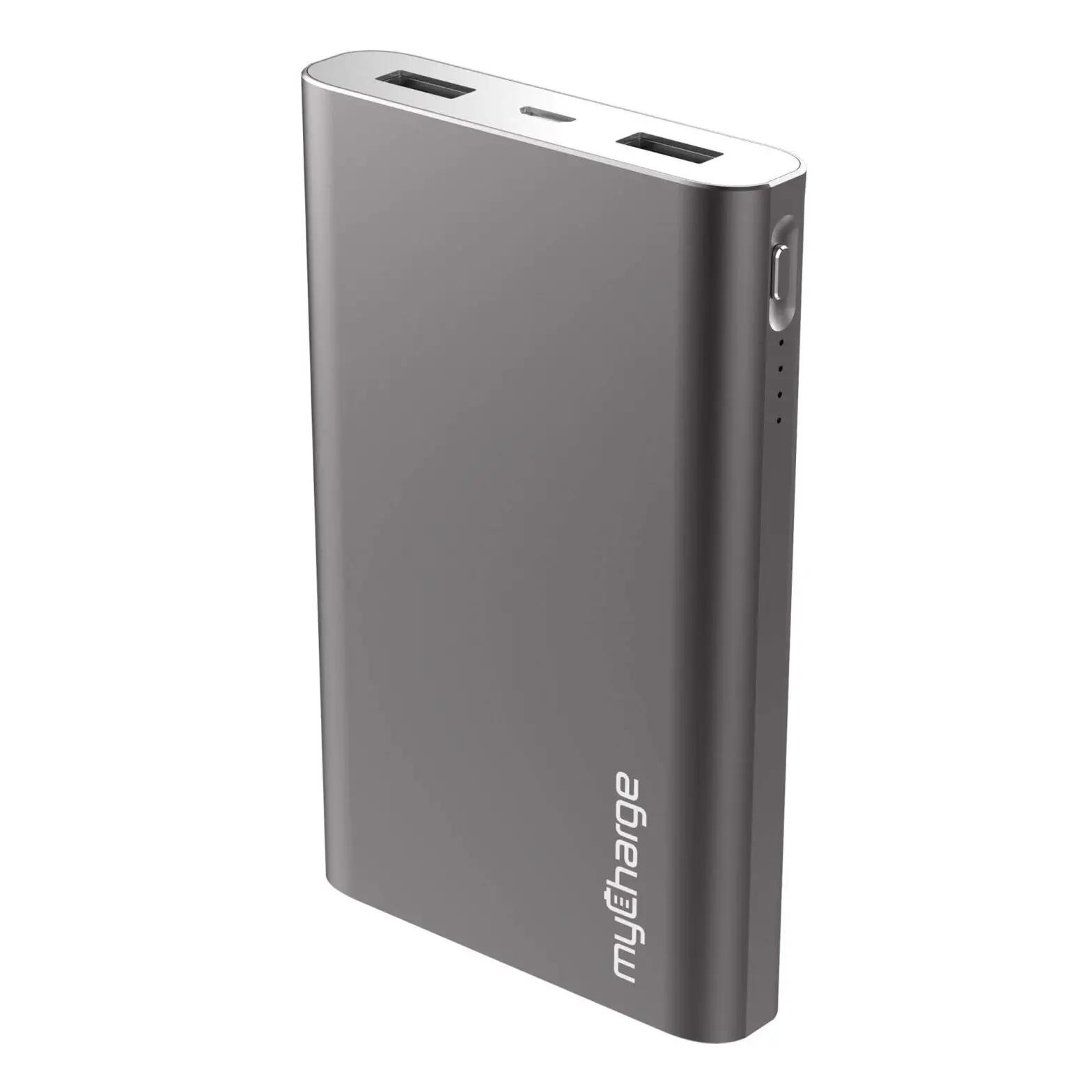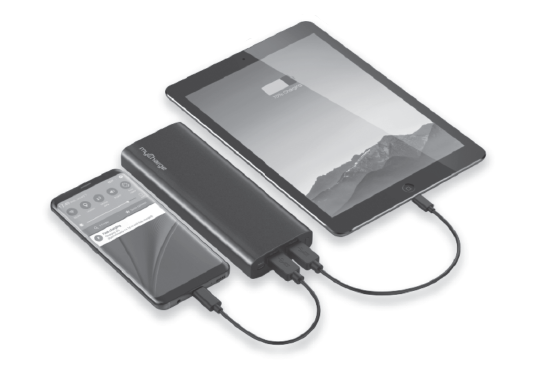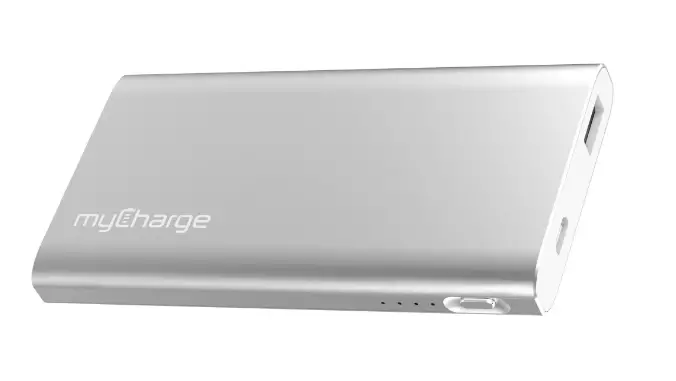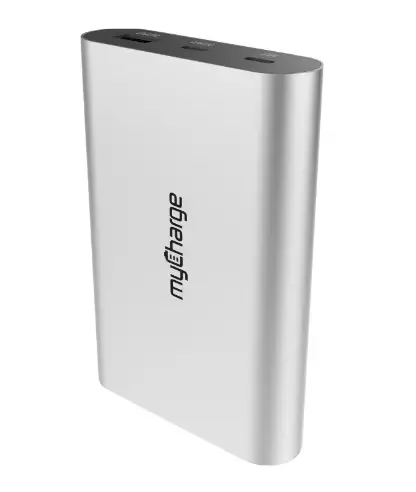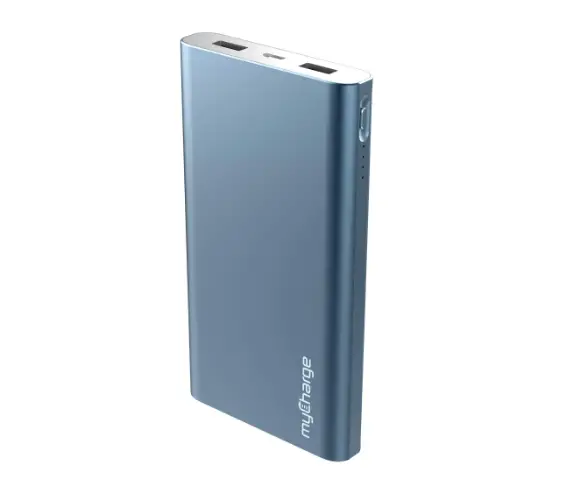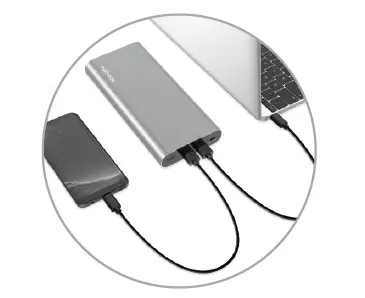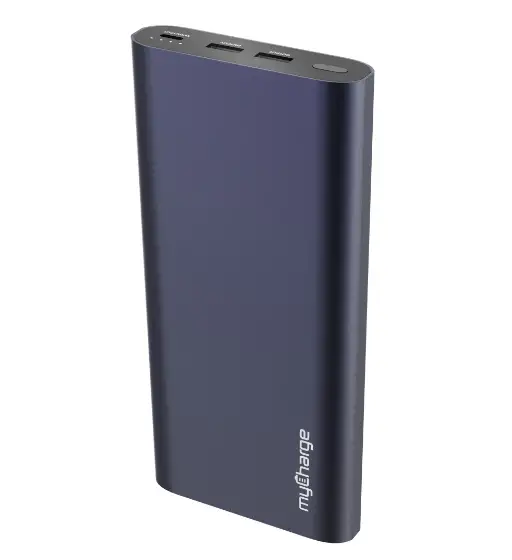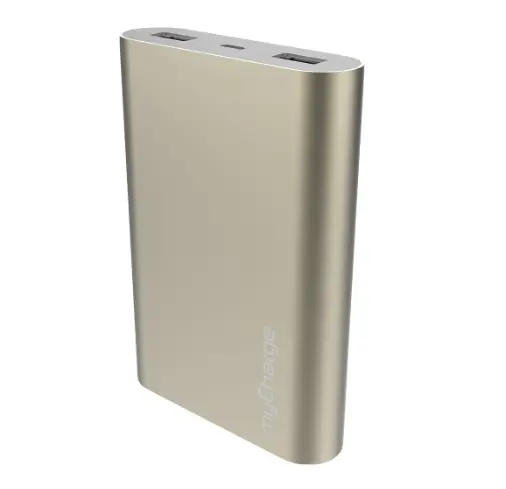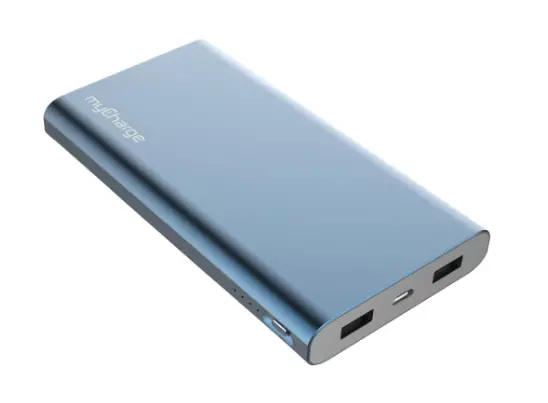
myCharge Razor Turbo 12K RZQC12 SDS
SAFETY DATA SHEET (SDS)
SECTION 1: IDENTIFICATION
| PRODUCT NAME: | Lithium-Ion Battery for myCharge Razor Turbo 12K | |||
| USE: | Battery Designated for recharge. | |||
| MODEL(S): | RZQC12**-* (3.7V, 44.4Wh) | |||
| IMPORTER: | RFA Brands, LLC d/b/a myCharge 123 W. Brown Street, Birmingham, MI 48009 +1 (888) 251-2026 | |||
EMERGENCY CONTACT:
For Hazardous Materials [or Dangerous Goods] Incident Spill, Leak, Fire, Exposure, or Accident
CALL CHEMTREC DAY OR NIGHT
Within USA and Canada: +1 (800) – 424 – 9300
Outside USA and Canada: +1 (703) – 527 – 3887 (Collect Calls Accepted)
*For emergency calls only. Non-emergency calls cannot be serviced at this number.
SECTION 2: HAZARD(S) IDENTIFICATION
| IN GENERAL | ||||
| This product is not dangerous during normal use. Do not dismantle, open or shred lithium-ion battery. In the event that the battery is ruptured, the electrolyte solution contained within the battery would be corrosive and may cause chemical burns upon contact with the skin. | ||||
| PRIMARY ROUTE(S) OF EXPOSURE | ||||
| These chemicals are contained in a sealed, stainless steel enclosure. Risk of exposure occurs only if the cell is mechanically, thermally or electrically abused to the point of compromising the enclosure. If this occurs, exposure to the electrolyte solution contained within battery cell can occur by inhalation, ingestion, eye contact and skin contact. | ||||
| POTENTIAL HEALTH EFFECTS | ||||
| INHALATION | Contents of a leaking cell or battery may cause respiratory irritation. | |||
| INGESTION | Swallowing a cell or battery may be harmful. Contents of a leaking cell or battery may cause serious chemical burns of the mouth, esophagus, and gastrointestinal tract. | |||
| SKIN CONTACT | Contents of a leaking cell or battery may cause skin irritation. | |||
| EYE CONTACT | Contents of a leaking cell or battery may cause severe irritation. | |||
SECTION 3: COMPOSITION/INFORMATION ON INGREDIENTS
| INGREDIENT(S) | CONCENTRATION (%) | CAS NO. | ||
| Lithium Cobalt Oxide (CoLiO2) | 10-30 | 12190-79-3 | ||
| Graphite | 10-30 | 7782-42-5 | ||
| Phosphate (1-), hexafluoro-, Lithium | 10-30 | 21324-40-3 | ||
| Lithium manganese oxide (LiMn2O4) | 7-13 | 12057-17-9 | ||
| Copper | 7-13 | 7440-50-8 | ||
| Aluminum foil | 3-7 | 7429-90-5 | ||
SECTION 4: FIRST-AID MEASURES
| INHALATION | If internal contents of the battery are inhaled, remove source of contamination and move victim to fresh air. Provide oxygen if having difficulty breathing. Seek medical attention. | |||
| INGESTION | Drink large amounts of water. DO NOT INDUCE VOMITING or aspiration into the lungs may occur and cause injury. If vomiting occurs naturally, have victim lean forward to reduce risk of aspiration. Have victim rinse mouth with water again. Immediately seek medical attention. NOTE: If ingestion of battery contents occurs, never give anything by mouth if victim is rapidly losing consciousness, or is unconscious or convulsing. | |||
| SKIN CONTACT | If skin comes in contact with contents of an open battery, immediately remove contaminated clothing, shoes and leather goods. Thoroughly wash extraneous matter and contact region with soap and lukewarm water for at least 30 minutes. If irritation or pain persists, seek medical attention. NOTE: Completely decontaminate clothing, shoes and leather goods before reuse or discard. | |||
| EYE CONTACT | Do not rub eyes. Immediately flush eyes with water continuously for at least 30 minutes, lifting upper and lower lids, until no evidence of the chemical remains. Neutral saline solution may be used as soon as it is available. Take | |||
| care not to rinse contaminated water into the unaffected eye or onto face. Immediately seek medical attention. | ||||
SECTION 5: FIRE-FIGHTING MEASURES
| FLAMMABLE PROPERTIES | In the event that this battery has been ruptured, the electrolyte solution contained within the battery would be flammable. Like any sealed container, battery cells may rupture when exposed to excessive heat; this could result in the release of flammable or corrosive materials. | |||
| EXTINGUISHING MEDIA: | Water, carbon dioxide gas, nitrogen gas, dry chemical powder or foam. | |||
| SPECIAL FIRE-FIGHTING PROTECTIONS OR EQUIPMENT: | When the battery burns with other combustibles simultaneously, take fire extinguishing method which corresponds to the combustibles. As for any fire, evacuate the area and fight the fire from a safe distance. Wear NIOSH/MSHA approved positive pressure self-contained breathing apparatus and protective clothing to prevent contact with skin and eyes. | |||
| HAZARDOUS COMBUSTION PRODUCTS: | When burned, hazardous products of combustion including fumes of carbon monoxide, carbon dioxide and hydrogen fluoride can occur. | |||
| UNUSUAL FIRE/EXPLOSION HAZARDS: | In the event that the battery cells rupture, the electrolyte solution contained within the cells is flammable. Like any sealed container, battery cells may rupture when exposed to excessive heat. This could result in the release of flammable or corrosive materials. If heated above 130ºC, cell(s) may swell/explode/vent. Fires involving lithium-ion batteries can be controlled with water. When water is used, however, hydrogen gas may evolve. In a confined space, hydrogen gas can form an explosive mixture. In this situation, smothering agents are recommended to extinguish the fire. | |||
SECTION 6: ACCIDENTAL RELEASE MEASURES
| IN GENERALA41:E47 | (1) Restrict access to area until completion of clean-up. Do not touch spilled material. Wear adequate personal protective equipment. (2) It is recommended to leave the area to allow the batteries to cool and the vapors to dissipate. Provide maximum ventilation. (3) Cell/battery materials should be collected in a leak proof container. Remove spilled liquid with absorbent (dry sand or earth) and dispose of in accordance with Section 13. | |||
| METHODS AND MATERIALS FOR CLEAN UP | Absorb spilled material with an inert absorbent (e.g., dry sand or earth). Scoop contaminated absorbent into a leak proof container. Collect all contaminated absorbent and dispose of according to directions in Section 13. Scrub the area with detergent and water; collect all contaminated wash water for proper disposal. | |||
| To clean up leaking cells or batteries, take following precautions: | ||||
| Ventilation Requirements: | Room ventilation may be required in areas where there are open or leaking cells and batteries. | |||
| Respiratory Protection: | Avoid exposure to electrolyte fumes from open or leaking cells and batteries. Use self-contained breathing apparatus (SCBA) as necessary. | |||
| Eye Protection: | Wear safety glasses with side shield if handling an open or leaking cell or battery. | |||
| Body/Gloves: | Use neoprene or natural rubber gloves if handling an open or leaking cell or battery. Wear steel toed shoes when handling large containers. Wear protective clothing if handling open or leaking cell/battery. | |||
SECTION 7: HANDLING AND STORAGE
| HANDLING: | Accidental short circuit for a few seconds will not seriously affect the battery. However, this battery is capable of delivering very high short circuit currents. Prolonged short circuits will cause high temperatures that can cause skin burns. Do not disassemble, modify or deform the battery. Never expose cells or battery to fire, high temperatures, water, or strong oxidizers. Do not subject the cell or battery to strong mechanical shock. Do not connect the positive terminal to the negative terminal with electrically conductive material. Insulating and tear proof materials are recommended. Do not crush or puncture the battery or immerse in liquids. | |||
| STORAGE: | Store in a cool, well-ventilated area. Elevated temperature can result in reduced battery life and degrade performance. Do not place the cell or battery near heating equipment or expose the cell or battery to direct sunlight for long periods. | |||
SECTION 8: EXPOSURE CONTROLS/PERSONAL PROTECTION
| 0 | Not necessary under conditions of normal use. If battery ruptures, use local exhaust ventilation or other engineering controls to control sources of dust, mist, fumes and vapor. Keep away from heat and open flame. Store in a cool, dry place. | |||
| RESPIRATORY PROTECTION: | Not necessary under conditions of normal use. If battery ruptures, avoid breathing dust and processing vapors. When adequate ventilation is not available, wear a NIOSH/MSHA respirator with air cylinder and/or dust mask to protect against inorganic dusts. | |||
| HAND PROTECTION: | Not necessary under conditions of normal use. If battery ruptures, protective gloves are recommended. Wash hands and contaminated skin thoroughly after handling. | |||
| EYE PROTECTION: | Not necessary under conditions of normal use. Use good industrial practice to avoid eye contact. Processing of this product releases vapors or fumes which may cause eye irritation. Goggle or protective glasses designed to protect against liquid splashes should be used, along with making eye flushing equipment available. | |||
| SKIN AND BODY PROTECTION: | Not necessary under conditions of normal use. Minimize skin contamination by following good industrial hygiene practices. Working clothes with long sleeve and long trousers and protective gloves are recommended. Steel toed boots also recommended for handling large containers. Wash hands and contaminated skin thoroughly after handling. | |||
| OTHER SAFETY PRECAUTIONS | Have a safety shower and eye wash fountain readily available in the immediate work area. Do not eat, drink, or smoke in work area. Maintain good housekeeping. | |||
SECTION 9: PHYSICAL AND CHEMICAL PROPERTIES
| Appearance: | Solid | |||
| Odor: | N/A | |||
| Odor Threshold: | N/A | |||
| Physical State: | Solid | |||
| pH: | N/A | |||
| Melting Point: | N/A | |||
| Freezing Point: | N/A | |||
| Boiling Point: | N/A | |||
| Flash Point: | N/A | |||
| Evaporation Rate: | N/A | |||
| Flammability (solid, gas): | N/A | |||
| Flammability Limit – Upper/ Flammability Limit – Lower (%): | N/A | |||
| Vapor Pressure: | N/A | |||
| Vapor Density (Air=l): | N/A | |||
| Specific Gravity: | N/A | |||
| Solubility in Water: | Insoluble | |||
| Solubility (Other): | N/A | |||
| Partition Coefficient (n-Octanol/water): | N/A | |||
| Auto Ignition Temperature: | 130ºC | |||
| Decomposition Temperature: | N/A | |||
| Viscosity | N/A | |||
SECTION 10: STABILITY AND REACTIVITY
| STABILITY | Stable during normal handling and use. | |||
| MATERIALS TO AVOID: | Conductive materials, water, seawater, strong oxidizers and strong acids. | |||
| CONDITIONS TO AVOID: | None during normal operation. Avoid exposure to direct sunlight and high humidity. A battery cell exposed to an external short-circuit, crushing or other physical damage, unauthorized modification or elevated temperatures, the cells or battery may cause excess heat generation or potential ignition of fire. Do not subject Li-ion Battery to mechanical shock. However, vibration encountered during transportation does not usually cause leakage, fire or explosion. | |||
| HAZARDOUS DECOMPOSITION PRODUCTS | This material may release toxic fumes if burned or exposed to fire. If cells are opened, hydrogen fluoride and carbon monoxide may be released. | |||
SECTION 11: TOXICOLOGICAL INFORMATION
| IN GENERAL | This product does not elicit toxicological properties during normal handling and use. Lithium ion cells and batteries are not hazardous waste. Sensitization: No Acute Toxicity: No Teratogenicity: No Reproductive Toxicity: No | |||
| ADDITIONAL INFORMATION | Risk of irritation occurs only if the cell is mechanically, thermally or electrically abused to the point of compromising the enclosure. Exposure to internal contents of batteries may cause irritation to the skin, eyes and mucous membranes. Overexposure can cause symptoms of non- fibrotic lung injury and membrane irritation. | |||
This product does not contain any kinds of the following substances and halogen-type flame retardants including Chlorine and Bromide type harmful flame retardants which are listed in appendix of TCO documents and relevant international ECO requirements.
Polybromated Biphenyls (PBB)
Polybromated Biphenyl Ethers (PBBE)
Polybromated Biphenyl Oxides (PBBO)
Polybromated Diphenylethers (PBDE)
Polychlorinated Biphenyl (PCB)
Polychlorinated Diphenylethers (PCDE)
Tetrabromphisphenol A (TBBPA)
Asbestos, Antimonytrioxide, Dioxine
None of the following substances will be exposed, leaked, or emitted during transportation, storage or any operation and any temperature condition:
Chlorinated Fluorohydrocarbon (FCKW)
Acrylonitride
Styrol
Phenol
Benzol
Mercury of great less than 0.0001 wt% for alkaline battery
Mercury of great less than 0.0005 wt% for other battery
Lithium content of great less than 0.5g/cell, 1.5g/battery
Cadmium, lead, and other harmful heavy metal
This product does not contain mercury, cadmium and lithium-metal.
Caution: If the cells are opened through misuse or damage, discard immediately. Internal components of cell are irritants and sensitizers.
SECTION 12: ECOLOGICAL INFORMATION (NON-MANDATORY)
| IN GENERAL | This product is not expected to cause toxicity to the environment. Some materials within the cell are bio- accumulative. Under normal conditions, these materials are contained and pose no risk to persons or the surrounding environment. When disposed, keep away from water, rain and snow. Do not allow undiluted product or large quantities of it to reach ground water, water course or sewage system. | |||
| ENVIRONMENTAL PRECAUTIONS | Prevent material from contaminating soil and from entering sewers or waterways. | |||
SECTION 13: DISPOSAL CONSIDERATIONS (NON-MANDATORY)
| DISPOSAL METHODS: | · Waste disposal must be in accordance with the applicable federal, state and local regulations. · Disposal of the lithium-ion cells or batteries should be performed by permitted, professional disposal. · Incineration should never be performed. | |||
| DISPOSAL CONSIDERATIONS | If batteries are still fully charged or only partially discharged, they can be considered a reactive hazardous waste because of significant amount of uncreated or unconsumed lithium remaining in the spent battery. The batteries must be neutralized through an approved secondary treatment facility prior to disposal as a hazardous waste. Recycling of battery can be done in authorized facility through a licensed waste carrier. | |||
| ENVIRONMENTAL CONCERNS | Do not discharge battery or cell contents into drains, surface waters or groundwater. | |||
SECTION 14: TRANSPORT INFORMATION (NON-MANDATORY)
| IATA: | Proper Shipping Name: Lithium ion batteries /packed with equipment/ contained in equipment | |||
| UN Number: Not restricted | ||||
| Hazard Class: Not restricted | ||||
| Packing Group: Not restricted | ||||
| The battery has passed the test items of UN Model Regulations, Manual of Tests and Criteria, Part III, sub-section 38.3.According to IATA DGR 60th Edition, PACKING INSTRUCTION 965 of section IB for transportation. | ||||
SECTION 15: REGULATORY INFORMATION (NON-MANDATORY)
| The regulatory information included here should not necessarily be considered all inclusive. Special requirements should be handled in accordance with relevant federal, state and local regulations. | ||||
| OSHA Hazard Communication Standard (29 C.F.R. § 1910.1200): Non-Hazardous |
SECTION 16: OTHER INFORMATION
| DATE PREPARED | August 2, 2019 | |||
| NOTE: The information provided in this safety data sheet is based on current knowledge about the product and current legal requirements and standards. It relates specifically to health, safety and environmental requirements and standards, may not identify all hazards associated with the product or its uses or misuses, does not signify any warranty with regard to the properties of the product, and only applies when the product is used for the purposes indicated in Section 1. This product is not sold as suitable for other purposes and such other usage may cause risks not mentioned in this safety data sheet. THE DATA PROVIDED IN THIS SAFETY DATA SHEET IS MEANT TO REPRESENT TYPICAL DATA/ANALYSIS FOR THIS PRODUCT AND IS CORRECT TO THE BEST OF OUR KNOWLEDGE. THE DATA WAS OBTAINED FROM CURRENT AND RELIABLE SOURCES, BUT IS SUPPLIED WITHOUT WARRANTY, EXPRESSED OR IMPLIED, REGARDING ITS CORRECTNESS OR ACCURACY. IT IS THE USER’S RESPONSIBILITY TO DETERMINE SAFE CONDITIONS FOR THE USE OF THIS PRODUCT, AND TO ASSUME LIABILITY FOR LOSS, INJURY, DAMAGE OR EXPENSE ARISING FROM IMPROPER USE OF THIS PRODUCT. THE INFORMATION PROVIDED DOES NOT CONSTITUTE A CONTRACT TO SUPPLY TO ANY SPECIFICATION, OR FOR ANY GIVEN APPLICATION, AND BUYERS SHOULD SEEK TO VERIFY THEIR REQUIREMENTS AND PRODUCT USE. | ||||
DOWNLOAD
myCharge Razor Turbo 12K RZQC12 SDS User Manual – [Download PDF]